















Once captivated by massive, enclosed shopping complexes modelled on American and Western European designs, Lithuanians are increasingly gravitating toward open-air, walkable, and human-scaled spaces that blend shopping with leisure, dining, and daily life.
Based on a press release by Do Architects.
Like much of emerging Europe, Lithuania’s relationship with shopping has always been intertwined with its history. After decades of scarcity under Soviet rule, independence in the 1990s unleashed an enthusiasm for Western-style consumer culture. The bigger and more modern the mall, the stronger the sense of progress and prosperity it seemed to project.
That sentiment found its ultimate expression in 2002 with the opening of Akropolis, Lithuania’s first major modern mall. Built in the capital Vilnius a decade after independence, Akropolis embodied everything the post-Soviet shopper had imagined: Western brands, cinemas, an ice rink, and a glittering, climate-controlled environment filled with abundance.
With an initial area of 54,000 square meters, later doubled, Akropolis quickly became a household name and a national symbol of modern life. A popular reality TV show was filmed on its premises. For many Lithuanians, a visit there wasn’t just about shopping – it was about experiencing a piece of the world they had once only seen on television.

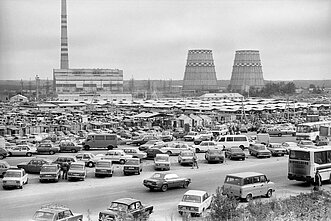
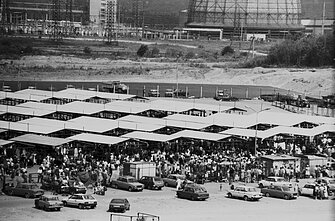
In a sense, the first Akropolis competed with Gariūnai – the sprawling open-air market on the outskirts of Vilnius that had dominated the country’s retail landscape throughout the 1990s. Known as the largest market in the Baltics, Gariūnai was where shoppers scoured endless stalls for cheap clothing and electronics, both genuine and counterfeit.
At Akropolis, the vast parking lot and single-level layout offered a surprisingly smooth transition from the hectic yet beloved market culture of Gariūnai to the polished world of Western-style consumption. “The more and the bigger, the better” – that was the logic.

The turn toward open-air and community spaces
Two decades later, that enthusiasm has evolved into something more reflective.
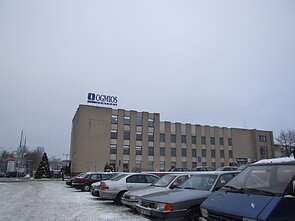
In the late 2000s, the operator Ogmios Group began redeveloping a 12-hectare site just north of central Vilnius, a former Soviet military base that had become a chaotic cluster of discount shops and kiosks. Initially, the company planned another large shopping centre. But after the 2008 financial crisis hit, consumer behaviour changed, and the idea of demolishing everything for a new mall began to feel out of step with the times.


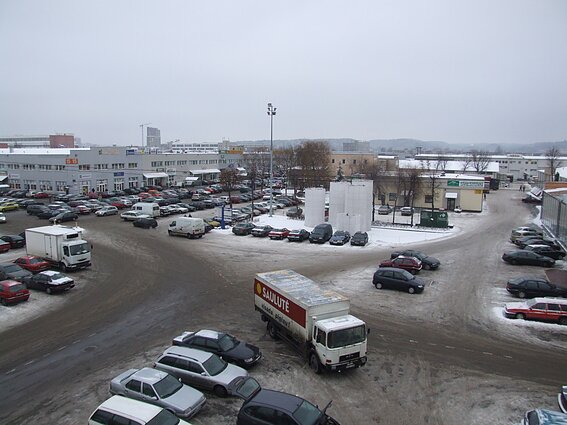
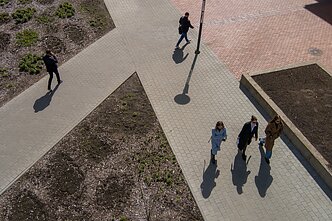
Instead, Ogmios shifted direction. Working with local architects, the company decided to gradually renovate the existing buildings, creating walkable spaces, adding greenery, and inviting cafés and restaurants to open. What emerged was Ogmios City, an open-air commercial district that feels more like a small town than a traditional mall.
“In commerce, consistency is crucial,” said architect Andrė Baldišiūtė of Do Architects, who led the project. “If you close the entire site for years of new construction, people will find other places to shop. Together with Ogmios, we recognised that this area was already functional and liked, although somewhat underdeveloped and definitely car-centric. Therefore, renovating one building at a time and connecting these ‘dots’ with walkable, green, family-oriented infrastructure was both sustainable and appealing.”
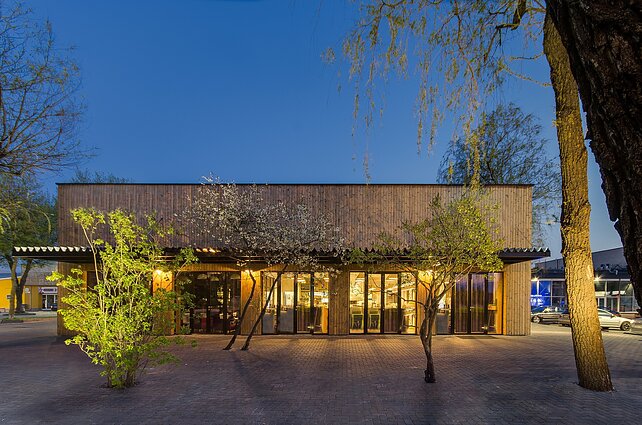
The first building to be renovated, a former water pumping station, became home to a pizza restaurant run by a popular food influencer’s family. Its success set the tone. Coffee shops and sushi restaurants followed and the strategy of upgrading one building at a time kept the area active and familiar, ensuring “a continuous flow of visitors and a perpetual sense of discovery”.
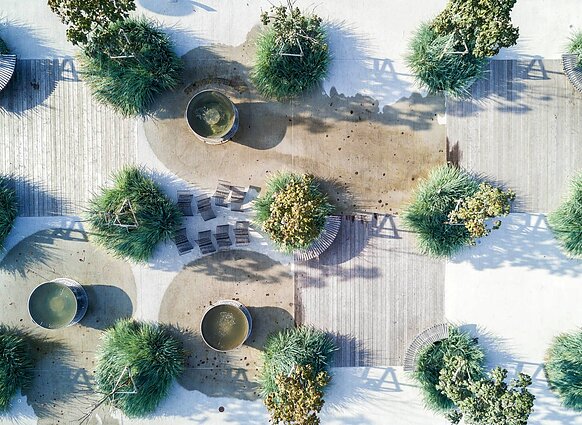
Even the car-focused layout was reimagined. “You cannot completely eliminate parking areas or ban cars in Lithuania – that would still be a business disaster,” Baldišiūtė said. “But we agreed to design two core parking areas with very few spots in between. This, coupled with abundant greenery, playgrounds, fountains, and other places to relax, normalised walking in the area instead of driving around it and invited neighbours to spend time without necessarily committing to shopping.”

From Akropolis to a city within a city
The success of Ogmios City may have inspired a broader shift in thinking. Akropolis Group, the developer behind Lithuania’s first mega-mall, is now planning a new project.
The company received a construction permit in 2024 for a “new-generation shopping town” near central Vilnius. Originally envisioned as another box-style complex, the project was reimagined as a city quarter with streets, varied building heights, and spaces for business, culture, and leisure.

“No matter where you look, a few hundred metres offer diverse and intense experiences in lively city streets,” Baldišiūtė said. “That’s why we suggested Akropolis Group […] rethink their initial project into a city quarter with streets, different buildings, varied facades and heights, and a broad array of functions beyond just shopping.”
The result will combine shopping, offices, coworking spaces, and cultural venues – all connected by pedestrian streets and surrounded by residential areas. “Although this will be a new development, it mimics the old city fabric, extends pedestrian-friendly areas, and offers dozens of hectares of new urban experiences,” Baldišiūtė said. “Turning the design around demonstrates the maturity and changing values of both businesses and Lithuanians.”