






A doctor who lost his medical license in Sweden for “gross incompetence” is now practising legally in Lithuania, according to an international investigation published Thursday by 15min.lt.
The report found that at least 130 doctors across Europe who are banned from practising medicine in one country due to serious violations – including sexual abuse, botched treatments, and performing breast implant procedures without patient consent – continue to work in other jurisdictions.
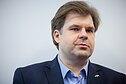
One such case involves 43-year-old Mohamad Khalil, originally from Lebanon, who currently works in the emergency departments of Klaipėda University Hospital and Palanga Hospital. His name does not appear in publicly available hospital contacts, and no official information about his practice in Lithuania has been disclosed.
Khalil moved to Lithuania at age 20 and completed medical studies in Kaunas. In 2012, he obtained a physician’s license in Sweden, but in 2018 Swedish authorities revoked it after ruling he was “grossly incompetent and clearly unsuitable to work as a doctor”.
After returning to Lithuania, Khalil secured a local medical license in December 2020, which remains valid. He attempted to use the Lithuanian permit to regain his Swedish license two years ago, but Swedish regulators rejected his application.
According to 15min.lt, Lithuania’s State Accreditation Service for Health Care Activities (VASPVT) was informed about the revocation in Sweden but allowed Khalil to obtain a new license regardless.
Hospital officials said their role is limited to verifying whether a doctor holds a valid Lithuanian license. “Evaluating decisions made by other countries regarding licenses is not within our competence,” said Jūratė Grubliauskienė, Klaipėda University Hospital’s director for management and economics.
Last year, Khalil enrolled in residency studies at the Lithuanian University of Health Sciences (LSMU). The university told 15min.lt it had not been aware of his revoked Swedish license but acknowledged the need for better access to such information.
The investigation also highlighted other cases, including that of Lithuanian doctor Vytautas Liesis. The UK’s medical tribunal revoked his license in 2024 after he failed to diagnose illnesses in three patients between 2019 and 2020, instead sending them home. Liesis told 15min.lt he did not inform Lithuanian authorities because he was not required to do so. He currently holds a valid license in Lithuania but is not practising.
The probe underscores gaps in Europe’s Internal Market Information System (IMI), which is meant to allow EU and European Economic Area countries to share information about suspended or revoked licenses. The system has been in place since 2016, but reporting is inconsistent.
Some countries have submitted only a handful of notifications, while others have logged thousands. Slovenia, for example, submitted one notification, compared with Lithuania’s 3,700. Most Lithuanian entries, however, were minor administrative suspensions or revocations unrelated to patient safety.
15min.lt reported that Lithuania has several active cases in which doctors stripped of their right to practice abroad continue holding licenses domestically.

Newsletter
Every Friday morning.