




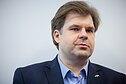





Lithuania’s incoming government, led by Prime Minister-designate Inga Ruginienė, on Tuesday presented its program to the parliament, promising a sharp increase in defence spending, stability on taxation after a sweeping reform, and a softer line toward China.
The 20th Cabinet, once approved, will commit to spending at least 5% of gross domestic product on defence – one of the highest ratios in NATO. That figure surpasses the outgoing government’s pledge of 3.5% and matches the State Defence Council’s decision to raise outlays to 5–6% between 2026 and 2030.
Defence funding is central to Lithuania’s security strategy as the country, which borders Russia and Belarus, aims to build a full army division by 2030 and prepare to host a German brigade permanently from 2027. The program also includes plans to establish a new training ground for brigade-level exercises, create a state-owned defence holding company and further strengthen air defence capabilities.
On foreign policy, the new government signals a reset with China. The program drops language labelling China a security challenge and instead pledges to restore diplomatic representation to a level “comparable with other EU member states”.

Relations collapsed in 2021 after Lithuania allowed Taiwan to open a representative office in Vilnius under the name “Taiwanese”, prompting Beijing to withdraw its diplomats. Since May, no accredited Chinese diplomats have been present in Lithuania.
On economic policy, the new cabinet promises no further tax increases beyond a special levy on banks. The pledge comes after parliament this year passed a sweeping tax reform that raised income, property and corporate taxes, introduced levies on sugar and insurance, and earmarked much of the additional revenue for defence. Business groups had urged the government to refrain from adding new burdens after the overhaul.
The program says the government will freeze increases to diesel excise duties – a politically sensitive issue – while raising taxes on tobacco, alcohol and e-cigarettes to generate extra revenue. It also includes a commitment to crack down on value-added tax fraud and toughen penalties for shadow-economy activity.

The program drops a pledge to cut value-added tax on fresh fruit and vegetables and abandons the previous cabinet’s plan to establish a Ministry of Regions, opting instead for a regional policy unit within the prime minister’s office.
Beyond these headline shifts, Ruginienė’s cabinet has retained many commitments from its predecessor. These include measures to boost investment across Lithuania, cut red tape for businesses and consolidate state-owned land to encourage industrial projects in the regions.
Social policies also feature prominently. The government promises to expand funding for children’s extracurricular education, speed up the indexation of child benefits, introduce free meals for primary school students, and increase support for first-time homebuyers. It also pledges to accelerate pension indexation, strengthen workers’ rights and reduce income inequality.

In education, the government wants to ease teacher shortages, raise salaries and ensure private schools face the same requirements as public ones.
In health care, it promises higher state contributions to the health insurance fund, shorter waiting lists, more resources for regional facilities, and significantly higher wages for nurses. Patients, the program says, should not face co-payments for services already covered by insurance.
Infrastructure and energy are also highlighted. The cabinet vows to secure financing for the newly established Road Fund, accelerate gravel road paving, expand investment in consumer-friendly renewable energy, and enhance forest protection.
Ruginienė’s government will formally assume office once parliament approves the program by a majority vote.

Newsletter
Every Friday morning.