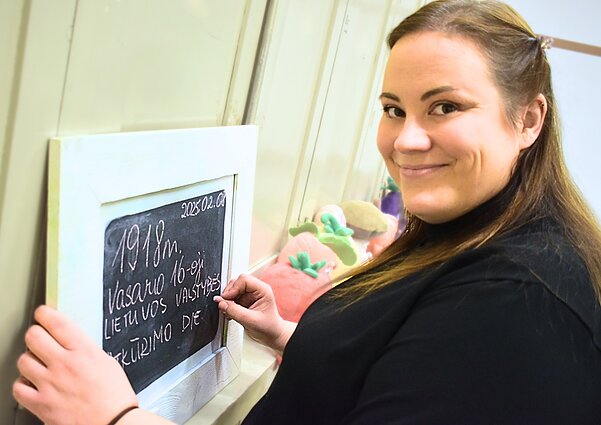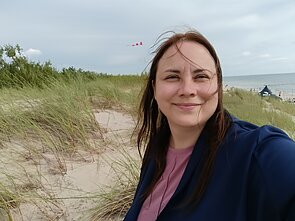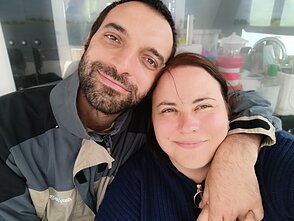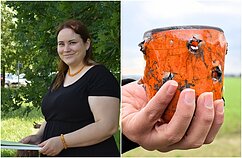


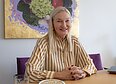







“It’s just an ordinary love story,” says Sigita Dabulskytė, a Lithuanian teacher and ceramics artist who has been living in Italy for the past nine years. Based in Bologna, the former Kaunas resident shares with LRT.lt that preserving Lithuanian identity in a multicultural family is challenging – but possible.
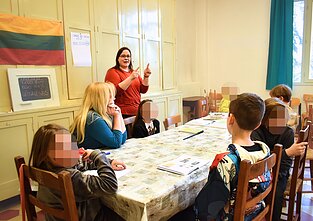
Sigita, who has been teaching at the Bologna Lithuanian School for two years, explains that although the Lithuanian community in Italy is small, it’s inspiring to see families driving up to 100 kilometres every other Saturday just so their children can practice the language and stay connected to the Lithuanian culture.
The slow pace of Italian life and endless paperwork
Sigita moved to Italy in 2016 after meeting her Italian husband during a trip to Kraków. Though she had never imagined living abroad, and the adjustment was not always simple, she embraced the experience with an open mind.
“When you move to a new country, you have to respect and adapt to its culture,” she says. “Sometimes we arrive thinking certain things are ridiculous, but people have lived this way for hundreds of years. Of course, you have to find a balance between integrating and staying true to your roots.”
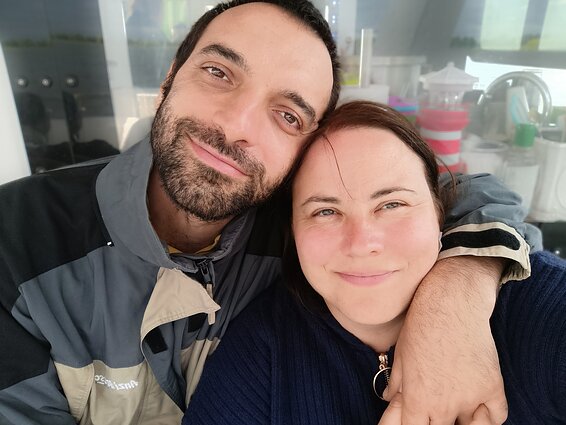
One of the first adjustments was adapting to the slower rhythm of life in Italy. Sigita jokes that before Italians do anything, they need to have their coffee.
“I’m the type of person who wants everything done now, quickly, efficiently. But in Italy, things run differently. Here, you take your time, drink coffee, and only then things get done,” she says. “And Italy is infamous for its bureaucracy. You just have to adapt.”
Three languages under one roof
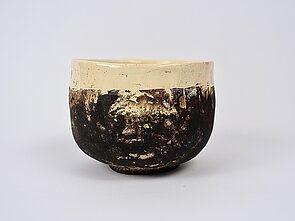
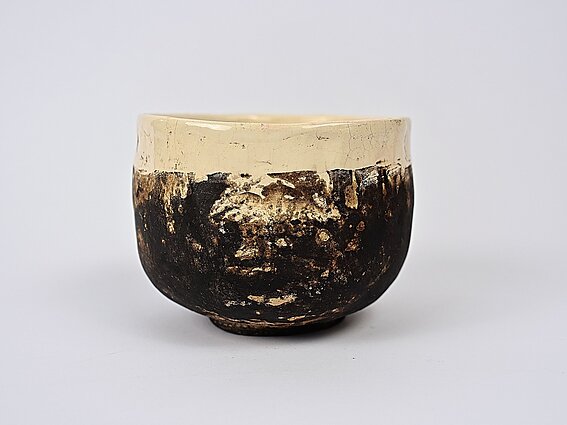
Before moving to Italy, Sigita worked as a teacher in Kaunas. Though trained as a painter, she developed a deep love for ceramics at the age of 17 after visiting a ceramicist who used a traditional Japanese-style kiln to create extraordinary works. “That was a turning point in my life,” she recalls.
Having started teaching straight after her studies, Sigita never imagined that just a few years later her life would take her to sunny Italy. Though she barely knew Italian, after her sons were born, she and her husband decided to move.
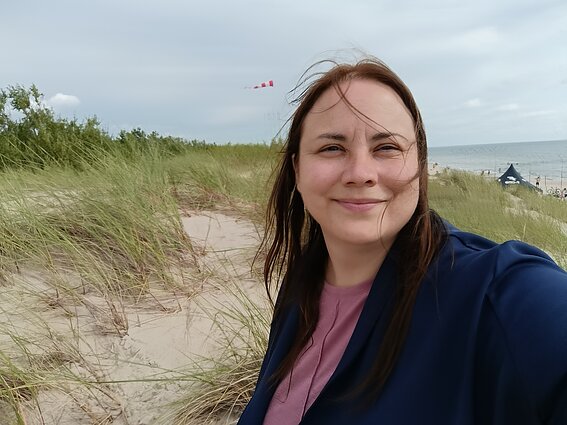
“Everything stopped for six years. Maternity leave in Italy is just nine months, including two months before birth, which is very short compared to Lithuania. When I got pregnant, we decided that I’d stay home to raise the kids. That’s how I learned the language and became familiar with the culture. Our kids stayed home until age three and had a calm, grounded childhood,” she recalls.
At home, the family navigates three languages – Lithuanian, Italian, and English. Sigita jokes that she speaks Lithuanian with her children, though when she needs to scold them, she switches to Italian. She and her husband communicate in English.
“My kids protest and sometimes refuse to speak Lithuanian with me, but it’s never an issue when they talk to other Lithuanian kids,” she says. “Of course, they make some mistakes or have a slight accent, but I think that is totally natural. Their father speaks Italian with them, and I speak Lithuanian, so they grow up with both. Even in the kitchen, we combine Lithuanian and Italian recipes or cooking methods.”
Keeping the Lithuanian identity alive
Sigita visits Lithuania with her family every summer. Though she says they don’t deliberately insist on Lithuanian culture at home, her eldest son is a clear example that cultural identity can survive even far from home.
“He draws the Lithuanian flag at school, wears a patch with Vytis on his backpack - he’s proud of his Lithuanian side, even if he doesn’t express it to me directly. One of the most touching moments was last year, right before we flew back to Italy. I went for a walk with him and told him I felt a bit sad about leaving. I asked how he felt. He calmly said, ‘I feel like a Lithuanian.’ My heart ached, and I thought – this is exactly what we work for every single day,” she recalls.
Sigita’s son has been attending the Lithuanian school in Bologna for four years now, where she also teaches. She explains that while the school once had branches only in Rome, Genoa and Turin, the growing demand led to a new one being opened in Bologna a few years ago.
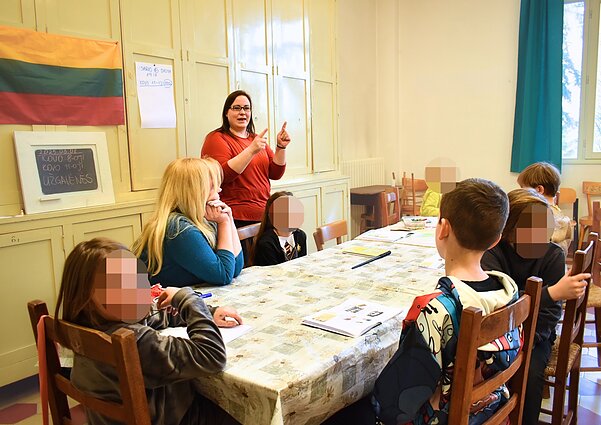
“For me, the Lithuanian school is a tool to ensure my children do not forget their language and cultural identity. In return, I teach ceramics classes there. I want my kids to have Lithuanian friends, which is actually a big challenge in Italy. Probably not as much in places like the UK, but here, there aren’t many Lithuanians. In our branch, we have just 12 children, and they travel from up to 100 kilometres away. We hold classes twice a month on Saturdays, and it’s a big commitment for families, but I’m really happy that they still make the effort.”
Teaching ceramics to the next generation
Sigita admits, teaching is not easy when the children’s ages vary so widely – in a single class, a three-year-old may be learning alongside a twelve-year-old, with each child showing different abilities.
“Sometimes the youngest kids actually speak Lithuanian better than the older ones. Every child is different; some can write and understand but don’t speak, others can speak but not write,” Sigita explains.
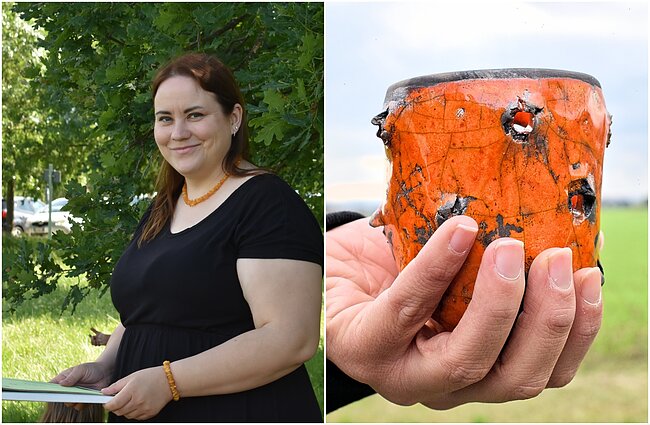
At the school, students not only learn the language but also explore Lithuanian history, culture, and traditions. Sigita enriches the curriculum with ceramics workshops.
“I believe ceramics has a strong therapeutic effect. It slows you down. You can’t rush through it; you have to focus and do it properly, be present in the moment. That’s rare these days, in our screen-filled world. Today’s kids aren’t the kind to just start moulding clay because you tell them to; it takes real effort to engage them. But there are always some who are genuinely drawn to it.”
Looking ahead, Sigita sees her future in Italy, but she dreams of having a place in Lithuania she could return to more often.
“I would love a little cottage near a lake in Lithuania. Living in Italy, I really miss the forests and lakes back home.”
Translated to English by Smiltė Titovaitė.

Newsletter
Every Friday morning.