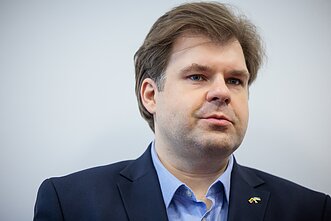















Around 40,000 troops will be training in the Baltic States and Poland, with approximately 16,000 stationed in Lithuania, during the Zapad military exercise planned by Russia and its ally Belarus in September, Lithuania’s Chief of Defence, Raimundas Vaikšnoras, has said.
“We have our own national exercises, together with our allies, and I would say that, based on what is planned as of today, the Baltic States plus Poland will have more moving parts, personnel and other capabilities than what we can observe through reconnaissance platforms [in relation to Zapad],” the general told LRT radio on Friday.
“We will have roughly 40,000 troops in the region alone – Lithuania, Latvia, Estonia and Poland. The Lithuanian contingent, without speculating too much on numbers, will be around 10,000, plus another 6,000 or so from our allies. And this applies not only on land, but also at sea and in the air,” he added.
According to intelligence reports, about 8,000 troops will be deployed in Belarus during the Zapad exercise, while the total number expected to participate this year is unlikely to exceed 30,000.
The Chief of Defence said the level of military capability in the region during the drills would be sufficient to respond to provocations, although such scenarios were considered unlikely.
Vaikšnoras previously stated that the armed forces would remain on high alert in August and September due to the upcoming exercises.
Lithuania has also already closed part of its airspace along the border with Belarus.
Russia and some analysts have claimed that around 200,000 troops took part in the 2021 Zapad exercise, held just months before Moscow launched its offensive in Ukraine. Lithuanian intelligence, however, reported a significantly lower figure of approximately 60,000.
The Zapad drills have been conducted every two years since 2009, with the exception of 2023, when British intelligence suggested the likely reason for the cancellation was a shortage of Russian troops and equipment, alongside the leadership’s reluctance to be criticised for routine demonstration manoeuvres amid the war in Ukraine.

Newsletter
Every Friday morning.