





"Military combat self-defence is not a sport – it is a way to neutralise the enemy in close combat without any rules, when there is no possibility to use a weapon," stated the Lithuanian Armed Forces.
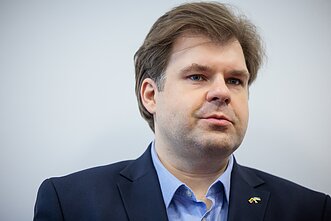
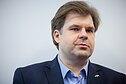
“A soldier must know how to fight—not just shoot. You can’t always rely on a firearm. Exposure to combat builds resilience—to pain, to high-stress situations. It makes the soldier more adaptable and capable. Concentrated physical training, combined with combat practice, contributes significantly to mission success,” said Saulius Šeškevičius, a combat sports coach, referee, professional soldier specialist in the Lithuanian Armed Forces, and one of the developers of military combat self-defence in the Lithuanian Army, in an exclusive interview with LRT.lt.
Combat sports are incredibly diverse across the globe.
In Europe, boxing – born in ancient Greece and revived in the 19th-century United Kingdom – dominates. In the Far East, many traditions trace back to aikido, karate, taekwondo, judo and jujitsu. Brazilian jiu-jitsu emerged in South America. The list goes on, but it is clear that combat sport has its own distinct place in the global tapestry of athletic disciplines.

Nowadays, combat sport is arguably the only arena where people can test physical strength in a duel. Of course, this is limited by sporting rules, but it is the closest expression of the physical brutality of war. Many combat sports were developed to supplement a soldier’s arsenal or quickly adapted for military training.
Even the terminology in sport often mirrors military language: battle, fight, duel, manoeuvre, tactics.
Thus, combat sport is inseparable from the military field – in ancient Greece, pankration was a core part of soldier training; in Japan, jujitsu and kendo were used; in Israel, the krav maga system is employed. These and many other systems are now recognised as forms of combat sport.
Lithuania is no exception.
Between the World Wars, sport was a vital part of military training in Lithuania, and the army played a key role in developing sport nationally.
For example, Juozas Vinča, a heavyweight boxer and participant at the 1928 Paris Olympics and Baltic champion, began his career in the army. According to Gintautas Surgailis’ book History of the Lithuanian Army, in 1935, the War School began training cadets by emphasising physical fitness and incorporating self-defence disciplines such as boxing, wrestling, and judo.
With Lithuania’s liberation from Soviet occupation, many combat sports practitioners became the nucleus of the nascent national defence system.
“In 1990, many people involved in sport arrived; they wanted to compete and had the fighting spirit – to fight and win. But it wasn’t just athletes. There were others motivated by patriotism,” Šeškevičius recounted.
Since arms were scarce, training focused on close combat in confined spaces – urban warfare.
“Duel-based sports were our weapon; we were the weapon ourselves. Remember the karate men led by Romas Vitkauskas – they also protected the Supreme Council and later reinforced the security forces. The feeling for the opponent comes from duel sports, where instincts play a huge role,” said Arvydas Pocius, former Lithuanian Armed Forces Commander.
This was the foundation of Lithuania’s defence system and its personnel, the framework that evolved into today’s Lithuanian military combat self-defence.
“At that time, there were no orders or official frameworks. We had to improvise, often concealing activities since Russian troops were still in the country,” said Šeškevičius.

According to the Ministry of Defence website, “Amidst a very challenging situation in Lithuania, one of the hardest tasks was to begin professional training of Lithuanian men for defence. In spring 1990, before international recognition, open training was nearly impossible, so it was conducted under the guise of the Military Technical Sports Club. On May 31, 1990, by order No. 1, this club was established under the Defence Department.”
“The club was led by General Č. Jezerskas, a world sambo champion, among other things. This was the seed from which everything grew – the training disguised as a sport club activity. As more people came, they had to be sifted; training sessions took place. Initially, this was called airborne preparation because many who joined were former Soviet troops wanting to begin training,” explained Šeškevičius.
“Karate and other combat sports practitioners emerged from the underground in free Lithuania. We had coach Šiškūnas, Kasteckas, rowers among us, and Romas Vitkauskas, current president of the Karate Federation, was always close by, teaching us various skills,” said Tomas Vaitkevičius, one of the first members of the Supreme Council’s Security Department.
From lack of weapons, necessity, and unwavering will, close combat principles were born, understood by those involved, and gradually laid the foundations for military combat self-defence in the Lithuanian Army and national defence system.
“We had nothing, so we had to defend ourselves somehow. At that time, it was probably one of the main methods of soldier training,” Šeškevičius said.
Colonel Aleksejus Gaiževskis, a member of the ‘Žvėrynas’ special unit, recalled the significance of such combat actions in early Lithuania:
“Military training relied not just on available resources but also on what the potential enemy – the Soviet soldier – best understood. And he respected not a rocket kilometres away, but the foe who could knock him down in close combat with strength, technique and courage. The saying then was: ‘the second hit is only to the coffin lid.’”
As Lithuania’s young army began to take shape, so too did military combat self-defence. However, as Šeškevičius explained, this process was for many years more organic than doctrinal.
“I understood the spirit of the time. I was training in martial arts with Gečiauskas. I told him, ‘That’s it, I’m going, I want to serve, to defend Lithuania, the homeland,’” recounted S. Šeškevičius of his decision to join the army.
Having already tasted combat sports, Šeškevičius began service in the Lithuanian Armed Forces in 1992, joining the first formation of the Vytautas the Great Jaeger Battalion – the Kaunas rapid reaction motorised infantry battalion Iron Wolf.

“We were selected by Saulius Veprauskas. He mainly chose people who had a sporting background; his priority was those physically capable of carrying out difficult tasks,” said Šeškevičius.
Service in this unit was inseparable from special combat training and close-quarters fighting.
“In exercises called special combat training, we’d stand by a tree and train with bare fists. Once, environmental inspectors fined the unit because we stripped the bark off all the trees. We trained without any protective gear; knuckles bled, there were injuries of all kinds. It was tough. Now everything is well organised and modern, but back then, we only had an idea – we were true patriots, wanting to defend our homeland and build a better life for future generations,” he said.
Although training was unconventional, at a time when the Soviet and Russian armies were still numerous in the country, the missions given were entirely real and dangerous.

“I carried a Kalashnikov with live rounds. We stopped Russian convoys, as we were tasked with preventing young men from being taken to serve in the Russian army. It was an adrenaline rush. Young and inexperienced, fear all around. Our eyes wide, we were trembling, but standing firm,” said Šeškevičius.
The system developed gradually. Later, the ‘Iron Wolf’ brigade was formed; the Kaunas CIS ‘Iron Wolf’ became the Jaeger Battalion, the first to carry out reconnaissance tasks.
They were among the first to work with the Green Berets. By 1992 or 1993, NATO delegates from Western countries had already come to Karmėlava, and we demonstrated training programmes for them. They couldn’t imagine how we had prepared so well in such a short time,” Šeškevičius recalled.
As the Lithuanian Armed Forces developed, so too did combat self-defence, both from the military training and sporting perspectives. However, as Šeškevičius explained, this was mainly driven by initiative rather than doctrine — the sporting side endured for a long time, while combat training relied on the initiative of individual commanders and units.
“There was healthy competition among battalions. From 1993, when the brigade was formed and the Jaeger Battalion emerged, development began. Everyone wanted to prove their troops were better prepared. Battalions sent soldiers to every possible competition to show whose system was superior.
But there was no fully formalised system. Each unit had its own preparation,” said Šeškevičius.

Everything changed under the initiative of Lieutenant General Arvydas Pocius, Commander of the Lithuanian Armed Forces from 2009 to 2014.
“The systematic formalisation began when Commander Pocius visited the US Marines. On his return, he brought back a lot of training materials and said: ‘Go, men, you have the task to develop something similar in the Lithuanian Armed Forces,’” said Šeškevičius.
“Pocius gave that task, a working group was formed, led by Major Kasteckas, and all specialists were gathered, including Janas Kačenovskis and others.
I had the honour of presenting our working group’s refined product to the Commander-in-Chief.
I’m not saying previous commanders did not support this, but the product that could be integrated into the training system was created then,” said Šeškevičius.
In the 2014 issue of the Lithuanian Armed Forces magazine Karys, in an interview with the outgoing Commander Lieutenant General Arvydas Pocius, the Commander stated: “I am pleased that applied military combat self-defence has found its place in the Lithuanian Armed Forces, because a soldier must be able to defend themselves unarmed as well. This discipline is widely implemented in foreign armies. I hope my successor will maintain this priority and not let it become just a memory of Lt Gen Arvydas Pocius’s initiatives.”

Military combat self-defence training in the Lithuanian Armed Forces is divided into three levels. At level one, soldiers learn basic techniques and acquire fundamental self-defence knowledge. Level two focuses on counterattacks and more complex combinations.
“At the highest level, tactics come into play – trenches, pits, rooms. Contact training includes fighting one-on-two, three-on-three, how to use a knife, stick, improvised weapons most effectively. All situations where a soldier might not be able to use their firearm and how to respond,” said Šeškevičius, describing level three.
Changes in military training began to influence the sporting side of combat self-defence, especially after the Lithuanian Armed Forces’ combat self-defence tournaments were revived in 2015.
“There was little protection against injury risks; only an eight-point scoring system limited the fights – once you reached those points, the match ended.
With the introduction of a more military-focused approach, we began incorporating technical elements and implementing better protective gear. As injuries and fractures began occurring, commanders became reluctant to send soldiers to compete. So we started refining the rules and adding safety measures. Competent instructors are essential – otherwise, injuries remove soldiers from their core military training, something commanders understandably want to avoid.”
Commenting on the current state of military combat self-defence tournaments, Šeškevičius said the competitive standard remains strong.
“I wouldn’t say the level is poor – it’s actually very good. People tend to romanticise the past, but times have changed. If we evaluate things honestly, today’s standards are solid. I would like to see wider participation. Personally, I’d welcome a return to battalion-versus-battalion competition.”

He also advocated for broader involvement from other national defence and law enforcement bodies. “There’s cooperation with the Ministry of the Interior and the State Security Department. We used to compete in their tournaments – now they should be invited to ours, both individually and as teams. After all, we’ll all be defending our homeland together. But first, everything needs to be structured within the military itself.”
“For those who think this is simply about brawling – 60% of combat self-defence training is psychological preparation,” said Šeškevičius.
He shared how a training doctrine commander had once sent him a U.S. analysis of combat experiences in Iraq and Afghanistan.
“It was fascinating. Soldiers trained in their version of combat self-defence – ‘combatives’ – remained composed in battle. Those who hadn’t been trained were far more likely to panic – and die. In my view, every soldier needs exposure to close combat, with or without a weapon. A degree of physical contact is vital – but always under the guidance of qualified professionals.”
The success of such training, however, also depends heavily on a soldier’s overall physical conditioning.
“A soldier doesn’t need to be an Olympian or NBA-level athlete,” Šeškevičius noted. “But nor can they be an average civilian. They must be somewhere in the middle. That’s the benchmark. If they want to go further, that’s great – but that mid-range level is essential.”
In this context, combat self-defence becomes more than just training – it transforms a good soldier into an additional weapon on the battlefield. But it requires proper preparation: physical, technical, and tactical.

Newsletter
Every Friday morning.