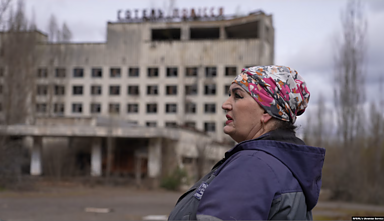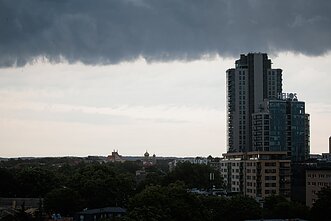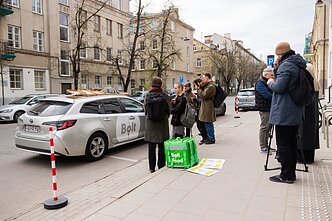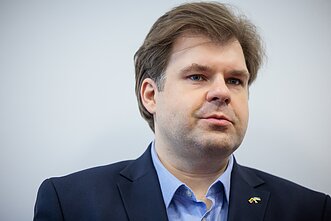














Vilnius Mayor Valdas Benkunskas criticized the Lithuanian government Friday for pushing ahead with plans to turn the long-abandoned Vilnius Sports and Concert Palace into a national conference centre without consulting city officials.
According to Benkunskas, the city had already made progress on developing an alternative site for a modern, A-class conference facility near the Seimas (parliament) building and was caught off guard by the government’s sudden decision.
“The government announced – without any discussion – that the space would become a conference centre. We weren’t sitting idly by; we were moving ahead with our own plans. Learning about this from a press release was unexpected,” Benkunskas told LRT RADIO.
The mayor said he had received assurances from Prime Minister Gintautas Paluckas early in his term that there would be no unilateral moves concerning the 1970s brutalist building located atop the historically sensitive grounds of the old Jewish cemetery in the Šnipiškės district.

Benkunskas said he was assured that any change of course would involve dialogue, but the municipality was not consulted.
He added that the city had already completed business feasibility studies, reached an agreement with the Seimas Chancellery on land use, and was on the verge of launching an architectural competition for its own conference centre plan.
Further reading
Jewish community raises concerns
The Lithuanian Jewish Community was also not consulted, according to its chairwoman Faina Kukliansky, who expressed alarm over the lack of transparency and potential disrespect to the memory of those buried at the site.
“I fear this project will attract Jews from around the world – not for conferences, but to witness how a civilised democratic country desecrates Jewish graves,” Kukliansky told LRT RADIO.

Vice Minister of Economy Agila Barzdienė insisted the government had followed proper procedure and that the site, now often vandalised, was neither protected nor maintained as sacred.
According to Barzdienė, Kukliansky herself, as the leader of the Lithuanian Jewish Community, gave a go-ahead back in 2019 to develop a conference centre on the site of the Sports Palace. However, other Jewish representatives contested the decision at the time.
Further reading
“None of us can claim this site is currently treated as sacred or supervised,” Vice Minister Brazdienė said. “It’s a central location that is now neither respected nor secured, it brings no benefit for the country. The ministry’s suggestion is to exploit conference tourism which is one of the most profitable and useful sectors for any city.”
She also dismissed the city’s alternative project as financially unrealistic, claiming its cost would rival that of a national stadium – an investment neither the city nor the state has budgeted for.
Historical and financial stakes
The Sports Palace, built in 1971, has stood unused for years. Proposals to redevelop it into a congress centre have circulated since 2015, frequently meeting resistance from Jewish groups due to the site’s location atop the historic cemetery.

Government officials argue that the redevelopment plan will include respectful commemoration of the site’s historical significance. The building also holds symbolic value in Lithuania’s modern history, having hosted the founding congress of the Sąjūdis movement in 1988 and the public farewell to victims of Soviet aggression in January 1991.
According to preliminary estimates from the Ministry of Economy and Innovation, the proposed Vilnius Congress Centre could generate up to €133 million annually and create up to 1,200 jobs across tourism, logistics, and event sectors.
A new feasibility study is expected soon, which will outline the project’s timeline and investment needs.
Further reading

Newsletter
Every Friday morning.