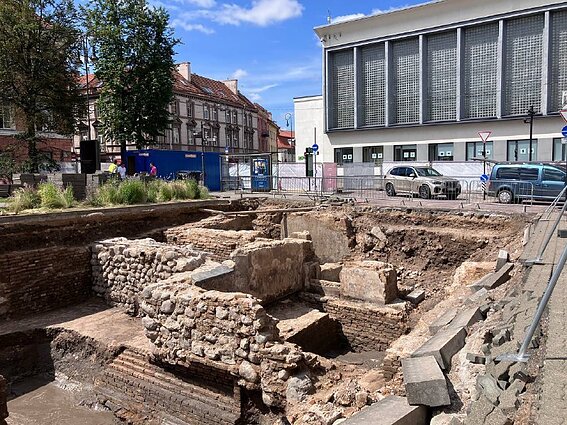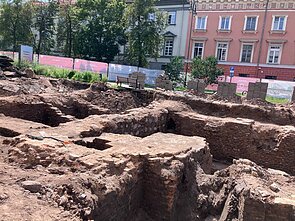















During the ongoing reconstruction of Vokiečių Street in Vilnius Old Town, foundations and cellars of a building that once stood there have been uncovered. These findings quickly drew public interest – LRT.lt reader Rimutis was curious about the history of the buildings that previously occupied the heart of the city and what will happen to their remains.
“I knew that Vokiečių Street was being renovated. But I was surprised that, soon after work began, the foundations of an old street – lost after the war – were revealed. I’m curious what was here before and what they intend to do with the foundations?” asked Rimutis.
The unearthed foundations of Europa hotel
The head of the Vokiečių Street reconstruction project, architect Robertas Zilinskas, told LRT.lt that buildings on the site have been recorded since the 16th century. The land later came into the possession of Jan Stanisław Sapieha (Jonas Stanislovas Sapiega), Great Marshal of the Grand Duchy of Lithuania, and in 1712, the Sapieha family donated it to the Piarist monastery. A church was planned on the site, though it was never built.
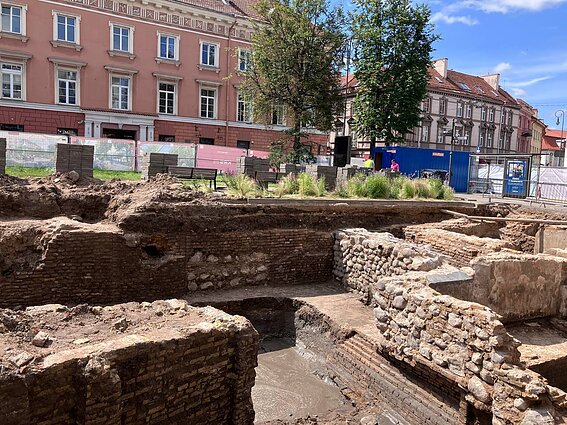
“In either 1802 or 1800, the land was gifted to architect Mykolas Angelas Šulcas, who designed and built a house there. The 1808 city plan depicts the completed building. The courtyard remained undeveloped, but records mention stables. In 1866, merchant Aronas Lebensonas opened the Hotel Europa in the house. In 1883, a third floor was added based on a design by architect Aleksejus Polozovas,” said Zilinskas.
He added that by the early 20th century, the hotel was owned by merchant Mečislovas Bogdanovičius, who altered the windows and doorways on the ground floor. The building was lost after the Second World War.
Historic buildings to be commemorated
Zilinskas emphasised that Vokiečių Street is among the city’s oldest, featuring remnants of 14th-century structures.
“It may well be that the layout remained unchanged until the post-war period, only the surface being periodically raised. In 2021, archaeologists discovered earlier paving layers beneath today’s street level. A vaulted sewage collector, still in operation, was built under the street in 1925, with a stone-block surface from the same period above it. Restoration works are preserving this surface,” he explained.
During excavations, archaeologists also found human remains, which Zilinskas believes may be victims of Soviet bombing in 1944.
Asked what other discoveries might be expected, Zilinskas noted that while structures from 1808–1925 are documented in drawings, the situation is less clear with earlier periods.
“There are historical records from earlier periods, but they do not allow us to know the precise layout or development of the site – though we may be able to do so archaeologically,” the architect noted.

After the current renovation, the original street layout will be marked in the pavement using contrasting paving stones to trace the outlines of historic buildings. Engravings will indicate the addresses of now-vanished structures.
“Reconstructing the original buildings isn’t part of the current project, but it could be done later, especially with more research data. For now, we’ll mark the contours of the former buildings in the pavement and green the areas of former courtyards,” Zilinskas noted.
Decision pending on historical value
Gabrielius Grubinskas, spokesperson for Vilnius City Municipality, told LRT.lt that archaeological excavations had been planned and integrated into the reconstruction project from the outset.
“The remains now uncovered were known about during the project’s planning phase. The final decision on their value will be made by the Cultural Heritage Department – if deemed of no value, the remains will be dismantled and removed,” he said.
Gerda Mockevičė, head of the Vilnius branch of the Cultural Heritage Department, explained that architectural studies are necessary to determine whether the remains should be preserved and included in the Register of Cultural Values.

“The research will provide a more detailed understanding of the period and significance of the uncovered foundations, and the decision will be made jointly with the Immovable Cultural Heritage Assessment Council,” she said. “At this stage, we cannot say what the decision will be, but given the historical importance of the former Vokiečių Street development, it is likely they will be listed. It remains unclear whether they will be included in their entirety, as there may be evidence of later reconstructions – but this will all be revealed through the architectural studies.”
She also pointed out that earlier archaeological studies indicated numerous building remnants beneath Vokiečių Street, so further discoveries are expected.
“There’s a more than 90% chance of uncovering additional remains as earthworks continue,” said Mockevičė.

'A poor start to the work'
On LRT KLASIKA’s Ryto Allegro programme, Justina Dobeikienė, Deputy Director of Search for Cultural Heritage company, described the finds as typical for Vilnius Old Town.
“Since the building is relatively recent and was used until the war [WW2], most artefacts are from the early 20th century – engraved floor tiles and such. They may not be significant for research purposes, as many similar items still exist intact elsewhere. We’ve found a few earlier items, but archaeologically, there’s no remaining cultural layer – everything was dug out when the 19th-century building was constructed,” she said.
Meanwhile, heritage conservationist Vitas Karčiauskas, Chair of the Historic City association, criticised the excavation as “excavator archaeology”.
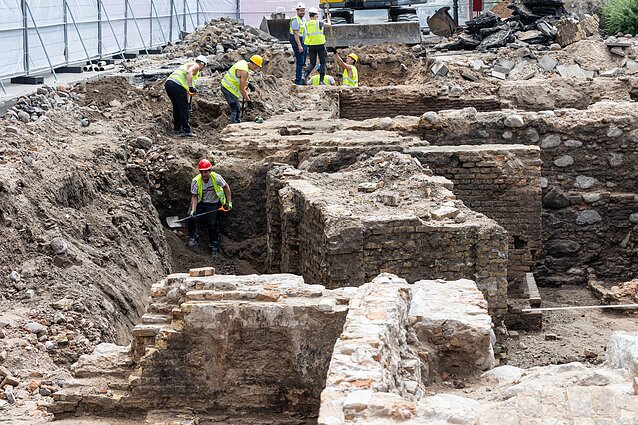
According to Karčiauskas, the beginning of the project was poorly handled: “Walls considered of no value were demolished, yet saying they’re worthless, given the city's history, is bold. That kind of statement reflects a very narrow archaeological perspective.”
“Excavator archaeology means working not with a trowel, as archaeologists should, but with an excavator. Unfortunately, that’s how it started. Using machinery is not wrong – it’s done across the city – but this particular case began with demolishing walls. I recorded that. That’s the problem. Maybe things have improved now, but no one has acknowledged that the start was unsuccessful, because supposedly valueless walls were torn down,” he said.
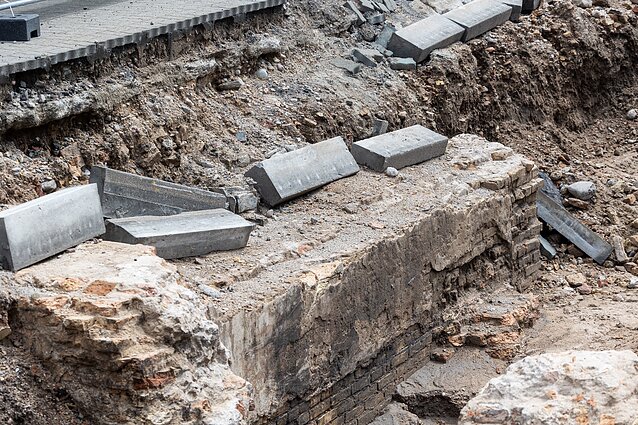
Dobeikienė highlighted that she was speaking about the archaeological layer, not the masonry itself. She insisted that nothing had been destroyed during their work.
“I don’t assess the value of masonry – that’s not my field. As for the excavator use – I understand how it may appear destructive from the outside, but the demolished buildings had already been buried under the rubble of previous structures. It may look like we’re destroying something, but that’s not the case. In fact, during the Soviet era, utility lines were installed in those areas, and the masonry was partly damaged then – not by us,” she explained.
The Vokiečių Street reconstruction will proceed in phases, with traffic restrictions in place. Completion is scheduled for the end of next year.

Newsletter
Every Friday morning.