









The Contemporary Art Centre (ŠMC) in Vilnius has opened its summer exhibition season with a show exploring the enduring scars left by repressive regimes. The exhibition also features Lithuanian artist Gerda Paliušytė’s photographic reflections on resilience in the face of external forces.
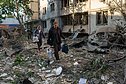
The exhibition, Walls Are Nocturnal Animals, was originally presented in Paris last year as part of the Lithuanian Season, a cultural programme celebrating Lithuanian art, music, and literature across France. It brought together artists from Lithuania and Ukraine to reflect on the geopolitical chaos triggered by Russia’s war in Ukraine.
Now reimagined for Vilnius, the exhibition expands its scope, adding new voices from abroad. The exhibition focuses on the emotional and environmental impact of occupations, the legacy of oppressive systems, and the ongoing threat of invasion.
“In Vilnius, we decided to extend the conversation started in France by including artists from different countries. This allowed us to see that the consequences of the war in Ukraine are international in scope, and what is happening there now resonates with past events elsewhere in the world,” said curator Emilie Villez.

Artists from 17 countries with histories of repressive regimes – including Romania, China, Cambodia, India, Costa Rica and Guatemala – examine difficult pasts, current realities and imagined futures. Works by Lithuanian artists are also featured in the exhibition.
“A significant aspect is the role of distance,” said co-curator Neringa Bumblienė. “Many of the artists speak about events they did not personally experience, but which their families or past generations did. Memory plays a key role – these events are not reproduced directly, but through remembrance, and memory always comes with a degree of distortion and reinterpretation.”
The international artworks on display come from the Kadist collection, based in France and the United States, which houses over 2,000 contemporary works including video art, photography, and installations.

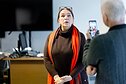
The ŠMC summer cycle also features the first solo institutional exhibition by Lithuanian artist Gerda Paliušytė, who meditates on resistance and resilience. Her photographic series features white orchid blooms that have emerged after the petals of blue-dyed flowers have fallen – the blue created through artificial injection.
“The dye fades over time, and the blue flower, if it’s dyed, does not remain blue. Rose petals fall off, orchids shed their blossoms, and new ones grow pure white,” Paliušytė explained. “This series is also titled Blue Flowers, but what you see here is the flower after its transformation – macro images, macro photography, a way of trying to get as close as possible to the bloom.”
To capture a flower's transformation, she photographed the same flower for several years.
“It was important for me to document the moment of change and transformation. I came to understand that the time spent with what I’m photographing becomes very important – through attention and observation, you can capture processes of change that otherwise go unnoticed.”
The summer exhibition series at the Contemporary Art Centre in Vilnius will run until mid-September.

Newsletter
Every Friday morning.