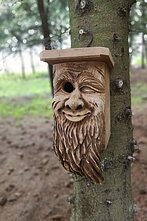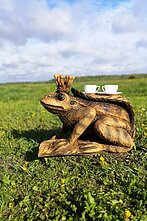






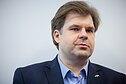








For Vidas Nugaras, woodcarving is more than a pastime – it’s a daily ritual, a source of peace, and a calling he discovered almost by accident.
Every evening after work, Vidas looks forward to sitting at his kitchen table, carving knife in hand, and whittling a piece of wood into something small and meaningful. What began as a practical solution on a construction site abroad has grown into a deeply personal craft that now defines his free time – and increasingly, his reputation.
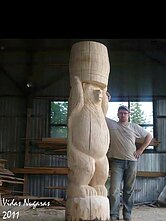
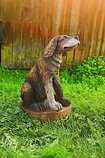
“I was working in Norway, building wooden houses,” Vidas recalled. “One day, the guy who was supposed to carve two decorative columns with bears holding barrels disappeared. I decided to try it myself – just using a chainsaw, grinder, and chisel, working off a picture. I didn’t even have Facebook or YouTube back then.”
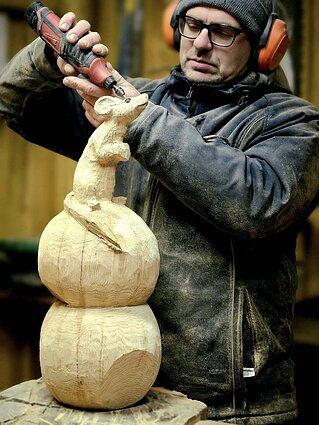
To his surprise, the project turned out well. Encouraged, he started carving smaller bears and other figures. At first, more experienced woodworkers were reluctant to share tips, but online tutorials later helped him refine his skills.
Now back in Vilnius, Vidas works weekdays at a tool store, sharpening and repairing equipment. On weekends, he escapes to his countryside property in Ukmergė District to carve larger sculptures. But even at home in the city, he finds it impossible to resist the urge. Without access to power tools in his apartment, he carves miniature figures with hand tools in his kitchen – often late into the night.
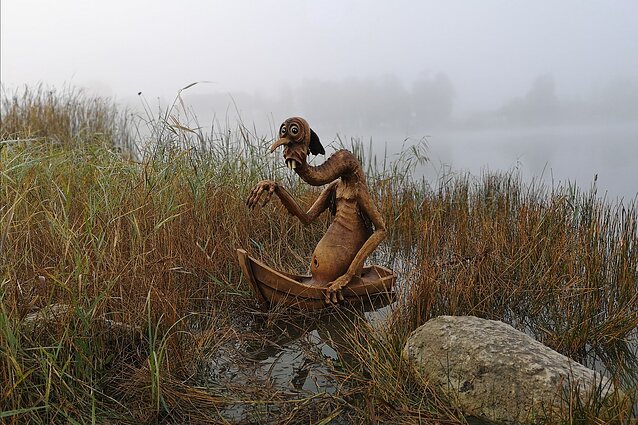
“It’s like playing a mobile game,” he said. “Once you start, you can’t stop.”
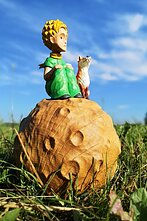
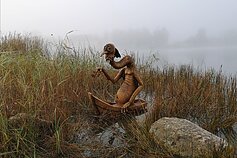
Among the gnomes and little characters Vidas creates, one figure stands out – Antoine de Saint-Exupéry’s The Little Prince. He began carving the beloved character when inspiration ran dry and typical folk motifs like angels and sorrowful saints no longer appealed to him.
“The Little Prince is such a warm and expressive character,” Vidas said. And people really respond to it – especially children.

Vidas has carved at least five small and several larger versions of the character, each slightly different. Some hold a fox, others a rose or a moon. One sculpture even won him a prize at a chainsaw carving competition in Akademija, near Kaunas.
Asked if he was particularly moved by the book, he didn’t hesitate: “That book is like a Bible – full of life lessons.”
Despite growing popularity, Vidas avoids selling at fairs or setting up an online store. Instead, buyers often find him through social media, especially Facebook.

“Whenever I post a piece, someone usually wants to buy it,” he said. “If no one does, I just think I’ll keep it for myself. But I still don’t have anything at home – everything gets picked up.”
One small Little Prince statue lives on his wife’s desk at school; another was spotted in a TV report on a Vilnius University rector’s office – a gift from colleagues. Larger versions often find homes in countryside estates used for events or educational activities.
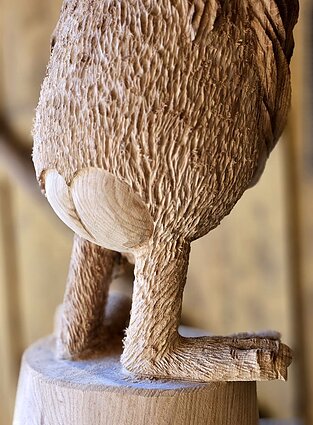
Still, Vidas has no plans to turn carving into a full-time job lest it becomes a chore. “If I carved all day every day, I might lose the joy in it.”
Instead, he balances his passion with other tasks, like mowing the lawn at the countryside house, and finds fulfilment in variety.
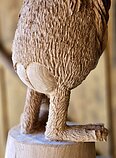
Ironically, the smaller the carving, the more time it takes. You have to play around for with the tiny ones much longer, he said, because every detail matters.
And so, night after night, Vidas returns to his favourite corner of the kitchen, where a block of wood slowly transforms into something magical – a small reminder that beauty can be carved from the simplest moments.


Newsletter
Every Friday morning.