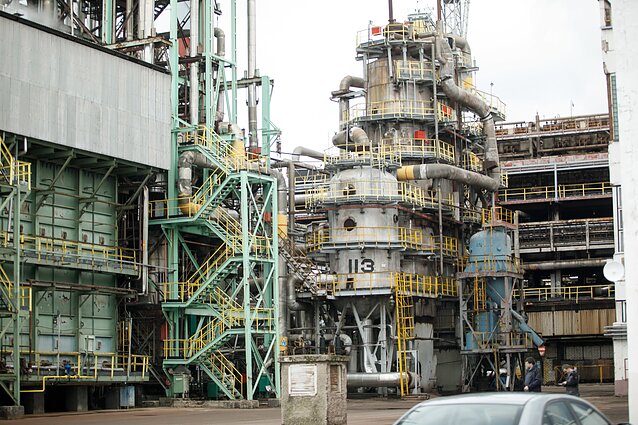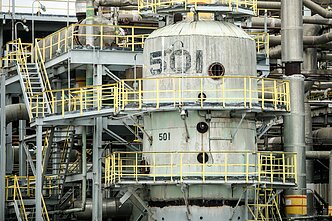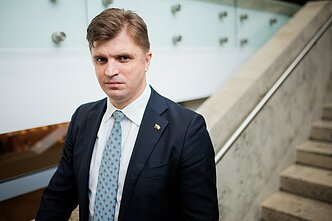











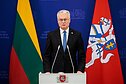

It would make sense to at least partially nationalise Lithuania’s biggest fertiliser producer Achema, suggests MP Giedrimas Jeglinskas amid talks that the struggling plant could be converted for explosives production.
“We see various interests regarding Achema [...] looking at the whole sphere of explosives and the defence industry in general, and it is certainly logical to consider that it should become at least partly a national company,” Jeglinskas, who chairs the parliamentary National Security and Defence Committee, said in an interview with the business daily vz.lt on Monday.
The government should consider buying out the shares of Achema from minority shareholders or the group’s main shareholder, Lyda Lubienė, he said.

Earlier in the day, Prime Minister Gintautas Paluckas met with Achema representatives and said that the Jonava-based facility could be involved in the production of explosives in Lithuania. However, the prime minister said the acquisition of a majority stake in the company was not discussed during the Monday meeting.
Gearing chemical industry towards military production
Vidmantas Janulevicius, president of the Lithuanian Confederation of Industrialists, has earlier suggested that some of the country’s large chemical companies could be reoriented towards the production of explosives.
Lithuania has two large chemical companies – Achema and Kėdainiai-based phosphate fertiliser maker Lifosa. The latter is currently under the supervision of a temporary state-appointed administrator due to the sanctions imposed on Russia.
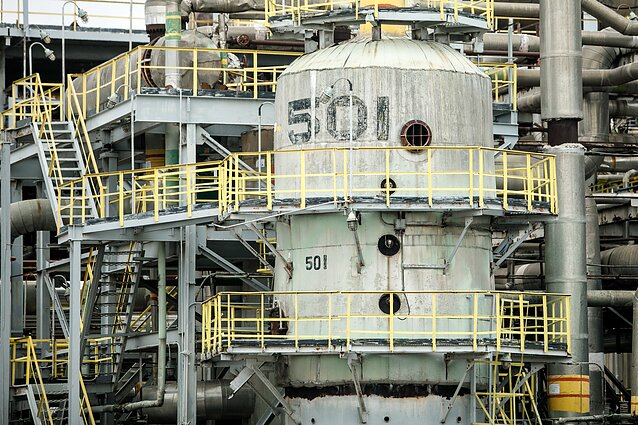
In her interview with BNS in December, Achema CEO Audronė Kuskytė said that the company was considering the production of explosives and was carrying out a feasibility study and market analysis.
However, she said, regulation in Europe and Lithuania is not yet in place for explosives production.
Last week, Achema said it was planning to temporarily halt the production of ammonia due to the high volatility of natural gas prices in Europe and the influx of cheap products from third countries.
Since late 2021, the company’s plant has not been operating at full capacity due to challenges in the natural gas and fertiliser markets.
Kuskytė told BNS in an interview last December that Achema expected to be fully operational and profitable in 2026, when the EU introduces an emissions tax on importers from third countries.

Newsletter
Every Friday morning.