











Lithuanian President Gitanas Nausėda says he is “not too optimistic” that EU countries will manage to agree on joint borrowing for military spending, citing scepticism from member states farther away from Russia.
“We see a different perspective from countries focused on stability or minimal budget deficits, so I wouldn’t be too optimistic on this issue today,” Nausėda told LRT after the European Council’s meeting in Brussels on Monday.
The president noted a clear division between the Baltic states and Poland on one side and other EU countries farther from Russia on the other, with the latter being more cautious about joint borrowing for defence.
According to Nausėda, EU leaders discussed potential instruments for joint European borrowing during the meeting.
“Perhaps we recall certain financial instruments developed during the pandemic or even earlier, during the 2008–2009 financial crisis,” he said.
Earlier on Monday, Nausėda emphasised in Brussels the need to make decisions on defence funding instruments at the EU level immediately, without waiting for the bloc’s new multiannual budget.

The president said that the EU should adopt decisions on joint borrowing for military needs and take a more flexible approach to budget deficits caused by borrowing for defence. He also supports expanding the European Investment Bank’s mandate.
Lithuania is seeking joint borrowing to step up defence funding. The president-chaired State Defence Council in January set a target of spending of 5–6 percent of GDP on the military from 2026 to 2030 to develop Lithuania’s national military division.
With the White House saying that NATO countries should spend 5 percent of their GDP on defence, some European countries have indicated that this would be an economic burden. However, countries on NATO’s eastern flank, including Lithuania, are enthusiastic about significantly boosting military spending.
Finance minister: the EIB should finance military infrastructure
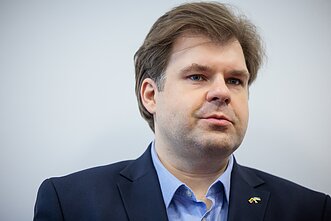
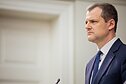
The European Investment Bank could partly finance defence and security infrastructure projects in Lithuania, including military campuses and military mobility projects, Finance Minister Rimantas Šadžius says.
He made the comments after his meeting with EIB President Nadia Calvino in Luxembourg on Monday, the Finance Ministry said.

“We need to seek to expand the EIB’s investment policy in the field of security and defence. We need to do this in a prudent way, while preserving the bank’s financial sustainability. We discussed with the EIB president the possibilities to contribute to the development of Lithuania’s defence and security infrastructure, including military campuses and military mobility projects,” Šadžius was quoted in the statement.
The minister also stressed that Lithuania is currently in particular need of the EIB’s investments in the development of military mobility and security infrastructure projects.
“Moreover, the EIB is the EU’s climate bank, and the transition to a green economy is essential in the current geopolitical context to achieve energy independence,” the Lithuanian finance minister added.
In his words, the green transformation, including further financing of the renovation of apartment buildings, should be one of the priority areas of cooperation between Lithuania and the EIB.

Newsletter
Every Friday morning.