




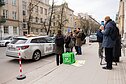









As European countries introduce increasingly strict rules on mobile phones in schools, Lithuania is not planning universal bans. Nor are there any common guidelines on whether schools should bar phones from classrooms or integrate them into teaching. Schools make their own decisions – some see harm in phones, others see benefits.
Students at the Hero School in Kaunas don’t just bring textbooks to literature classes, but also laptops. However, they have to leave their mobile phones in a box before classes begin and can take them back only before heading home. This is the ninth year of the school’s policy.
“We try to show them that this [mobile phone use] is a hard-to-see but serious addiction to fight. The second thing is that it is a distraction during the education process,” says Dovilė Pelegrimė, founder of the Hero School.
Restricting the use of mobile phones, she adds, helps children develop habits of being technology-free and communicating face to face.
“For a young person, it’s a very important thing, and at the beginning it might feel awkward,” she says, but the phones are never put out of sight: they’re in a box where kids can see them.

By contrast, in Kaunas Saulės Gymnasium, phones are near the students even during lessons. The school does not impose any restrictions, even encourages their use for completing tasks.
“They are almost adults, 15-19 years old, and we have agreements, they are conscious individuals. They use their phones in the educational process, for assessment, self-evaluations, tests,” says Sonata Drazdavičienė.
UNESCO's Global Monitoring Report on Education also recommends using phones in the classroom only when they are needed for learning. In Latvia, phones will be banned for students in grades 1–6 from this spring. Mobile phones have been banned in schools in the Netherlands since last year, and bans have already been adopted in Italy and France.
In Lithuania, the decisions have been left to each school.

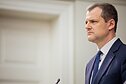
“If we see a widespread demand and schools struggling to set their own rules, then we will propose common rules that schools can use. At the moment, there is no such need,” said Education Minister Raminta Popovienė.
Medical experts say that spending a lot of time in front of screens reduces concentration, makes it difficult to plan activities and control emotions.
“If a person is exposed to screens very early – in the first, second, third year of their life – there appear signs that are reminiscent of autism, there’s even the term ‘screen autism’, children start to behave like they’re autistic, they can’t concentrate, they’re very impulsive,” notes Dr Indrė Bakanienė, head of the Child Rehabilitation Clinic in Kaunas.

Ilona Tandzegolskienė-Bielaglovė, researcher at Vytautas Magnus University (VDU) in Kaunas, agrees that phones are a distraction, but studies carried out in schools show that bans do not always work. Around one in five students say they still use their phones during lessons despite the bans.
“We should look for a solution that suits both sides. It would entail defining certain zones where students can use their phones, during breaks, specific lessons during which mobile phones can be used,” says Tandzegolskienė-Bielaglovė, deputy chancellor of the VDU Academy of Education.
The Lithuanian parliament drafted a proposal to oblige schools to draw up rules on mobile phone use back in 2022, but it was voted down.

Newsletter
Every Friday morning.