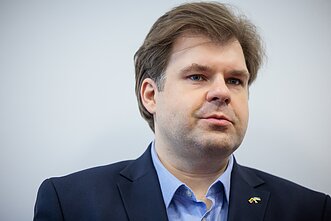












White Christmas is now a rarity in Lithuania – in Vilnius, for example, winter holidays have been snowless 11 out of the past 20 years. “Although things would always vary, it’s true that winters used to be colder and snowier in the past,” says Gytis Valaika, a meteorologist at the Lithuanian Hydrometeorological Service.
The last time we saw an extremely cold winter was 29 years ago, in 1995–1996, when temperatures dropped below zero already in November. That year, winter lasted five months, until March.
“Nowadays, winters are usually not consistently cold, with snow forming and disappearing more than once a winter. Over the last 10 years, almost all winters have been warm or very warm, and there are very few very cold days throughout the winter,” says Valaika.
To find a winter in Lithuania when the temperature dropped below -30 degrees, you would have to go back to February 2012.

“So, we have been living without deep freeze for almost 13 years now,” the meteorologist points out.
According to the Lithuanian Hydrometeorological Service, the winter of 2019–2020 was the warmest on record. In meteorological terms, there was no winter at all.
Shorter and warmer winters
Weather data is not encouraging – the planet is warming rapidly due to greenhouse gases. While Lithuania is mostly spared disastrous weather events, climate change affects the country too.
“Global climate change has no borders [...], this phenomenon is also changing Lithuania’s climate: winters are getting shorter and only intermittently cold, there are more periods without or with little snow,” says Valaika.
Observational data also shows the change in temperature: in Vilnius, the average temperature during the Christmas period was -2.7 C in the period 1991–2024. Over the past decade (2015–2024), it was more than three degrees higher, or 0.5 C.

“In my estimates, the number of days with snow cover in Vilnius region has decreased by about 30 days in the last 70 years,” says climatologist Egidijus Rimkus.
In particular, he adds, March used to be snowy but is not anymore.
“In the past, the snow cover used to form in mid-December, a little later in the west [of Lithuania] and a little earlier in the east, but in the last few decades we have had winters where the snow cover only forms at the beginning of January, if ever,” the climatologist says.
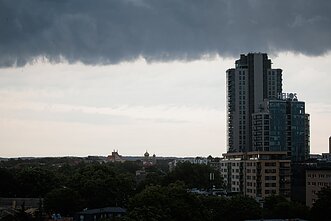
Warmer winters mean not only less snow but also more weather events that may be unusual for the winter season. In early December, a thunderstorm caught Lithuanians by surprise.

“Thunderstorms require very watery air masses to form, which are quite warm and unusual for the winter months. Without a doubt, the frequency and likelihood of thunderstorms in winter will only increase in the future,” says Rimkus.
Even in the past, winters have not been evenly cold, and deviations from the average temperature are perfectly normal, notes Valaika.
“There have always been and there will be some variations from year to year. Some winters are a little colder, others warmer, this is normal. But the trend should be noted, and it clearly shows that winters have warmed up considerably, especially in the 21st century,” according to Valaika.
“The Baltic Sea freezing over off the Lithuanian coast has become a rare exotic event, whereas before, there have been years when you couldn’t even see the water from the beach, only a desert of ice,” says Valaika.

However, winters will not disappear completely, as Lithuania will not change its latitude, scientists say. “The cold and dark seasons will not turn into summer and we will not grow bananas in Lithuania. We will simply experience more of the cold and grey weather of November or March in winter.
“In meteorology, the period when it’s no longer autumn but not yet winter is called pre-winter. Climate change could mean five months of November weather, eventually leading to November weather lasting as long as five months, that is, mild winters like the ones in Western Europe,” the meteorologist concludes.

Newsletter
Every Friday morning.