












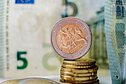


Lithuania adopted the euro a decade ago on January 1, 2015. Here’s what the experts had to say about it.
“We did a cost-benefit analysis before the euro introduction [and everything] has worked as roughly forecast,” Vitas Vasiliauskas, who headed the central Bank of Lithuania when the euro was introduced, told BNS on Thursday.
The euro had existed de facto in Lithuania after the litas, the country’s national currency, was pegged to the euro in 2022. Adopting the currency in 2015 allowed Lithuania to partake in the monetary policy-making of the euro area.
“Borrowing costs have fallen, as the currency exchange risk is gone. Since we joined the eurozone, borrowing has become cheaper for the state, businesses and individuals. This, of course, has given the state credibility,” Vasiliauskas said.
Further reading
It also had a psychological effect on the investors, according to economist Algirdas Bartkus.
“Many people start to see us as a more reliable country and are more willing to lend more and more cheaply, which translates into lower interest rates,” he said. “It has become much easier to do for companies and citizens who have some credit obligations.”
Lithuania was fourth in the EU in terms of average price growth rate for 2014–2024, Bartkus said. The country’s participation in the eurozone's common monetary policy has allowed it to avoid even higher inflation and the more severe consequences of the 2022–2023 energy crisis, he added.
“If we had not had the euro, we would not have had the 50 percent [decadal average inflation]. We would have had 70 percent, like the Hungarians, and maybe even more, because the Hungarians had cheap Russian energy resources, and we would not have taken them, of course, for political reasons,” Bartkus said.
The two experts disagree that the introduction of the euro in 2015 has led to a significant price increase.
“We expected some increase in prices [after the euro introduction],” Vasiliauskas said. “In my opinion, the currency change has nothing to do with inflation.”
Despite the jump in prices, the purchasing power of the country's population has increased by around 70 percent over the decade, Bartkus said.
“The euro as a currency is very useful for small countries like ours, which do not have A to Z production of goods and energy resources,” he added.

Newsletter
Every Friday morning.