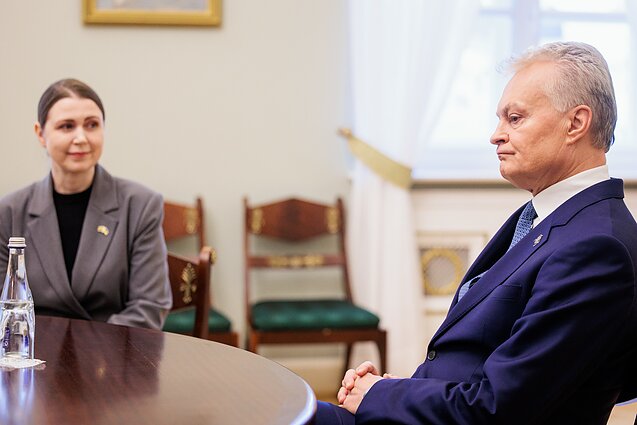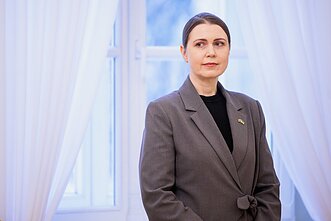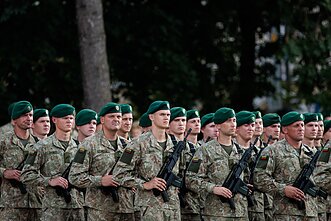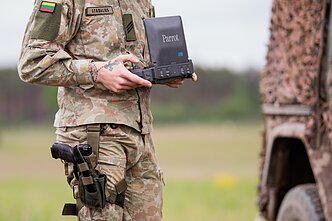














Developing a division within the Lithuanian armed forces by 2030 will be the key task for the next defence minister, a presidential adviser said on Friday after President Gitanas Nausėda met with Dovile Šakalienė, the candidate for defence minister.
“The division by 2030 is the number one priority,” presidential adviser Frederikas Jansonas told reporters. “[Doing it by] 2040 or 2036 is not OK.”
To make it happen sooner, Lithuania needs to substantially increase defence funding over the next six years, he said. The president and Šakalienė discussed the possibility of increasing defence spending to at least 3.5 percent of GDP in the 2025 budget.
The current 2025 budget bill includes 3.03 percent of GDP in military spending, but Prime Minister-designate Gintautas Paluckas has vowed to review the budget in the first half of next year.
Šakalienė believes that the currently proposed defence funding does not meet Lithuania’s needs, saying that 3.5 percent of GDP is the “floor”.

“This means that we need to have significantly higher amounts and soon enough, but in this case, first of all, we need to find at least the 3.5 percent as soon as possible for 2025 in the first half of the year, and we need to look for higher sums. Otherwise, I don’t know what we are preparing that division for, the enemy?” the Social Democrat politician said.
Calls for further military spending increases after a State Defence Council meeting a few weeks ago, when officials said that, with current funding levels, Lithuania could have a military division at full capacity no earlier than 2036–2040.
The government’s ambition is to have the division in the armed forces by 2030.
Lithuania currently spends around 2.5 billion euros, or 3.2 percent of its GDP, on defence.
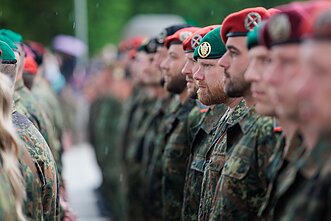
According to Jansonas, the first task of the new defence minister will be to get ready to receive the German brigade by 2027.
Šakalienė said the brigade must be in Lithuania on time, as agreed with the Germans.
“Those delays, which are already evident now, will have to be addressed, they will have to be sorted out,” she said.
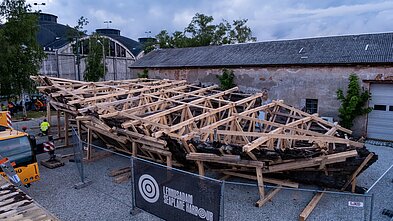
Nausėda said last week that preparations in Lithuania to receive the German brigade could be delayed, adding that the construction of the infrastructure need for the German brigade is somewhat stalling.
“The vision for how they [the delays] will be sorted out has not been very visible either,” Šakalienė said.

Newsletter
Every Friday morning.