










Delta Biosciences, a Lithuanian life sciences company, has been selected for NASA’s Space Healthcare Programme. The company will contribute to solutions in space healthcare.
The company’s spokesman talks about the benefits of its research on Earth and in space in LRT KLASIKA’s programme Bright Future.
A few years ago, Delta Biosciences started to develop an accelerated molecular research system, which allowed it to carry out 260,000 different experiments per hour, compared to the normal rate of about 20,000.
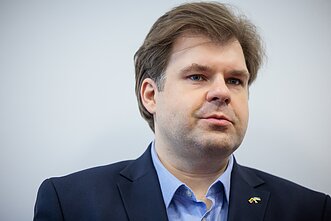
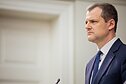
According to Dominykas Milašius, co-founder of Delta Biosciences, the system helps to discover more quickly certain chemical molecules that can protect astronauts from space radiation, for example in the development of space-specific medicines.
“The principles of research into protecting astronauts from space radiation are similar to research on cancer patients who go through radiation therapy and then have to rebuild their immunity. We have found common points,” he says.

According to Eglė Elena Šataitė, Head of Space at the Innovation Agency, researching healthcare in space can offer valuable knowledge to be applied on Earth.
“Both NASA and the European Space Agency (ESA) are talking about a mission to the Moon. [...] We have identified that we have strong researchers and well-functioning companies, which we encourage to develop solutions in the space sector as well. [...]
“ESA membership is a matter of great prestige. For Lithuania to survive in the international arena, it must develop solutions and show them to the world,” says Šataitė.
Hotels in space
According to Milašius, working with the European Space Agency is a fast track to the space industry. It is also an area that is gaining in importance and interest. Milašius notes that as early as 2030, private companies from all over the world may have their own space stations, and within five years the first space hotel could be built.
“When we have a hotel in space, we need a first aid kit, because ordinary drugs we have on Earth do not always work in space. For example, antibiotics have a very strange effect – we’ve had one astronaut for whom antibiotics did not work when he returned from space. We do not know why.
“Aspirin and about 40 percent of other medications have a much shorter shelf life [in space] than on Earth. We do not know why. Probably gravity or space radiation. We need to look for reasons, solutions and how to make Earth’s drugs work in space, or to incorporate the logic of space drugs into the development of new drugs,” says Milašius.
Selfie cameras and wireless headphones are just some of the technologies we use in our daily lives that were developed by NASA scientists for different purposes. Delta Biosciences’ research into medicines for the space industry should also contribute to solutions for everyday life, says Milašius.
“We hope that our company will contribute to more effective cancer research applications, help people in civil aviation as they are exposed to higher radiation doses. People who fight radiation on the ground, ie rapid response teams, and protect us from different risks,” he says.

Ongoing research
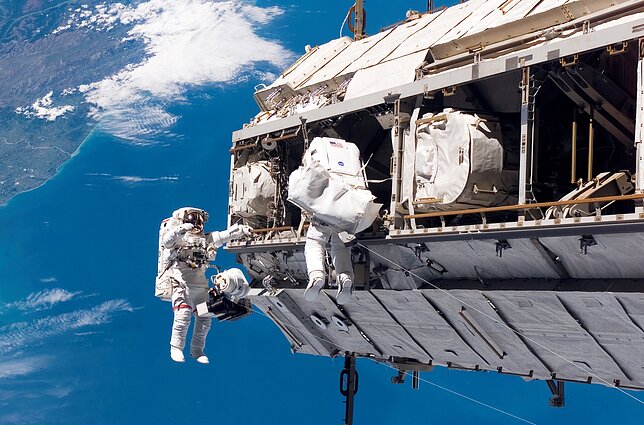
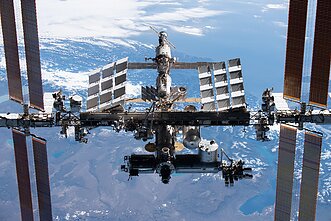
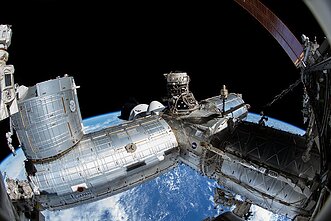
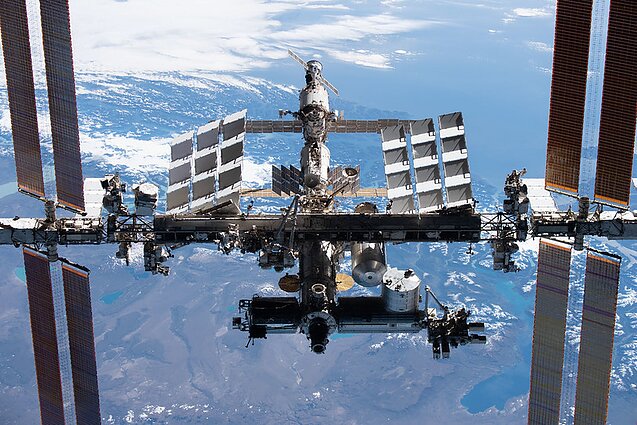
Delta Biosciences is currently working on an experiment on the International Space Station to test how drugs work in space and what is needed to make the substances in them last better.
“For example, if we want to do a mission to Mars, we need to have aspirin that lasts for two years. We don’t have that today. This is a specific need from NASA and the ESA. Our contract with the ESA has allowed us to look at 200 different chemical molecules that are already being used to treat cancer or boost immunity.
“First, these molecules are ‘broken down’ into many different pieces, then we study which pieces work and which do not. These are translated into new formulas, from which we choose a few to put into a dual testing base. One will be on Earth, where we will test on animal models and conduct clinical trials, and the other will be in space,” says Milašius.
According to him, Lithuania is already seen abroad as a space-faring nation. “If you go to Milan, London or Brussels, Lithuania is already being talked about as a space country,” Milašius concludes.

Newsletter
Every Friday morning.