












LRT English Newsletter – October 4, 2024
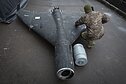
Is it just hot air or a serious threat? This week, Lithuanian politicians and institutions were preoccupied with balloons. Apparently, smugglers have been using weather balloons – intended for collecting meteorological data higher up in the atmosphere – to transport contraband cigarettes from Belarus to Lithuania. One fell down in Vilnius Airport last weekend, one more landed in a military facility. Smuggling is bad enough, but could weather balloons be used for spying? Dropping bombs? Pose threats to aviation?
Most importantly, who should be dealing with it? The defence minister suggested it should not be the military but border guards. The latter say they have neither the equipment nor authorisation to start shooting objects in the sky. Meanwhile, the military commented that shooting down balloons in peacetime would be a little extreme.
Nevertheless, the government has decided to table legislation allowing border guards and public security servicemen to take down smuggler balloons.
LITHUANIAN ONLY
The Lithuanian parliament passed legislation requiring that all customer-servicing foreign workers speak Lithuanian.
To be sure, the rule had applied to most workers even before: employers had to make sure that their employees could service customers in the official language. However, this left out the self-employed, such as foreign taxi drivers and food couriers working for platforms. It is mostly for them that the new law – which will come into force in January – was made.
IN THE MIDDLE
Scores of sociologists and economists have laboured over the question of how our societies are stratified and what makes one part of the “middle class”. A survey, commissioned by Swedbank, has asked respondents to self-identify, and 51 percent said they thought of themselves as middle-class. That represents a gradual decline since 2020 when 59 percent put themselves in the category.
What do people think makes them middle-class? Most said home ownership – and going for holidays abroad.
LUKASHENKO TO THE HAGUE?
The Lithuanian government has asked the International Criminal Court to start an investigation into what it believes to be crimes against humanity committed by the Belarusian government of Alexander Lukashenko. These include forced deportations, persecution of supporters of the opposition and other instances of cruel treatment.
More than 60,000 Belarusians are currently living in Lithuania, most of them came after the 2020 protests against Lukashenko that were met with fierce violence and suppression from the government.
PROSPECTIVE FOREIGN POLICIES
With a little more than a week left until Lithuania’s parliamentary elections, three scholars from Vilnius University’s Institute of International Relations and Political Science (TSPMI) take a look at the proposed foreign policy directions of the key parties seeking to lead the country’s next government.
EDITOR’S PICKS
– In order to promote electric vehicles, Lithuania installed several dozen free charging stations along the main highways five years ago. But as free electricity came to an end this month, how will it affect consumer preferences?
– We are now in the second Cold War, with only one difference from the first one: China has replaced the Soviet Union as the other pole to the United States. So says British historian Niall Ferguson in an interview with LRT.lt.
– A payment card, cash withdrawals from ATMs, and access to online banking tools are some of the basic services that commercial banks operating in Lithuania must provide for their customers at a fixed price. As Lithuania’s banking regulator is expanding this basic plan, banks are calling it “planned economy”. But do they have a point?
– Tomas Kurapkaitis, a social worker who works with young people on the street, has earned the nickname of the Point. Tomas is an unconventional social worker: he is the one who gets out of his comfort zone and tries to help teenagers who have persistent problems, don’t go to school, don’t listen to their parents, or just don’t know what to do with their lives.
– Last year, 267 new cases of HIV were registered in Lithuania. This is significantly more than in 2021 when 121 cases were diagnosed. Apparently, many new cases are refugees from Ukraine which is classified as a high HIV prevalence country.
– Only three of Lithuania’s elected MEPs have decided to move to Brussels, the other eight say they are only coming for the sittings while keeping permanent residence in Lithuania. Why won’t they move the capital of Europe?
Written by Justinas Šuliokas
Edited by Ieva Žvinakytė
Would you like to contribute to LRT English? Please send your suggestions, submissions, and pitches to english@lrt.lt

Newsletter
Every Friday morning.