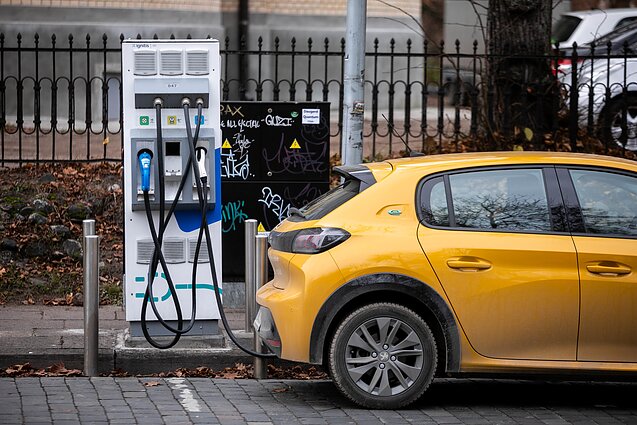















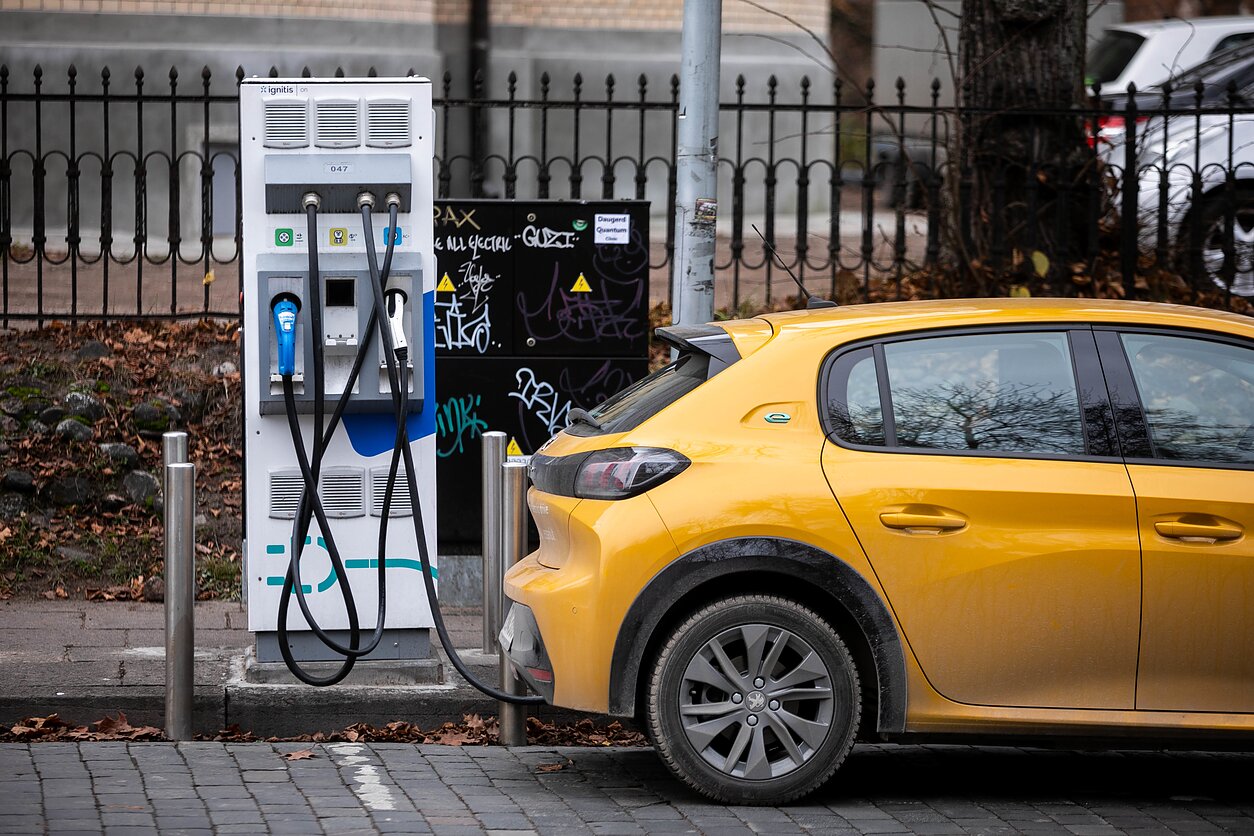
In order to promote electric vehicles, Lithuania installed several dozen free charging stations along the main highways five years ago. But as free electricity came to an end this month, how will it affect consumer preferences?
Gintaras Tamošiūnas, a resident of Vilnius, has been driving an electric car for six years. He says he decided to buy it not because of its cost-effectiveness, but out of curiosity – he has always been interested in innovation. But the running costs are also worth it, especially if one can charge the car at home during the night, when the rates are lower.
“I try to charge only at night, because, naturally, everyone’s asleep and it’s really cost-effective,” he tells LRT TV. “In summer, driving 100 km can cost me around 4 euros.”
It makes sense to have an electric car if one can charge it at home and mainly uses it for getting around within the city, says Tamošiūnas.
Meanwhile, plugging a car into public charging stations is too expensive, he believes. And the free stations, which were installed around the country to promote transition to electric cars, usually require waiting in queues.
“I have charged on motorways a few times but I used paid [stations]. Standing in a queue and waiting for an hour or more for your 30-minute slot – that’s enough to drive 100 km – doesn’t really make the journey any more enjoyable,” says Tamošiūnas.
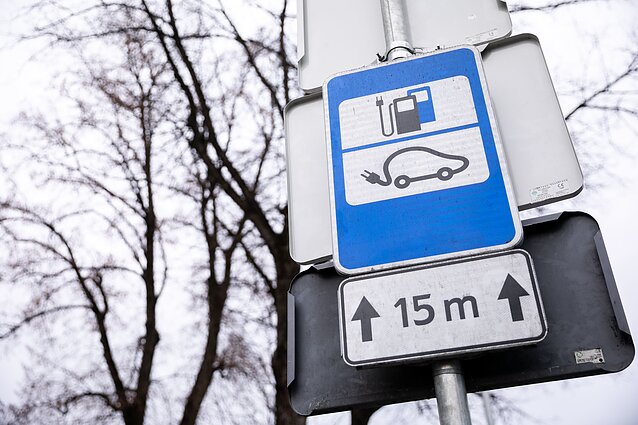
Until this September, there were 27 free charging stations spread along the country’s main motorways. were operating on motorways. They are here to stay but no longer for free.
“The Via Lietuva network was installed with European funds, so there was an obligation to provide these services free of charge for five years,” explained Eduardas Kakura, Head of the Via Lietuva Service Group.
Energy consultant Martynas Nagevičius welcomes the decision to abolish free electricity.
“Free charging simply distorts the market and prevents the emergence of other providers,” he argues.
According to Nagevičius, more charging stations will now appear not only in urban centres, but also on motorways.
But the density of the network is not the only issue, stresses Lineta Ramonienė, associate professor at ISM University. There’s also the cost, as her study has shown.

“For electric vehicle drivers, price is not the most important factor when they buy or plan to buy a car, but once they have bought it, they want to save money,” says Ramonienė.
According to the study, the decision to scrap free charging stations could have a negative impact on the growth of electric car use, as some drivers may decide against switching from gas-powered vehicles.
“At the moment in Lithuania, we have some incentives for purchasing an electric car, but there are no longer any incentives when it comes to charging an electric car. And this is where all sorts of questions start to arise in the consumer’s mind,” says Ramonienė.

The previously free Via Lietuva charging stations are now offering electricity at 46 cents per kilowatt-hour, more than twice the household electricity rates (two-and-a-half times the night rates).
Kakura says the price is justified by actual costs. “Most of it covers electricity, transmission, power charges, infrastructure maintenance, and provision of the service,” he says.
Energy consultant Nagevičius says the price is too high but hopes that competition will bring it down. “It would be very good if the price of public charging stations for electric cars could be no more than 30-50 percent above the price of electricity at home,” he says.
He estimates that rates between 20 and 30 cents per kilowatt-hour at public charging stations would be an attractive price.

Newsletter
Every Friday morning.