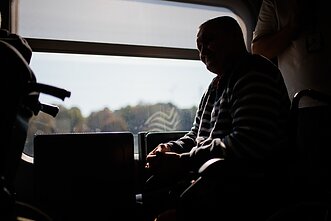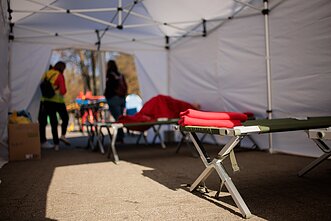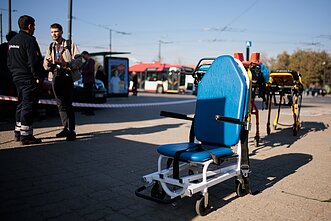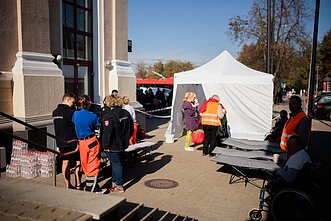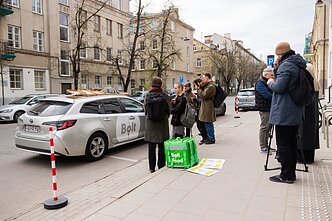


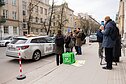







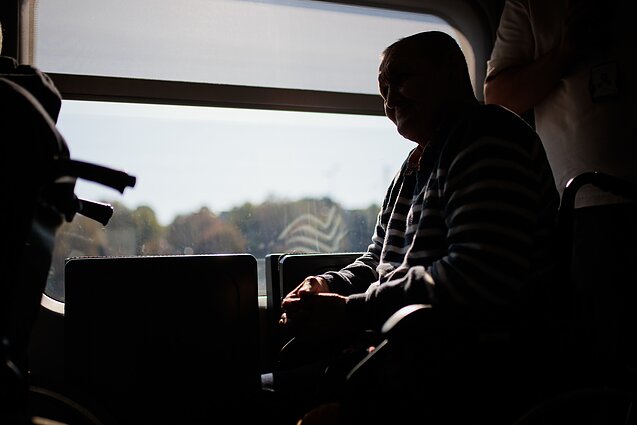
Lithuania has held its first-ever evacuation drill for people with disabilities and other vulnerable groups by train as part of the wider bid to test the country’s mobilisation system.
For the first time, people with real disabilities and residents of care homes, rather than extras, took part in this type of exercise.
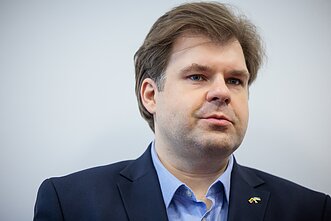
“Our aim was to test the system because there has never been an exercise in Lithuania involving people with real disabilities, be it movement disabilities or other conditions. It is very important for us to test whether we are capable of doing so and whether we have the equipment and the people, the staff, to do that,” Vilmantas Vitkauskas, who leads the National Crisis Management Centre, told reporters on Tuesday.
A total of 160 people took part in this part of the exercise.
According to Vitkauskas, there are about 2,000 people with disabilities in Vilnius who would need to be evacuated this way.
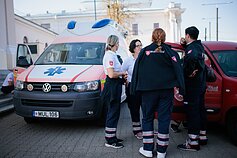
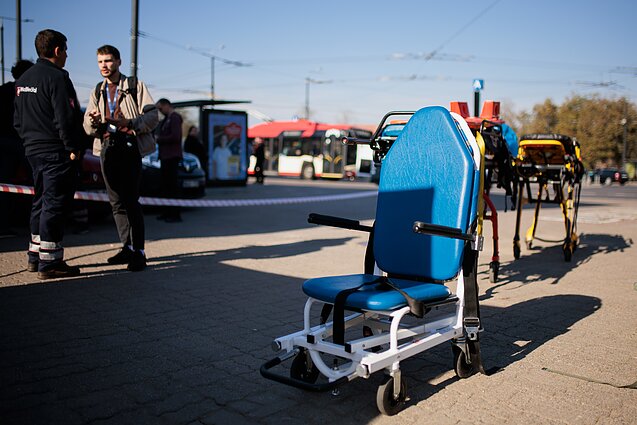
Meanwhile, Justinas Vasiliauskas, a representative of the Order of Malta Relief Organization, said that the role of the organisation’s members in a crisis would be to help the disabled and the sick to get to trains, and also to provide water and some food.
“Everything went quite smoothly, as smoothly as it can go,” Vasiliauskas described the exercise, adding that 22 members of the Order of Malta Relief Organization took part in the exercise.
The organisation has a total of about 1,500 members. In case of crisis, several hundred volunteers would be deployed.
Gediminas Seckus, chief resilience officer at Lietuvos Geležinkeliai (Lithuanian Railways, LTG), says this is the fifth year that LTG has participated in the exercise to increase the preparedness of its staff for crisis situations.
“Our staff is ready to take Lithuanian citizens out of areas where evacuation would be needed. [...] Today, more than 5,000 LTG staff members are familiar with mobilisation matters and are ready for unexpected events,” he said.
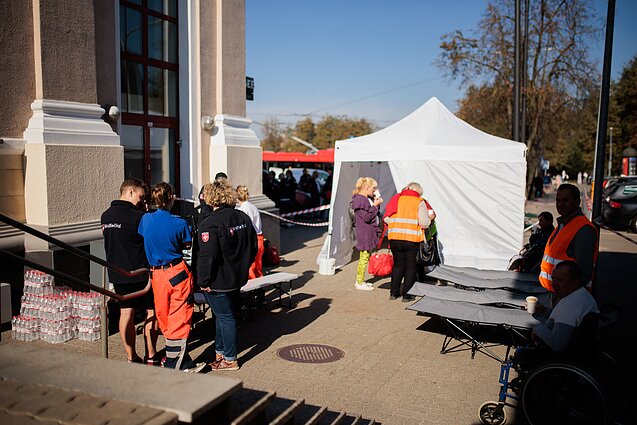
The exercise started on Monday and will run until Thursday. Its main objective is to assess the mobilisation system, and how the country would regroup and use resources in preparation for self-defence and how vital functions would be carried out at a critical moment.
This is the first time that an exercise of this scale has been held in Lithuania. It involves around 1,000 civil servants, officials, municipal representatives, and volunteers.

Newsletter
Every Friday morning.