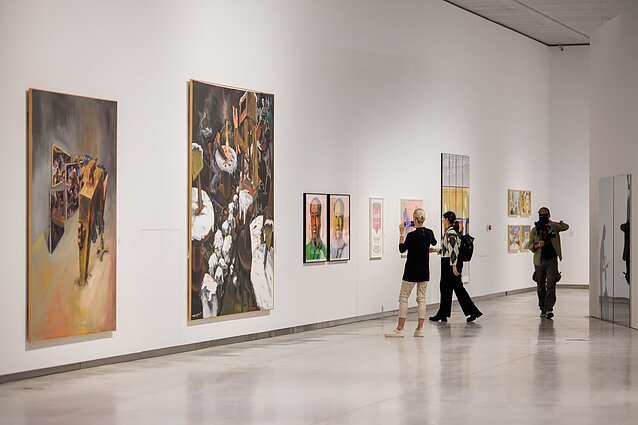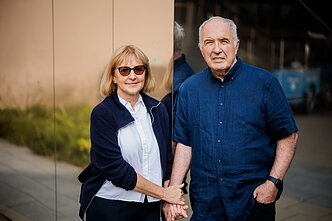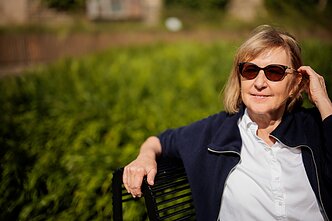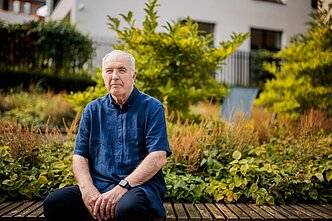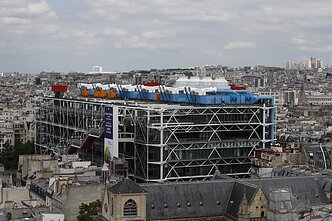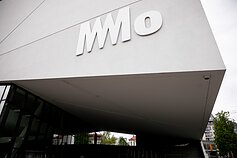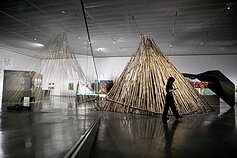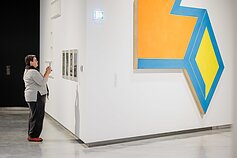












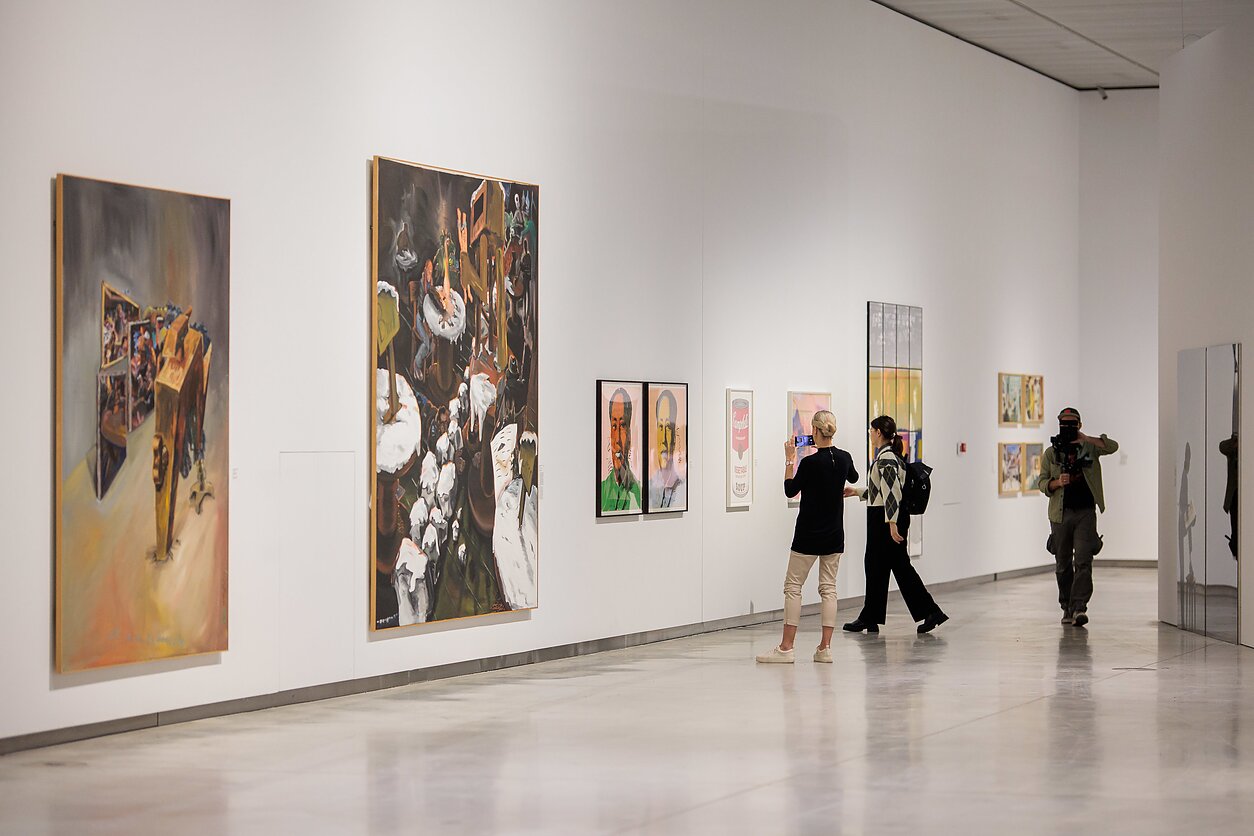
Marking the beginning of the Lithuanian Season in France, the MO Museum in Vilnius signed a cooperation agreement with the Centre Pompidou in Paris. The agreement was accompanied by a historic donation from the owners of the MO Museum, Danguolė Butkienė and Viktoras Butkus.
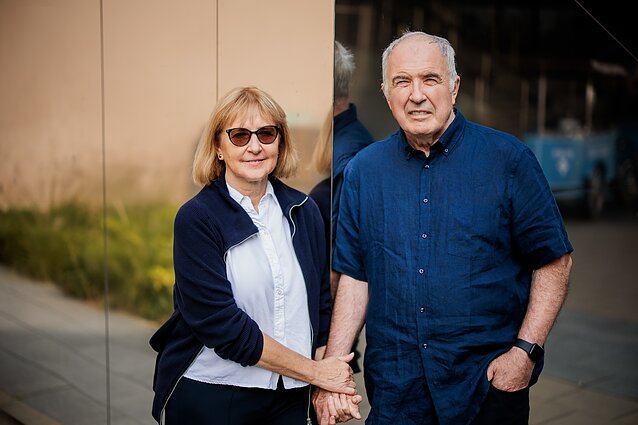
In an exclusive interview with LRT.lt, the founders of the MO Museum reflect on their collection of over 6,000 works of art, the gift to the Centre Pompidou, and the elitism of art.
The MO Museum, in collaboration with the Centre Pompidou, is presenting the seasonal exhibition "Contemporary Art in Lithuania from 1960 to the Present" accompanied by your donation. Why did you decide to donate rather than lend the works?
Viktoras: It is the policy of the Centre Pompidou to only show its works. There is a queue of people who want to donate works, so it is an honour and prestige to be in the Pompidou collection. The fact that we were chosen was also due to the Lithuanian Season in France. It was the reason why Pompidou representatives came to Lithuania, visited the most important museums, and spent a whole day in the MO vault.
In the world, only 5 percent of the works are exhibited in museums, the other 1 percent are in repositories, where nobody has seen or taken out the works since they got there.
The MO collection is no exception, with around 6,000 works, most of them true modernist masterpieces. We thought that nobody in the world knew about these works, so if some of them went to the Pompidou collection, it would be a kind of restoration of justice and international recognition of Lithuanian art.
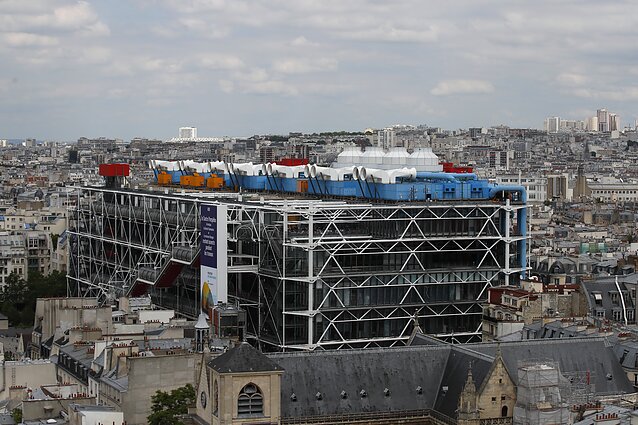
The works are included in the permanent collection of the museum. Until now, the Pompidou has had relatively little art from Eastern Europe and nothing from Lithuania. With the opening of the [post-Cold War] borders, the interest in Eastern European art has grown. So, perhaps tentatively, the Pompidou is slowly trying to fill those gaps.
The Lithuanian season in France and this donation reflect the desire of all of us, the citizens of Lithuania, to have our art as a full part of international European art. This is one way to achieve this. Of course, there are many others, such as organising exhibitions, but this is a very public and strong way.
When we opened the MO museum, our credo was twofold: to preserve what had been created and to bring off the shelves all the works that had been hidden away, that had suffered from political upheaval, and to make them known to the world. This is a long-standing strategy and we are taking every opportunity to stick to it.
You mentioned that the works were selected by the visiting Pompidou representatives. Was there a strategy in terms of the choice of works?
Danguolė: It seems to me that there was a very strong emphasis on women artists. We all know that during the Soviet era, women artists suffered a lot. It was very difficult for women to enter painting. At that time there were two prestigious art professions: painting and sculpture, and there were only one or two women admitted into the programmes. Now, in a sense, justice is being done.
How many works went to the Pompidou centre?
Viktoras: There are 12 works in the exhibition, but we didn't donate all of them, the other works came to the Pompidou differently. In particular, there are 5 works from our collection: by Maria Teresė Rožanskaitė, Kazimiera Zimblytė, Linas Leonas Katinas, Marija Švažienė and Vince Kisarauskas. The Pompidou Centre's collection has been implemented in other ways by contemporary works of Eglė Rakauskaitė, Anastasia Sosunova, Andrius Arutiunian, Žilvinas Landzbergas, and Pakui Hardware.
Danguolė: Elvira Kairiūkštytė's drawings were donated to Pompidou by her friend and curator Regina Norvaišienė.
It's a great honour to donate, to contribute to the opportunity to show Lithuanian art to the world, but is it easy to part with the works?
Viktoras: There are works that we love very much. We just didn't include them in the offers because they probably would have loved them too (laughs).
What are the works that you didn't include?
Viktoras: The other 6,000.
Danguolė: For example, we didn't include one work by Zimblytė, which is hanging in our house.
Viktoras: First, the Pompidou selected the artists they were interested in, and then we drew up a list of works by each of them for them to choose from. All the others stayed in the MO collection.
And are there any works that you would never want to part with in your life?
Viktoras: We haven't sold a single piece from our collection. When we created the collection, we told all the artists that if they ended up in the museum's collection, they would stay there. It's important to the authors that when they are gone, their work is taken care of. That is what we have done and will continue to do.
Today, we're talking about 6,000 works. And what were the first pieces in the collection?
Viktoras: Having artwork in the house has always been a priority for our family.
Danguolė: Very long ago, at the beginning of my working life, I acquired the graphic works of Vytautas Jurkūnas and Mikalojaus Vilutis. And when we started living together, Viktoras decided to buy paintings because he likes them better.
Then there was the famous Aidas Gallery in Vilnius, where we were introduced to the works of the modernist classics by Zimblytė, Vygantas Paukštė, and Vincas Kisarauskas. That was probably the first school. From them, we started to build up a collection, and then the idea of setting up a museum was born.
You first acquired modernist works, did that lead to you choosing to collect exclusively modern and contemporary art?
Viktoras: We have a time frame – from the 60s to now, while we are alive and can have some influence. That year also coincides with our age, the beginning of our life. That's the period in which our collection is set.
To build a quality collection, you have to set boundaries because if you start collecting art from all over the world, you will have a hodgepodge. Professor Raminta Jurėnaitė has helped us to assemble the collection.
Danguolė: We were focused on progress because we both come from the natural sciences, we tend to innovate. When we started the collection, modernism seemed to be a big novelty, so we chose this period.
Viktoras: It all started with the seven years of workshops that we used to organise for artist friends in our farmhouse. We always talked about art in the company, even though we hadn't thought of doing a collection at that time. Little by little, we got the impression that we had a problem with the management of visual art. The theatres were full, the books were being read, but the visual arts were poor. Artists were either angry or working in silent seclusion. There was a lack of management.
Then we started to like art, we wanted to restore justice. The lack of management was just one of the problems – artists at that time were in total desperation. Before independence, museums bought the works, artists lived off that, they brought the more [politically] "correct" works to the shows and stacked the "wrong" works on the shelves.
As a result, some works may have disappeared forever. This is also a problem – the works are disappearing. We were trying to restore justice, which has not yet been fully restored. The situation is better than it was, but the purchase of artists' works is still not systematic.
At that time, we spent maybe 10 million Litas (around 3 million euros) to purchase art. It was a large sum of money on the national level, as the state did not allocate that much at that time, it had other priorities. We are also part of the state and as citizens, we had to do something.
There was also the raising of prestige. We were visible in business, we had artworks in our office, and gradually it became important to have artworks at home and elsewhere among other business people.
When the MO Museum opened, there was criticism and scepticism. Were you expecting it, were you prepared for it?
Danguolė: There was a lot of scepticism – it has reduced now, but we still often feel the gaze from above. There is elitism in all areas. Professionals always look at those who come from outside with scepticism. On the other hand, we have tried to democratise the presentation of art, not the art itself.
The process of democratisation is always accompanied by questions – are you going to cross the line, are you going to do more than what is allowed? The elites are always sceptical. However, life goes in the direction of democratisation – you either adapt or you fall out.
You say "elite", don't you consider yourself part of the cultural elite?
Danguolė: We consider ourselves to be part [of the elites], but I don't know if the elites see us the same way. If you want to do something different, you run into problems.
[But] we're not really doing anything very original or special – this is a process that is happening all over the world. An expert from the United Kingdom once told me how museums have changed in 20 years: they used to be unvisited and dusty, but today they are full of people. Western museums have followed the same path, we just had to replicate and adopt the methodology.
Deep thoughts can also be expressed in clear language. For example, the articles by the director of the Van Abbe Museum in the Netherlands are easy to read, and their professionals speak in a language that people can understand. Professional jargon is much easier for many in the field, but more work is needed to convey the same ideas more simply.
I have noticed that some young art historians seem to write articles like they are deliberately trying to show off to each other how educated they are, and what philosophical theories they know, but that is not our way.
I would say that elitism is often the same as provincialism. The whole world is trying to be understood, to be accessible, not the other way around. It is still common here in Lithuania to think that we are clever if nobody understands us.
The museum came into being six years ago and now you have signed a cooperation agreement with the Centre Pompidou. What is your vision for the future of the museum?
Viktoras: We are managers. Theoretically, if you can manage a furniture factory, you can manage a museum, the economic principles don't change. [...] The museum has a strong team that knows what it is doing.
The exhibition "Contemporary Art in Lithuania from 1960 to the Present. A Major Donation" at the Centre Pompidou, Paris, will run until 6 January 2025. Read the full interview with MO Museum founders here (in Lithuanian).

Newsletter
Every Friday morning.