















Lithuanian Railways (LTG) has started installing safe locomotive control systems, replacing the Russian KLUB-U systems used so far. The latter was identified as a security threat by the parliamentary Committee on National Security and Defence (NSGK) back in 2018. However, the problem remains in the wagons, where Russian parts are used until today.
Back in 2017, the Lithuanian Railways and other authorities practised how to behave if hackers took control of a locomotive. It was then that the Russian KLUB-U security systems on Lithuanian trains were found to be unreliable.
The LTG reports that it has now started replacing the KLUB-U locomotive safety systems that have been in use until now. They are being replaced by Estonian and Ukrainian systems that meet European safety standards.
“The whole project will last until the end of 2027. More than 160 rolling stock items are planned to be replaced – both in freight trains and passenger trains, as well as in specialised equipment. KLUB-U will be removed from all the equipment of our five subsidiaries,” Aleksandras Zubriakovas, Corporate Affairs Director at LTG, told LRT TV.
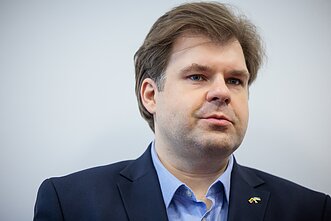
The NSGK deemed the Russian-developed KLUB-U locomotive control system to be a threat to national security back in 2018. According to Dainius Gaižauskas, the then committee chair, the government needs to explain why the infrastructure has not been replaced for so long.
“It is inexcusable when the current government, which focuses so much on the fight against Russia, doesn’t solve this problem. If there is still trade or the use of Russian rolling stock on our railways, then I think it is up to the current government, especially those who talk a lot about our security, about the Russian threat, to explain why they have not resolved this issue to this day,” he said.

According to Edvinas Kerza, former Director of Business Resilience at LTG, the replacement of Russian KLUB-U systems is not the only problem, as many Russian parts are still used in the wagons.
“To my knowledge, the railways are looking for, and successfully negotiating with Western partners to replace lubricants, rubber parts, bearings, various other repair components,” he says.
The 1520 mm gauge, or Russian gauge, is the main reason why Lithuania is still looking to Russia for train parts, even if reluctantly.
The 1520 mm gauge, which is wider than the European gauge, is the most widespread in Lithuania and is the legacy of the times of the Russian Empire and the Soviet Union. Similar tracks exist in Russia and Belarus.
So, even with the war in Ukraine, Lithuania is forced to buy some parts from Russia, and the Sanctions Commission makes exceptions for these procurements.
“Up to 10 percent of all purchases could be parts from unfriendly countries. That amount is strictly regulated and has to be justified on a case-by-case basis. But the aim is to replace all the parts, all the machinery with European parts,” Zubriakovas said.
Representatives of former governments have said that there was no need to abandon the Russian broad gauge because Lithuania was making a profit from transit with Kaliningrad.
The LTG says, however, that it intends to completely replace old trains with Russian parts. Lithuania’s state-owned railway company is buying 15 electric trains from Swiss Stadler and is continuing its cooperation with Škoda.

Newsletter
Every Friday morning.