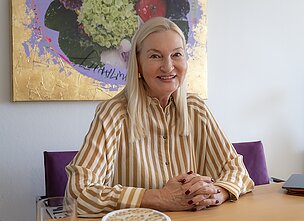



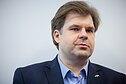




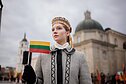



On the shortest night of the year, Lithuanians celebrate Joninės (St John’s Day) or Rasos. According to ethnologist Nijolė Balčiūnienė, however, these are different celebrations.
Balčiūnienė says that the Midsummer festival, or Joninės, came with Christianity, overshadowing the traditions of pagan Lithuanian ancestors, who celebrated Rasos.
“The Rasos celebration is very old, it goes back to the times when there was no Christianity in Lithuania. The customs of spells, wreath floating, jumping over the fire to make people and animals well – these are extremely old customs that have survived until today,” the ethnologist says.
“The name Joninės only came into use after the introduction of Christianity, while all the rites and customs are ancient, which is a complete mismatch,” she adds.

According to Balčiūnienė, Rasos can be celebrated for up to two weeks or for as long as the sun is at its highest point. She also stresses that Rasos does not always fall on June 24, the day of Joninės.
The celebration of Joninės was very popular in Soviet times, which was also a sign of resistance to the Soviet system, the ethnologist notes.
“I remember very well why in 1967, when I was a first-year student, we, the Vilnius University students, organised an alternative Rasos festival in Kernavė,” Balčiūnienė says. “It was our resistance to the Soviet Midsummer festival, which was celebrated with beer, shashliks, stage bands, and they called it Joninės.”
Since 1999, Balčiūnienė has also been organising the Rasos festival in Verkiai Park in Vilnius.
“It’s unbelievable that I’ve been organising the Rasos festival in Verkiai Park for 25 years. After seeing that Vilnius does not have a real Rasos festival, according to all the customs, I felt sorry for the Vilnius residents that their Midsummer was spent with beer and I decided that they should have real Rasos,” she says.
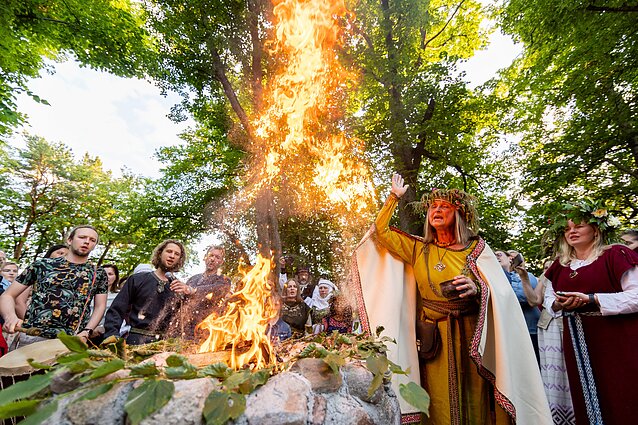
“I chose a very suitable place in Verkiai Park, on the Verkiai High Hill, where the altar of Lizdeika stands, where the Verkiai and the Neris rivers flow, where the legend of the ancient times and of our ancestors who lived there is alive. Then we managed to put together a programme and started doing all the ceremonies as they should be,” the ethnologist explains.
Rites and customs
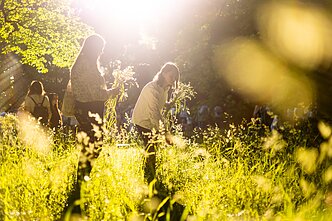
According to the ethnologist, the Rasos festival begins, with the ceremonial gate crossing – one must pass through a decorated gate to enter the festival. Special entrance songs are also sung. After passing through the gate, the participants sprinkle water on their hands. Later, the girls go to the branched pole, called kupolė, and throw wreaths on it. The number of attempts it takes them to throw the wreath on the pole indicates the number of years until they get married.
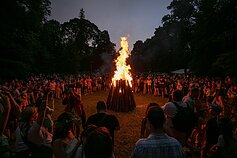
At the altar of Lizdeika, the sacred fire is then lit, and traditional songs are sung. Once the bonfire is lit, the musicians from the ensembles perform and folk dancing begins.
Fire is one of the most important motifs in the Rasos festival. The bonfires are lit to strengthen the sun, which after the shortest night begins to weaken and makes smaller and smaller circles in the sky.

This year, June 20 was the day when the sun rose to its highest point in the sky, meaning that it was the shortest night of the year. The sun is honoured both with fire and with songs that thank for the favours granted by the sun.
According to Balčiūnienė, the Rasos festival unites people because everyone is involved in dancing, singing, as well as wreath making and floating.
“It is very beautiful when everyone is dancing around the bonfire. There are no performers, everyone is a participant. Rasos is different from other festivals because everyone is a participant, we all dance and sing,” the ethnologist says.
Rasos are named after the Lithuanian word “rasa” (dew). One of the festival’s core traditions is bathing in the morning dew after the night of singing and dancing, Balčiūnienė notes.

“This is also a very old custom. It is said that old people or those sick or with rashes used to wallow in the morning dew and that girls would be rejuvenated and beautified by washing their faces with the morning dew,” she explains.
“When the fire starts to get cold, we also start jumping over the fire. The fire, when you jump over it, strengthens you, cleanses you from all diseases and troubles. Even the sick and animals used to be made to jump over the fire at night,” Balčiūnienė adds.
The ethnologist is pleased that Vilnius residents are very fond of the Rasos festival and come to celebrate the ancestral traditions every year.

Newsletter
Every Friday morning.