












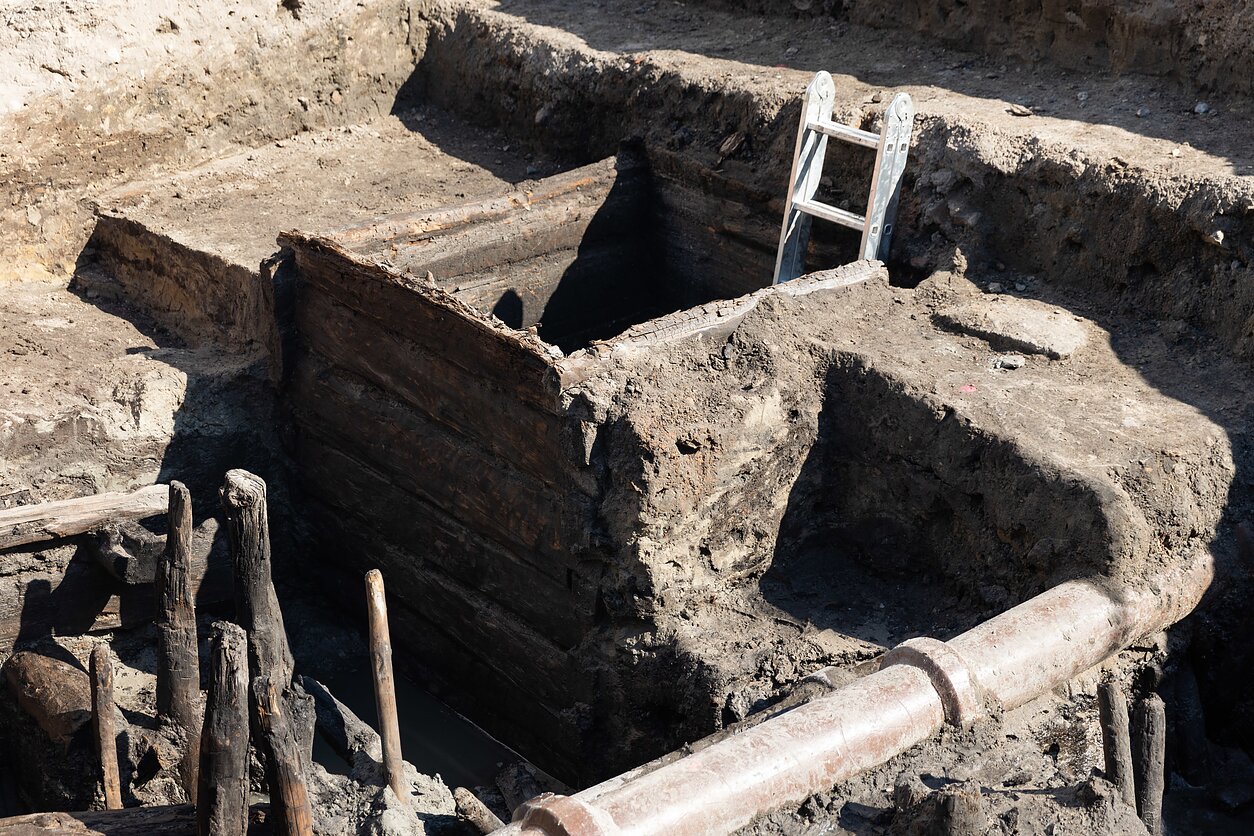
The 14th-century fortified settlement at the foot of the burnt Kreivoji (Crooked) Castle has been discovered on the territory of the National Museum of Lithuania.
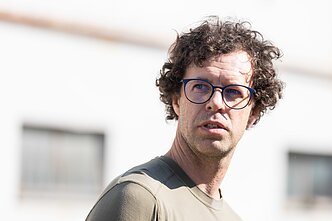
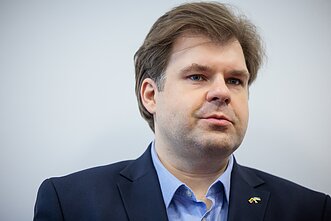
“We have found the settlement of the Crooked Castle here. Vilnius, as we know, had three castles – everybody knows the Lower Castle, the Upper Castle, but the Kreivoji Castle is a kind of mystical castle because it as if disappeared somewhere,” archaeologist Atas Žvirblys told journalists in Vilnius.
“We are immediately teleported to the second half of the 14th century and the history of old Vilnius under the layers of the 19th-century tsarist fortress, one and a half metres deep,” he said about the find.

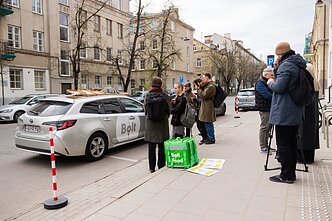
The remains of the Kreivoji Castle, burnt by the Teutonic Knights in 1390, were found after the National Museum of Lithuania started renovation works on the former detention centre and its surroundings and commissioned exploratory archaeological research.
“The significance of this discovery is very high, as we hope to gather a lot of new information about the development of this area. It was thought that after 1390, when the Kreivoji Castle was burnt down, life on this side of the Vilnelė River was reduced and there was no development,” said Valdas Steponaitis, head of the Department of Archaeological Collections of the Middle Ages and Modern Times at the National Museum.
“The fact that we have found fragments of 14th and 15th-century buildings here suggests that not all the people had moved out of this place,” he added.
During the search, a defensive frame structure was also found, Žvirblys said. The excavations also uncovered various items, such as parts of footwear typical of the 14th century and a fragment of a leather ball.

According to archaeologists, the site has never been explored before, as it was considered a high-security zone because it was the site of various prisons for more than 150 years.
However, the public will not be able to see the remains of the Kreivoji Castle for the time being.
“The Assessment Board, seeing the importance of this object, decided to preserve and complete the studies and then, at a better time, to study the whole area more extensively and look at its more precise use,” Steponaitis said.
The artefacts found at the site will be exhibited in the National Museum of Lithuania, he added.

Newsletter
Every Friday morning.