








One month before Lithuania’s presidential election, LRT TV programme Savaitė (The Week) has asked for the candidates’ positions on some of the thornier issues that never fail to arouse emotion: family, same-sex partnerships, and abortion.
Family and same-sex relationships
For some presidential candidates, family is unimaginable without marriage. Others take a broader view. Can people of the same sex who live in a committed relationship be called a family? Opinions differ radically. There is less divergence on whether same-sex relationships should be legislated in a civil partnership law.
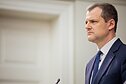
“I think it is not for the state to say what is a family and what is not a family. A [single] mother raising children, a father raising children. Is a same-sex couple raising children also a family? There are different kinds of families, and all those families need to have both rights and responsibilities in order to raise decent citizens. We are certainly late on the Partnership Law,” said presidential candidate Giedrimas Jeglinskas (nominated by the Democrats ‘For Lithuania’).
“A family is the union of a man and a woman. When all the characteristics of a traditional family are put into the institution of partnership – like changing one’s last name, some other things – it is obvious that the attempt is to bypass the constitutional regulation in order to legalise the change of the concept of family,” said Andrius Mazuronis, (nominated by the Labour Party).

Asked whether same-sex couples can call themselves family, Gitanas Nausėda, the incumbent, said: “Whatever you want to call it, you can call it that.”
“The question now is whether society treats them as a family or not. I have always advocated that the legal relations of such couples should be legalised through amendments to the Civil Code, providing for the possibility of running a joint household, getting information about the partner’s health, etc.,” said Nausėda, who is running as an independent candidate.
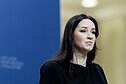
“It’s not whether or not you call it family. For people, family is what they themselves consider family. It is a matter of our self-respect to ensure a dignified life for these people,” said Ingrida Šimonytė, (nominated by the conservative Homeland Union-Lithuanian Christian Democrats, TS-LKD).
“There are two genders: male and female. They give birth to a child who has a mother and a father. And this is the basic unit of society that we must take care of. Because that is the only way we can survive. State support and infrastructure must be there. There can be different sexual fantasies, but they do not have to be equated with gender. LGBT propaganda that is not based on science must be banned,” said Eduardas Vaitkus, an independent candidate.
Ignas Vėgėlė, another independent candidate, believes that whatever same-sex civil partnership law may be passed, it should deal with practical issues, but no more than that.
“Family is what comes from marriage. Or it comes from raising children. Mother raises the child, father raises the child, right? That’s when we can talk about family. And these are the two foundations on which the family is built. I do not see any more foundations in the Constitution,” said Vėgėlė.
“On January 11, 2019, the Constitutional Court made it very clear that, according to the constitution, family can mean a same-sex couple living together. We have not solved these issues, eg partnership, the Istanbul Convention, we still have one foot in the Eastern or Russian world,” said Dainius Žalimas, (the candidate of the liberal Freedom Party).
Independent candidate Remigijus Žemaitaitis also accepts a loose definition of family, as any emotionally involved people living together. “It can also be a same-sex relationship. [...] They are a family because they are building a family. There must be a law on civil partnership. There is too much emphasis in Lithuania on the legalisation of same-sex relationships – that law will also apply to opposite-sex relationships.”

Abortion
On abortion, the presidential candidates’ opinions converge much more than on family or same-sex unions.
“Only a woman, a mother herself, can understand what abortion is: whether it is necessary or not. In cases of violent crime, rape, – yes, we can talk about [abortion]. But when people have abortions for pleasure because it just happened, then it is morally wrong,” Žemaitaitis said.
“A woman, like any other human being, has the right to her own body, so, of course, it is important that she make up her mind before a certain deadline, until which she can make a decision to terminate a pregnancy for one reason or another,” said Žalimas.
“I understand that there are all sorts of situations in life, and there can be, but the state’s duty, its first and foremost duty, is to help women so that they do not make a decision that kills a life,” said Vėgėlė.
“Abortion is a drastic event, but a woman must have the right to her body. However, the society as a whole, the state as a whole, must encourage childbirth and abortion would then be a rare exception,” said Vaitkus.
“As a woman, it is probably very difficult for me to imagine myself making such a decision, no matter what life circumstances would force me to do. But if you ask me if I condemn women who make such decisions, absolutely not. And I certainly don’t think there should be any restrictions or bans,” said Šimonytė.
“Human life is sacred. It’s just that sometimes there are certain circumstances where maybe the family, the woman, has no other choice. From the point of view of the state, it is important to create conditions where such dramatic situations do not arise,” said Nausėda.
“There are circumstances in life when a woman simply has to be left to choose. For one reason or another. I am opposed, categorically opposed, to an absolute ban on abortion,” said Mazuronis.
“I really believe that it is a woman’s decision, first and foremost a woman’s decision. It is her decision with her partner, with her family. We should empower people to continue to be able to make their own decisions,” Jeglinskas said.
The first round of presidential elections will take place on May 12.

Newsletter
Every Friday morning.