

The archive of the Boston Lithuanian Encyclopaedia in the United States has been added to the UNESCO Memory of the World Programme National Register. The encyclopaedia of almost 20,000 pages is a testimony of how Lithuanians fleeing the war and Soviet occupation sought to preserve and transmit the culture of independent Lithuania to future generations.
Halfway between New York and Boston, the snow-covered winter landscape of Connecticut is reminiscent of Lithuania. On the outskirts of Putnam, at a quiet intersection surrounded by pine trees, the Gediminas Pillars adorn the wall of a low-rise building and the only difference is that the blessing on the wooden crucifix – “God bless Lithuania” – is engraved in English, not Lithuanian.
Inside the building is the legacy of a century of Lithuanian diaspora in the United States.
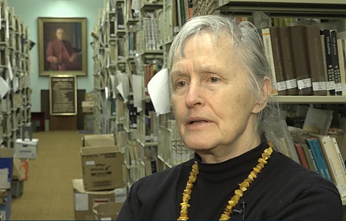
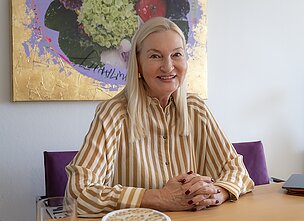
“Prelate Juras started collecting material in 1922,” says Mirga Girniuvienė, the Chicagoan director of the Lithuanian Cultural Archives in the USA, as she turns on the lights.
Pranciškus Mykolas Juras came to the USA before the First World War, fleeing service in the Russian Imperial army. Ordained as a priest in the USA, after the war he began to collect newspapers, books and art by the Lithuanian diaspora community that had existed on the east coast of the USA since the 19th century.
This was the beginning of the Lithuanian-American Cultural Archive, which moved to Putnam after World War Two.
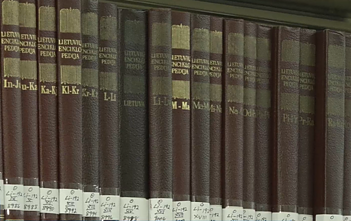
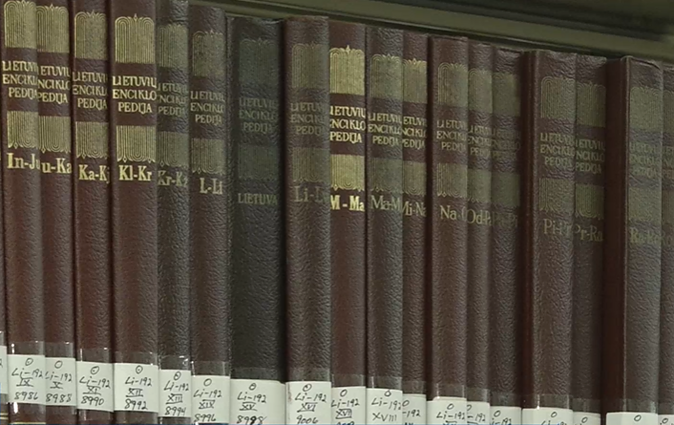
The most unique item of the collection is the Boston Lithuanian Encyclopedia.
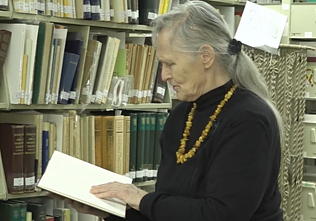
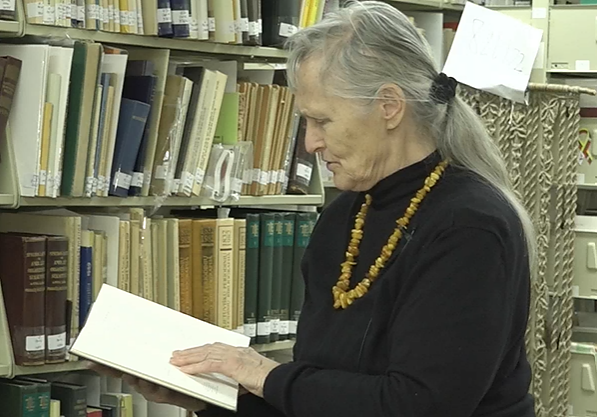
“Written and published in the diaspora. No other community in the diaspora has published a universal encyclopaedia,” says Girniuvienė, displaying on her bookshelf two huge sets of the encyclopaedia, dozens of thick volumes, arranged alphabetically.
Intellectual centre of Lithuanian diaspora
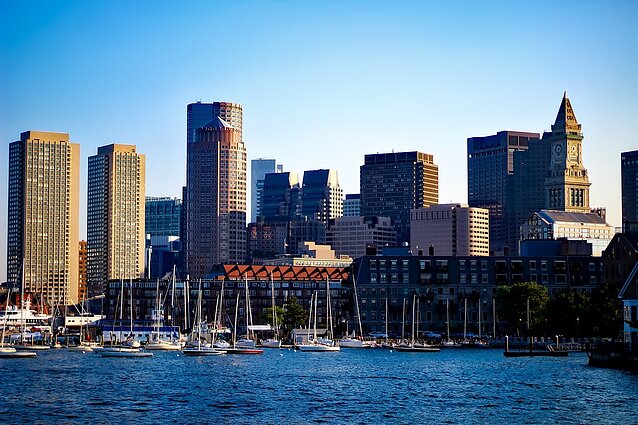
“Built by Lithuanian immigrants in 1904” proclaims an inscription in English on a red-brick church in south Boston, a hundred kilometres from Putnam. Service in Lithuanian is still held every Sunday.
It was not easy for Lithuanians to settle here – at the time, the area was dominated by larger Catholic Irish and Polish immigrant communities. Later, however, Boston became a centre for Lithuanian intellectuals fleeing the Second World War.
“They had to work in sugar factories, load crates onto trains, do physical labour, while they were here in America,” says Girniuvienė.
Writing the encyclopaedia helped them maintain a link with their former lives that they led in the interwar Republic of Lithuania.
They also felt they had a mission: to preserve Lithuanian culture and to counterbalance the Soviet version of what was happening in Lithuania.
“They all felt that there was a struggle here, both for Lithuania and for the truth. It was a sacred cause,” says Girniuvienė.
The work took decades, and dozens of the most famous Lithuanian intellectuals and artists contributed. “Gimbutienė Marija, Ivinskis Zenonas – history; Jakštas, Jakubėnas Valdas – music,” Girniuvienė reads, flicking through the volume.
For decades, these authors, who were scattered all over America, sent their material to the encyclopaedia’s editors, including Juozas Girnius who devoted many years in Boston to editing the encyclopaedia.
Putnam is now home to the encyclopaedia’s archive collection which is included in the UNESCO National Register.
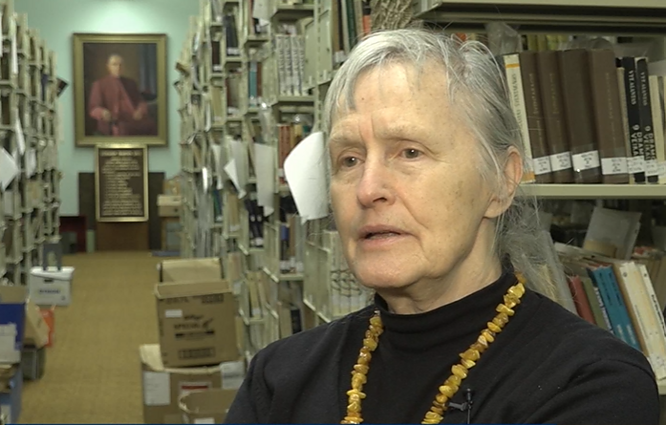
The archive contains thousands of manuscript pages and decades of work. Girniuvienė shows one manuscript, by the philosopher Girnius, on a yellowed, small piece of paper.
“They were not rich, they didn’t have much paper,” she notes.
Although they were labouring far away from their homeland, their vision was to have it one day passed to Lithuania, Girniuvienė smiles.
The thirty-seven volumes of the Boston Lithuanian Encyclopaedia contain about twenty thousand pages.

Newsletter
Every Friday morning.