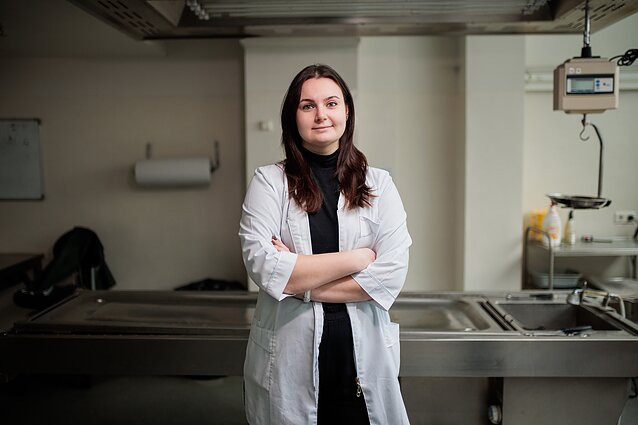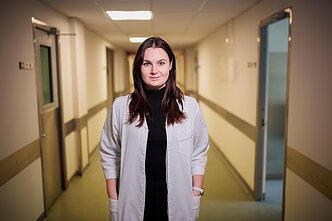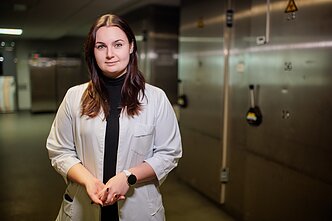













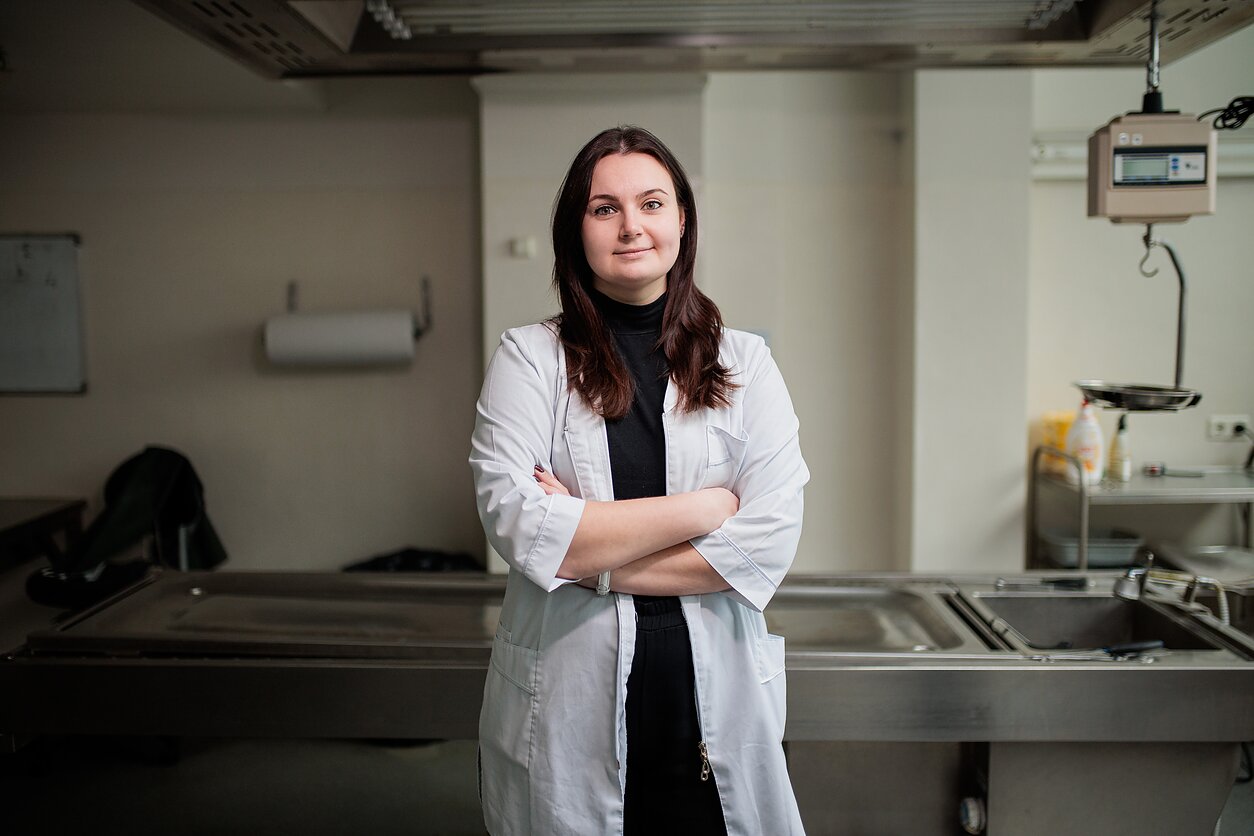
Worms in bodies, sex crimes, and the huge responsibility of determining the exact cause of death are the daily routine of forensic medicine experts. Is there anything that surprises and evokes emotions in them? “We leave emotions outside”, but it is still difficult to investigate the cause of death of children, says forensic medicine expert Diana Vasiljevaitė.
As a child, what did you want to be when you grew up?
I had a diary that I recently opened. It says that I wanted to be a nun. I don’t know why and where I got that idea.
And at school?
It was at school that I became interested in forensics. I already knew what I wanted to be at school, and I pursued it with determination. One of my mother’s acquaintances worked in the morgue, and I was always interested to hear stories from her work. I knew that I had to be good at biology and chemistry to get into medicine.
During my medical studies, there were all sorts of thoughts. I thought maybe I should go into gynaecology. One of the reasons was the financial aspect. There are also more career opportunities in that field. I had done all my summer internships in genealogy. However, I realised that it was not for me.
What do you like about this job?
First, it’s interesting that every day is different. There are no two similar cases. If there is a murder, there are no two identical murders – something is always different. Also, when you work in a hospital, everybody is rushing, and here, there is less of that. You can think calmly before making a decision.
What does your working day look like?
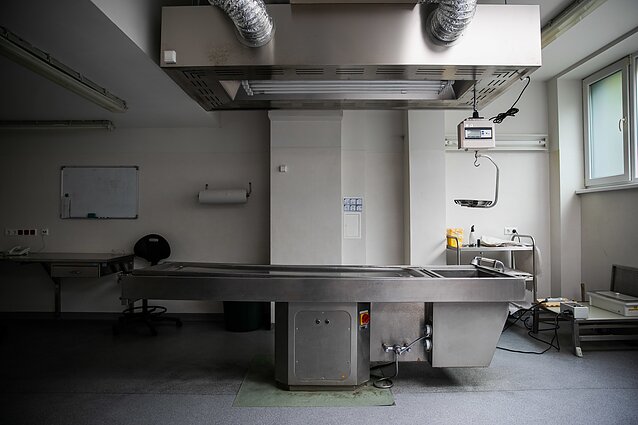
Like everywhere, it often starts with a cup of coffee or tea. We have meetings on Fridays, where we present the most interesting cases and share our knowledge with colleagues. And then it depends on the day: sometimes I work in the autopsy room and sometimes in the outpatient clinic with live persons or medical records.
Forensic experts work on both living and dead people. Which do you work with?
I work with both but I spend more time in an autopsy room. I only work with the living people for three days a month.
What do you need to do when you work with the living?
I examine the body and assess the external injuries. If there are internal injuries that are documented, I assess them too.
Some people come after they have been referred by law enforcement and legal proceedings have started. Then some people come themselves, as they are not subject to legal proceedings. When we work with living persons in the outpatient clinic, we have to assess the injuries that have been sustained, what caused them, and the timing of the injuries. Often these are victims of domestic violence, mostly women, but also men.
Do people lie?
Yes, and often. But we work objectively and with a cold mind. We listen to the circumstances of the incident, but we look at the injuries and decide for ourselves how they were caused.
Can it be determined whether a person has caused their injury or whether someone else has done it to them?
That’s not always possible, and we do not normally come to categorical conclusions. However, there are features that are both typical and not typical of self-harm.
Let’s go to the autopsy room. What’s the working day like here after a cup of coffee?
We familiarise ourselves with the tasks, the circumstances of the incident. Sometimes the material provided by the investigators is not enough, so we have to contact the officials and ask for more information.
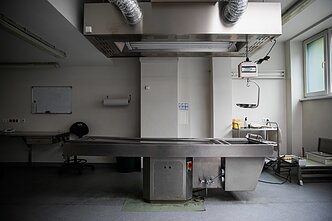
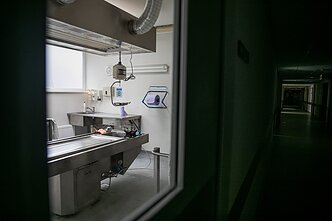
Then we go to the body and work. Usually, the staff bring the body to us so that we can immediately inspect its position, clothing, and appearance. We place it on a table, take photos, and describe what we see. If it’s a violent death, we look to see if the injuries on the body match the damage to the clothes.
We look at and evaluate the post-mortem phenomena, which helps us determine how much time has passed since the death. If the identity of the person is unknown, we need to describe in detail the facial features, hair, beard, and, if possible, anthropological data. External injuries should also be described.
After the body has been examined, we make an autopsy incision in the middle of the body, from the neck to the pelvis. This is routinely done by our technicians. We look to see if there is any fluid or blood in the body cavities. The whole organ complex is then removed. We look at each organ, what pathologies are present, what they look like. We weigh the organs, measure them, cut them, and see how they look, whether they are morphologically intact. We take urine, blood for additional tests.
What do you do with the organs afterwards?
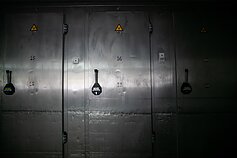
They are placed in a plastic bag to prevent leakage of fluids and put back into the abdomen.
How long does an autopsy take?
It varies. If it is a cardiac pathology, it can be examined in 1.5 hours. If it’s a homicide, it can take a whole day or even several days. We’ve had a case with many stab wounds. We worked all day, then we put the body in the fridge and continued the next day.
There have been cases of multiple gunshot wounds. The most I have seen is more than 20 gunshot wounds on the body.
What do you do after an autopsy?
If it is not a violent crime, the body is handed over to the relatives or the funeral home, and we wait for the results. For example, if it’s a drug test, sometimes we have to wait for up to a month.
Then comes the exciting part when we have to determine the exact cause of death from all the data we have gathered and draw up a specialist’s report. This is not always easy.
Is the time elapsed after death important for determining the cause of death?
Time is very important to us. The earlier you get the body, the more accurate you can be in determining the time of death. Sometimes, we go to the scene where we can determine the time of death very precisely. We measure the temperature of the corpse, the temperature of the air, we take the measurements an hour later, and then we know quite accurately when the person died. When the corpse is brought to our autopsy room, we can only determine the time interval of the death.
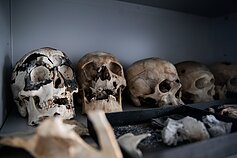
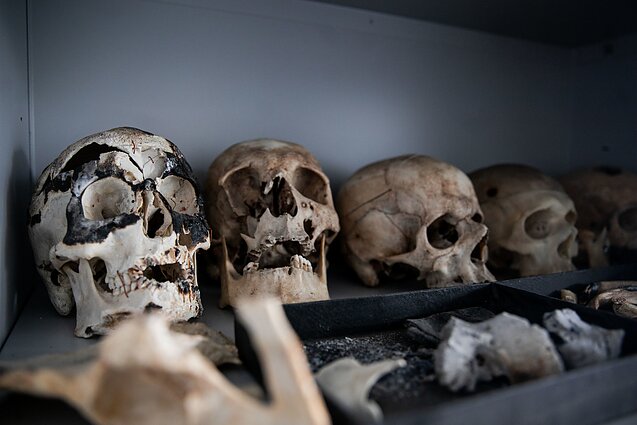
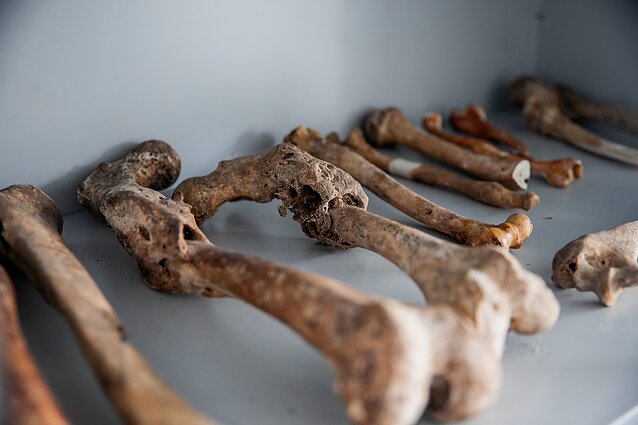
Once decomposition has begun, it is difficult to draw conclusions about the time and cause of death. External injuries are almost impossible to see, and often the surviving internal organs are not visible. The only thing we can examine then is the bones.

What methods do you use to determine the cause of death? For example, how do you determine that a person drowned rather than being thrown into the water already dead?
There is a set of criteria. We look at how the body looks, whether there are external injuries. Laboratory tests also help us a lot. There is a bone in the head called the temporal bone, which has its duck. We take it apart and see if there is any fluid there. Theoretically, there should be no fluid there. If it is there, it shows that the person was still trying to breathe underwater. We take the duck’s fluid and look to see if there is diatom plankton. If it is found, forensic scientists can take a water sample from the body of water where the person was found and see if the type of diatom found there is the same as that found in the person.
You have examined hundreds of bodies. What is the most common cause of death?
Heart diseases. About 50 percent of the cases investigated are cardiac pathologies, ischaemic heart disease.
And what are the least common causes of death?
I recently had a case of aorto-cardiac fistula. This is a very rare case, with an incidence of 0.04 percent in the population, according to the scientific literature.
Is there anything that still surprises you at work?
We have cases of people bleeding to death due to stomach ulcers. My colleagues and I talk about how strange it is that people don’t go to medical institutions. We had a recent case – a man had cirrhosis of the liver and more than 9 litres of fluid had accumulated in his peritoneal cavity. The person didn’t ask for help and finally died.
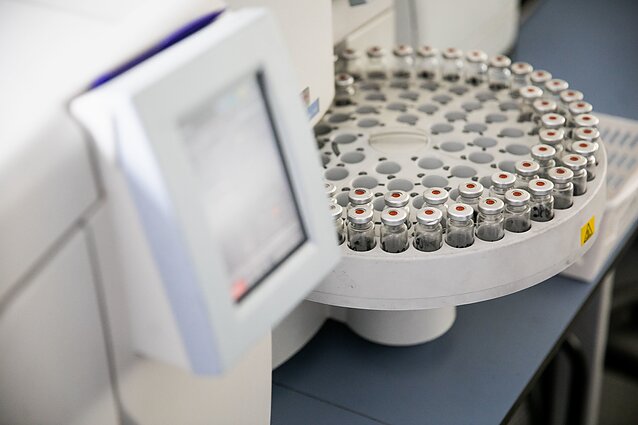
What kind of people end up on your table in the autopsy room?
Bodies are brought to us when there has been a sudden death, a person who has been referred to medical facilities but died there in less than 24 hours, a death in a public place, if it is a violent death, including traffic accidents, homicides, falls, suicides, deaths in the workplace.
Do you think about who these people were before they died?
At least I don’t think about it, and I try to distance myself. The more you get into their life, the more you give life and emotion to the work, which is not desirable in our work.
And yet, do you get emotional at work?
Not only for me, but I have also heard from other experts that it is the most difficult to work with children and babies.
Do you find worms in the bodies?
We find worms in decomposing bodies, which helps us determine the time of death. As fly larvae have a life cycle, we can determine the time of death by the size of the egg, the size of the larva, the colour.
I remember one of my colleagues even had a case where they found a fish in the body of a drowning man.
Do you find other things in the bodies?
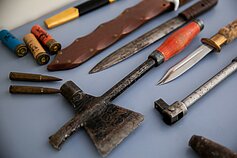
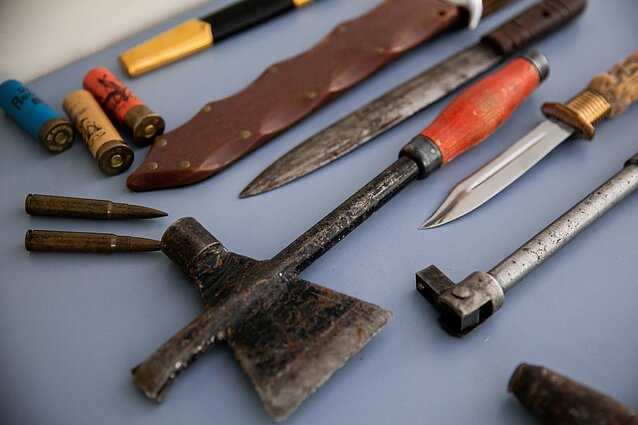
We do. One of our colleagues recently did a report on this. We have found buttons, a World War Two-era bullet between the ribs of an elderly woman.
Are you at risk during your work?
Yes. There are infectious diseases that can be contracted from a corpse. These include hepatitis, HIV, tuberculosis. You open the chest cavity and see... Then you run to get a respirator. There is also the risk of injuring your hands on sharp bone fractures.
Do you find abnormalities, stones in the bodies?
My colleagues even have a collection of stones – of all colours, sizes and shapes. We have found a horseshoe-shaped kidney.
Do you notice an increase in workflow at certain times?
We notice tendencies according to the seasons. Let’s say there are more drowning in the summer and more freezing to death in the winter. We also feel that there is more work after holidays, long weekends.
Have there been cases where you could not determine the cause of death?
It is rare, but it happens. Especially when the bodies are decomposed, there is not much you can say. If the body is badly burnt, it is also difficult to give a definitive cause of death.
Forensic medicine requires 10 years of training, but the salaries in this field are much lower than for other medical professionals. Is salary the reason why there are very few people in this profession in Lithuania?
Salary is not motivating at all. The only “light at the end of the tunnel” is that we have been included in the list of shortage professions. There was additional funding earmarked in the budget, so we are looking forward to higher salaries.
Attracting new professionals is difficult. Students enter the forensic medicine residency, look at it and leave. Every year, 1–2 students join, but 1–2 drop out because of salary, working conditions, career opportunities, etc.
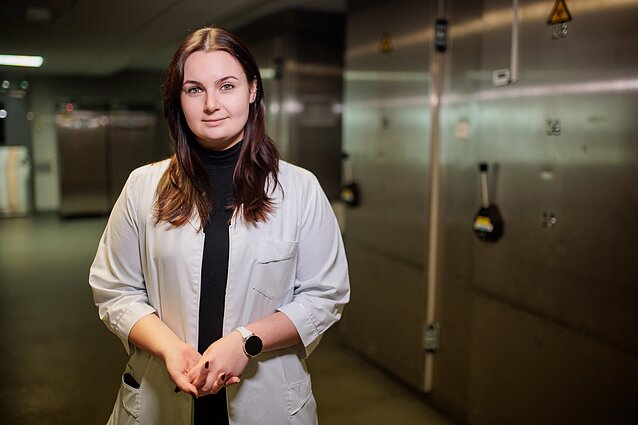
Do you feel tension when you write the cause of death? After all, your findings may determine what the courts decide.
The responsibility is huge. I remember reading the first conclusions I wrote 10 times. It was extremely scary to make a mistake, to come to the wrong conclusion. For example, a few days ago, I phoned the investigators after the autopsy and said that the man could not have fallen like that. When I say these words, I realise that there will be proceedings, that officials will be looking for a suspect.
We also attend court hearings where we have to explain our findings. There are times when we go to the scene of an accident with forensic experts and the suspect. There, the suspect shows how the crime happened. You look and realise that it wasn’t really like that because the injuries don’t match.
You are not only working but also doing a PhD.
Yes, I am a PhD student and I am also teaching other students. I work on cases of sexual violence. It is important to talk about it because it is very little talked about and very little research is done into this subject.
Do you dream of your “patients”?
For some reason, everyone asks this question, both at university and in life. No, I’ve never dreamt of work. You have to learn to come to work, leave your emotions behind, and not take them home when you finish. You cannot let your emotions take over your mind.

Newsletter
Every Friday morning.