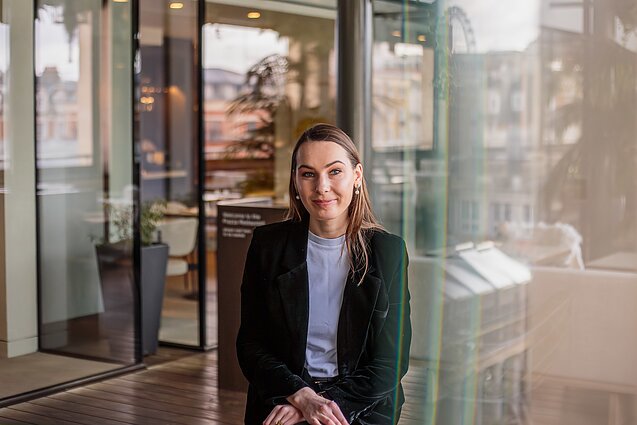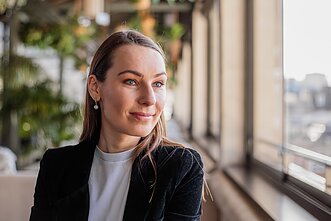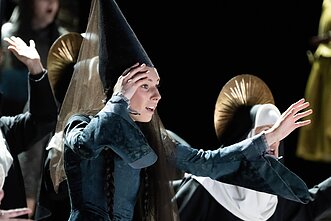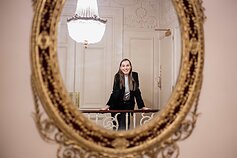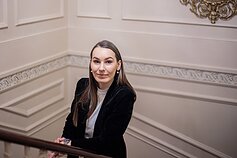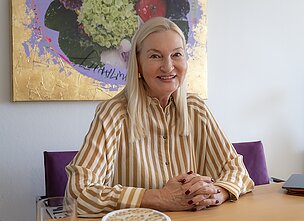














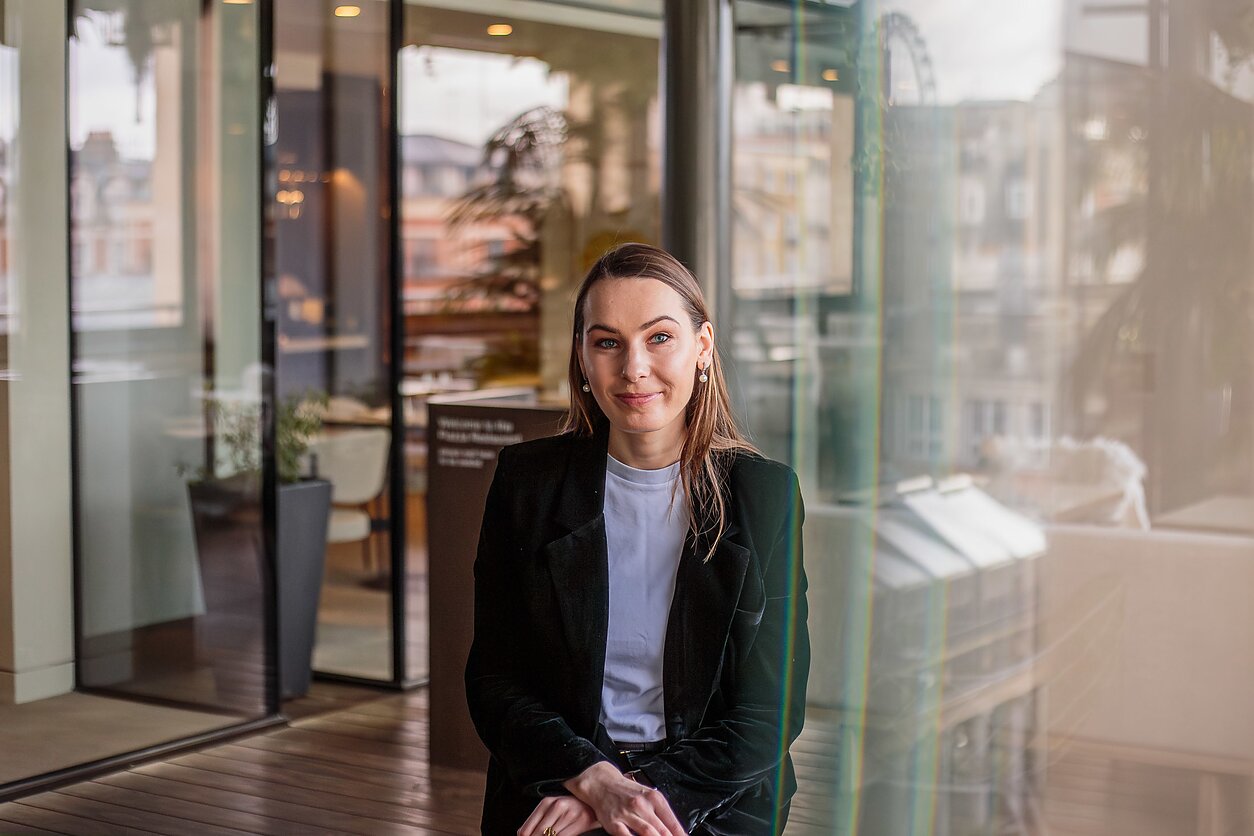
Gabrielė Kupšytė, who grew up in the village of Baubliai near Lithuania’s Kretinga, today sings at the Royal Opera House in London. She urges Lithuanians to discard the thoughts that they don’t deserve something because they are from a small country.
We meet outside the Royal Opera House in London on a bright February morning. Kupšytė’s schedule is tight – after returning from Germany at night, she is at the theatre first thing in the morning, where a costume fitting awaits her after our interview.
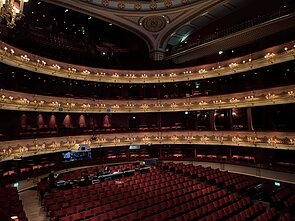
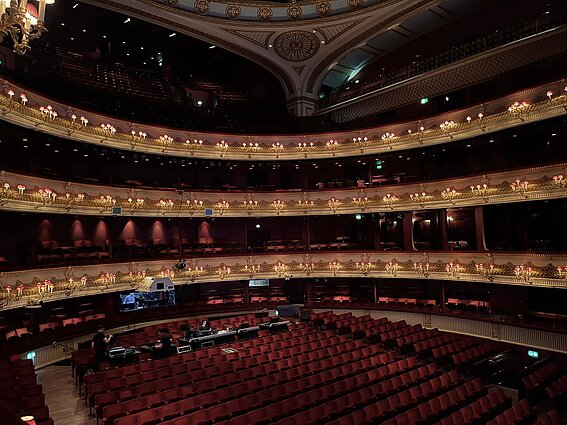
We sit down for a chat in the British royal family box at the Opera House. It’s just us and a few other staff members in a space which usually fits around 2,500 people.
Discovering classical singing
Kupšytė says she felt from a very young age that singing would take centre stage in her life. Her mother was a member of a women’s folk group, and it was she who instilled a love for music in her daughter.
For ten years, Kupšytė sang at the Saulainė choir at the Kretinga Music School.
“There was no pop at all. We used to go to world competitions where we had to prepare a programme, so serious music was always with me,” the opera soloist says.
Kupšytė traces her interest in classical music back to the period when she started studying at the Klaipėda Stasys Šimkus Conservatoire.
“When you’re a teenager, you don’t really listen to classical, symphonic music or opera. I think it all started when I was 15 or 16. At the Šimkus Conservatoire, we studied everything from classical to contemporary music. I liked the depth, the philosophy of classical music, and classical singing stuck to me naturally,” the woman explains.
Later, Kupšytė studied at the Lithuanian Academy of Music and Theatre in Vilnius. But she says she wanted something more and decided to apply to the Royal Academy of Music in London.
“I always wanted to see more, to experience what was happening elsewhere. When I was studying in Vilnius, I was always hungry. [...] I think it’s hard to improve when you’re in one place – you have to broaden your horizons. I was simply obsessed with the Royal Academy of Music,” the opera soloist says.
While artists usually apply to as many high-level academies as possible, there was only one name on the Lithuanian woman’s list.
“I don’t know why I decided that. I just have a strong intuition; I know where I want to go. It’s not out of arrogance because I’m sure I’ll be accepted, but rather out of sheer naivety and desire,” Kupšytė says.
“I remember when, after I sang, I was immediately offered a place, and I just froze. Then the director asked me very slowly in English: ‘Do you understand what we said?’ And I answered: ‘Yes’,” she smiles.
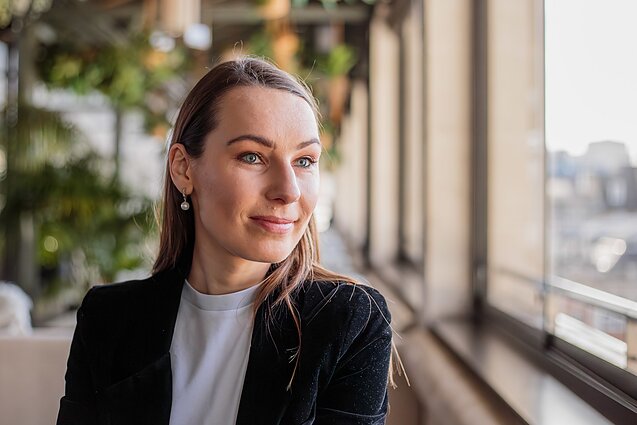
Kupšytė was among 11 students and only one of the two foreigners accepted to the course. She admits that it was first difficult to get over the language barrier and get used to the life in a big city.
“The most important thing is not to lose sight of what you came here for and what you need to make out of it. Obviously, when you come to such a big academy from a small country, you wonder if you are meeting all the standards, if you are doing everything well. The transition period was maybe 2–3 months to understand how the system works, how people work,” she says.
However, the mezzo-soprano says that she has never been embarrassed or felt inferior because of the fact that she comes from Lithuania.
“Of course, maybe the locals feel that someone came from a small country and is doing better than them. That’s the other side of the coin. But I think everyone should be appreciated for their talent and abilities, and there is enough room for everyone under the sun,” Kupšytė says.
Becoming part of history
After studying at the Royal Academy of Music, the Lithuanian woman continued her studies at the opera studio Mascarade in Florence. In 2022, after a huge competition, she was selected for the Jette Parker programme, which opened the door to the Royal Opera House in London.
“I remember when I was studying at the academy, I used to walk around this building like a cat around bacon. I used to think how perfect this theatre was. And it is. I’m not disappointed. I was attracted to it because there are so many legendary conductors, soloists,” Kupšytė says.
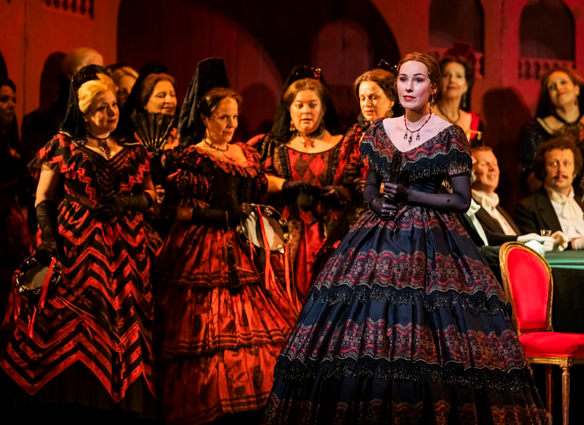
“If you are a soloist with ambition, how can you not want to sing in this place? I wanted to sing here not for some egoistic reasons, not because I’m the next best mezzo-soprano, but to touch the history and become part of it,” she adds.
Although her life looks spectacular from the outside, singing at the Royal Opera House in London is hard work, Kupšytė admits.
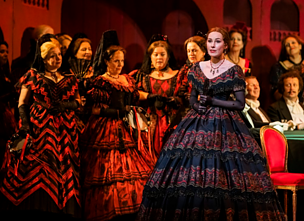
“For example, when I was in Elektra, I was already rehearsing Carmen, and everything is planned very far ahead. It sometimes takes 14 hours a day,” the woman says.
“Sometimes, you don’t even notice time passing, and you think, what’s the weather like outside – is it rainy or sunny? Of course, when people come to such a luxurious theatre and look at you on stage, they think you have a pompous life, but it’s not like that. It’s hard work behind it,” she shares.
The opera soloist says she also has to deal with disappointments and criticism.
“I’ve heard ‘no’ a lot. I’ve heard a lot of criticism. But it is a normal process. How else would you grow? If everybody praises you, there is no progress. Of course, sometimes you get angry, thinking that you have given so much of your heart and you are criticised. But all the doubts are also part and parcel of being an artist,” Kupšytė explains.
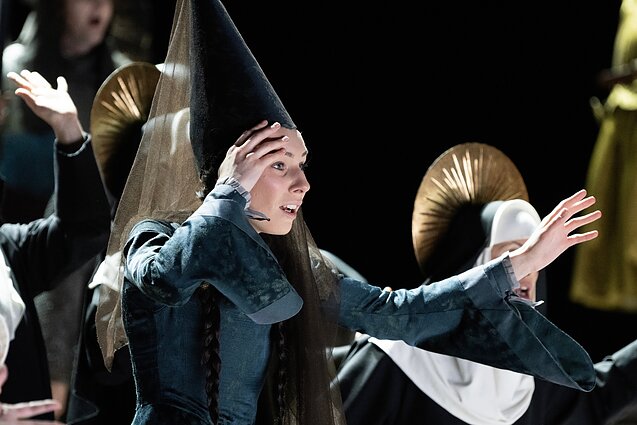
However, she says she enjoys this way of life and feels that she could not live any other way. She also thanks her Samogitian character for helping her achieve her dreams.
“You can be a very talented and hard-working person, but if you don’t have a thick skin, it’s very difficult to survive in this industry because the competition is huge and everybody has a very strong opinion. If you don’t know what you're doing, it’s very easy to get lost,” the opera soloist notes.
According to Kupšytė, young Lithuanian artists often turn to her for advice, and she always tells them to be more audacious.
“My advice is to be more audacious because sometimes we are too modest and we diminish our talent. We need not be stamped with the idea that we are from a small country and do not deserve something,” she says.
The mezzo-soprano, who is promoting Lithuania on international stages, says she always emphasises where she comes from: “I always stress that I am Lithuanian because I am proud of my country.”
She shares that her dream is to sing for the Lithuanian audience more often and she is especially looking forward to a concert in Vilnius in June.
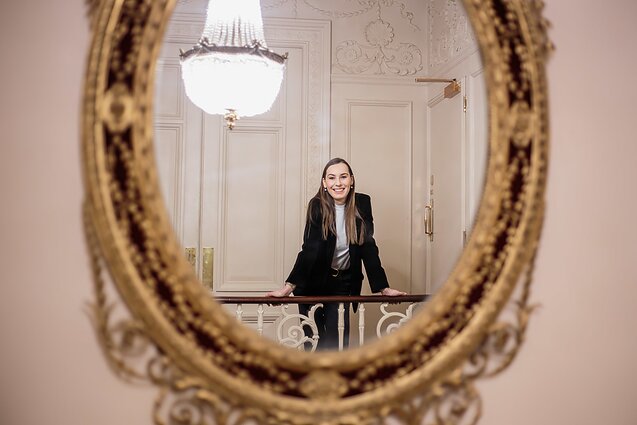
As the Jette Parker programme draws to a close, Kupšytė is also confident that the next stage will be easier. In August, she will be moving to Dresden, Germany.
“I cannot reveal what will happen there yet, but it’s a new phase and I’m looking forward to it,” she says.

Newsletter
Every Friday morning.