





“Lithuania is an organic country that has blossomed like a flower,” says Hugo Verkest. The Belgian man has no real connection to Lithuania but has admired the country, its history, and nature for many years.
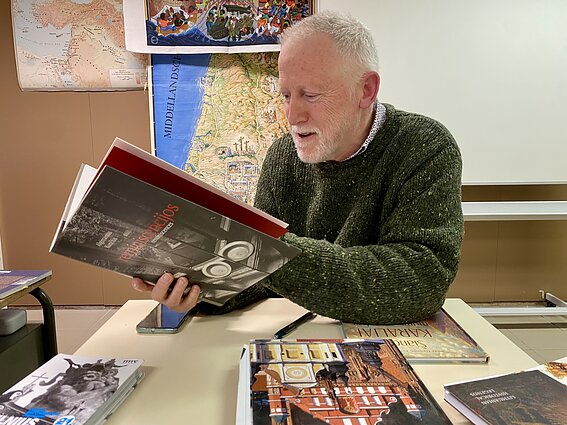
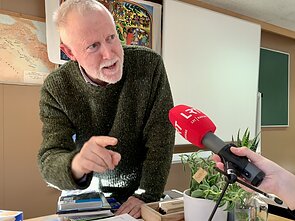
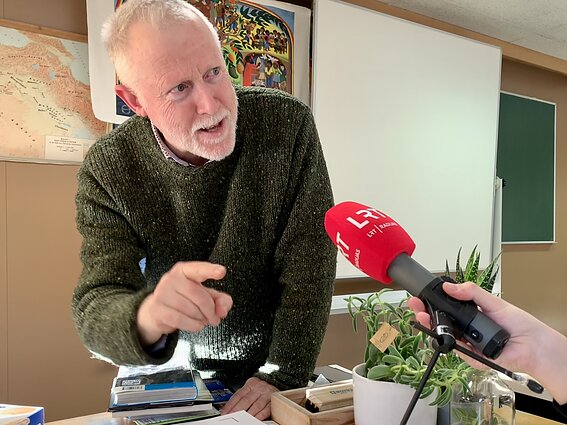
We meet in the small western Belgian town of Torhout in the Dutch-speaking region of Flanders where Hugo works as a teacher.
In 2020, Gintaras Marijauskas, the chairman of the Belgian Lithuanian community, presented him with the Friend of the Community award for his participation in and organisation of Lithuanian community events.
When I meet Hugo, I immediately ask him: “Is your wife Lithuanian? Do you have Lithuanian roots?” He smiles and answers with a simple “no”.
Students’ stories
Hugo’s story of love for Lithuania began at the beginning of the 2000s when he was in charge of student exchange programmes at the university. Most students see such exchanges as an opportunity to live in a warm or exotic country, but Hugo had a different idea.
“I wanted to send students not to Spain but to the Baltic states, as well as Poland, the Czech Republic, and Slovakia because it was new to us. We were interested in history, culture and wanted to cooperate. If I told the students about the Baltic countries, I had to show them a map because they didn’t even know where they were,” he says.
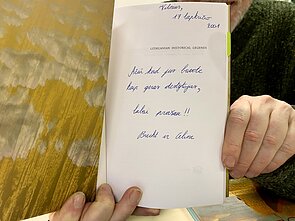
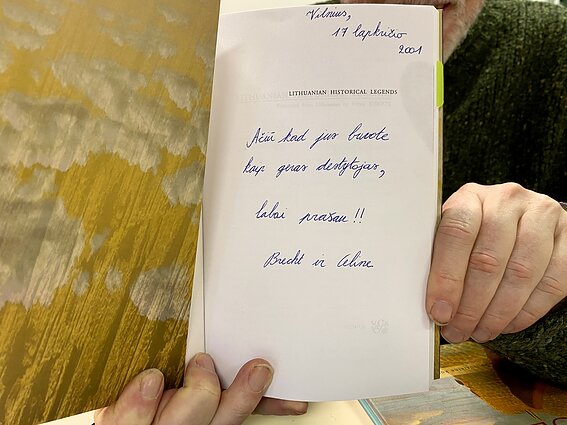
Hugo sent his first students to Lithuania in 2001. Their gift to the teacher was a book with Lithuanian proverbs and stories translated into English. On the first page of the book is a thank-you note signed in clumsy Lithuanian.
“Thank you for being such a good teacher. Brecht and Celine,” the first students Hugo sent to Lithuania wrote.
According to the Belgian man, both they and those students who went to Latvia were fascinated by the region and told many stories on their return.
“These were impressions about life, folklore, the 1980s, the occupation, deportations. Yes, we’ve heard about the deportations, but when they went there, they met the deportees. It was a cultural shock for them,” Hugo explains.
After hearing these stories, he decided to visit Lithuania himself.
First visit
Hugo had to wait several years for his first visit to Lithuania. In 2004, he visited Šiauliai and remembers seeing the city still recovering after the Soviet occupation.
“I was in a park and suddenly I saw a horse. I was surprised – what is it? A horse in the middle of the city? Seeing a horse in the city was surreal for me,” he says.
It was in Šiauliai that the first close scientific partnership was born. Later, more educational institutions in Lithuania joined the collaboration. Today, Hugo counts that he has sent well over 100 students to Lithuania since 2001.
He always tries to draw parallels between Lithuania and Belgium: “For example, your language. There was a period when Dutch, the language we speak, was also oppressed. You were punished if you spoke Dutch at school and not French.”
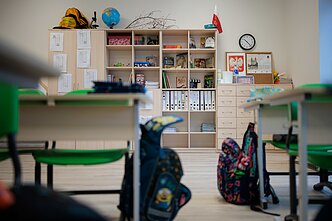
Hugo’s students are studying to be primary school teachers, so they visit Lithuanian schools. But the Belgian man says that he especially wants to show the students Lithuanian nature. He himself was most impressed by the seaside in Lithuania.
According to him, seaside towns and cities in Belgium are urbanised, with wide promenades, many restaurants along the coast, and tall apartment blocks towering over them.
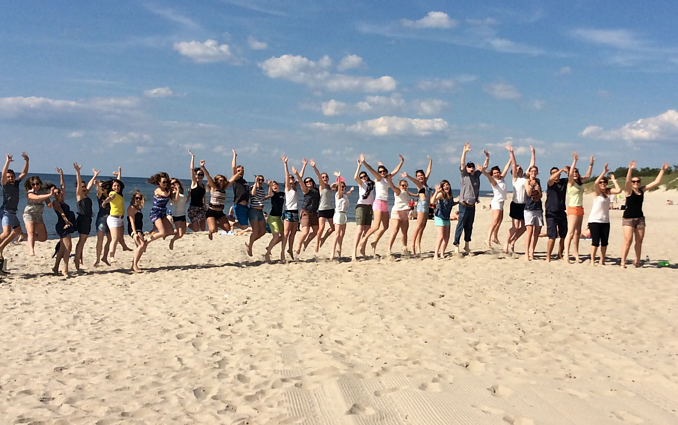
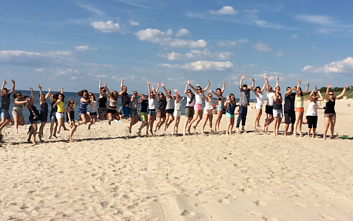
His students were also fascinated by Nida: “This trip was an eye-opener for the students. Your nature is pure: dunes, trees, silence. It was a fantastic experience.”
Feeling connection
Hugo calls Lithuania an organic country, with its own history, unfolding from the past. He says this is not the case in his country: “Belgium is a construction; the parts are put together but not fixed. This is sometimes a problem. There is no such thing as Belgianness.”
This is also why he finds the Lithuanian community fascinating.
“When I hear your music at events at the embassy, I still wonder how it is possible to know all the songs by heart. If I asked my students to sing a traditional Belgian song, even our national anthem...,” the man smiles.
“I’ve been to basketball matches and seen the film The Other Dream Team, which shows the 1992 match against the Russian national team. The way the fans cheer and chant... I close my eyes and say to myself, ‘you can feel the connection here’,” Hugo adds.
Big changes
When Hugo first came to Lithuania in 2004, he saw a country still emerging from Soviet oppression: “The cities were emptier, there were fewer cars on the streets.”
He also recalls seeing a lot of people with small baskets on the roadside.
“At first, we didn’t understand what was in them, but then we saw that there were mushrooms. People were trying to sell them to make extra money. We asked how much people get – we were told that they get less than 200 euros when they retire. It was hard for me to imagine how people could survive in such a system,” the Belgian man says.
But Hugo, who had visited Lithuania almost every year before the pandemic, experienced a big change in the country. Now, he says, the cities are much more westernised and the pace of life in Lithuania is faster.
But there are still differences, he says. One of them is the wounds left by the years of oppression. Hugo still often feels the Lithuanians’ distrust: “When you start talking to a Lithuanian, they look at you with suspicion at first.”

Newsletter
Every Friday morning.