















German scientists say they have discovered a wall on the Baltic Sea floor that may have been built by Ice Age hunters over 10,000 years ago.
According to the researchers, the structure was probably made of stones by hunters trying to lure reindeer into a trap. The structure, discovered off the coast of Germany, may be the oldest man-made structure in the Baltic region.
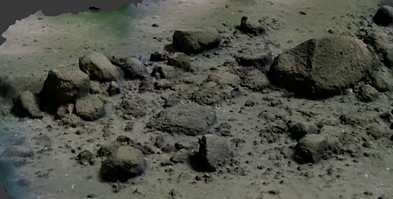
On the bottom of the Baltic Sea is a series of stones and boulders that German scientists say were put together in a neat structure more than 10,000 years ago.
The wall, which stretches for almost a kilometre, is made up of larger boulders joined by smaller stones the size of tennis balls and footballs. In total, there are more than 1,500 boulders.
Scientists stress that such a structure could not have appeared naturally or been created in modern times.
The first discovery of the boulder belt was made by geologists in autumn 2021, some 10 kilometres off the German coast. After studying the origin of the sediments, they found that the structure could be 11,000 years old. The researchers therefore believe that the wall was built by Stone Age hunters.
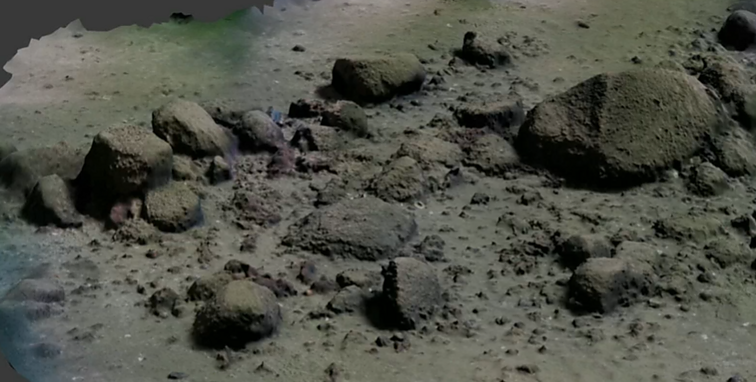
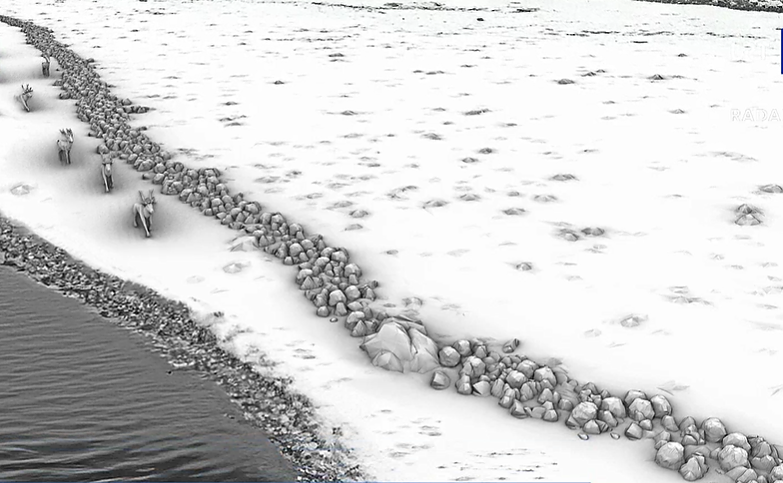
The 3D model produced by the researchers shows that the structure, which was probably built near a body of water, was likely to lure reindeer, then a major food source, into traps, smaller areas or even water where it would be easier to hunt the animals down. This was the conclusion of the geologists, geophysicists and archaeologists involved in the study.
“It is important that we have an interdisciplinary investigation. We have the opportunity to work in a large team, so we can understand things better by using different methods. Because the discovery itself is very old, very big. We have never seen anything like it,” says Marcel Bradtmoller, archaeologist at the University of Rostock.
A very similar hunter-gatherer structure is believed to have been found in the United States, in Lake Huron, one of the Great Lakes of Michigan. The wall extends 30 metres down.
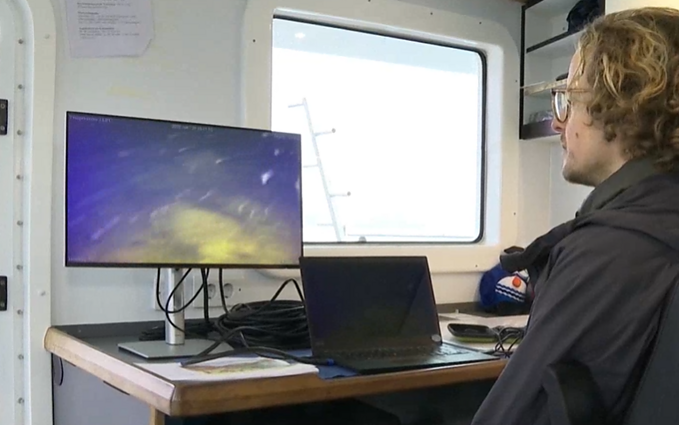
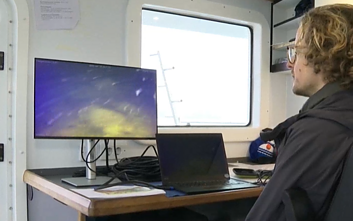
In the Baltic Sea, research is also difficult, with divers having to take pressure into account.
“The depth is 21 metres. So divers have just 35 minutes before decompression. This means that after 35 minutes, the divers have to surface again,” says Anne Herbst, a researcher at the University of Rostock.
Scientists estimate that around 10–11,000 years ago, the climate started warming up, forests expanded, and reindeer retreated. So the wall must have been built before then.
When the water level began to rise after the Ice Age, around 8,500 years ago, the wall got submerged. The scientists plan to explore the seabed in the Gulf of Mecklenburg further, as more traces of similar structures have been found.

Newsletter
Every Friday morning.