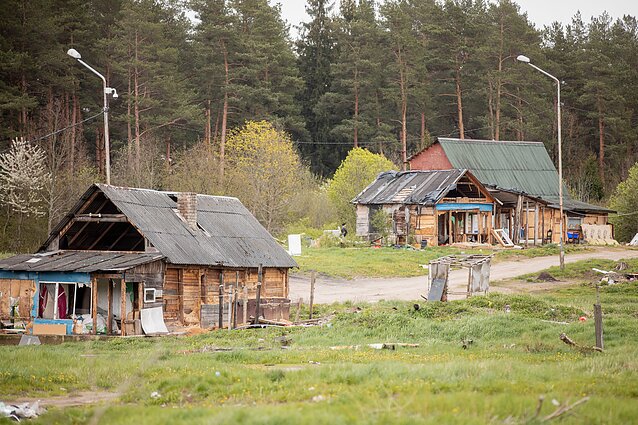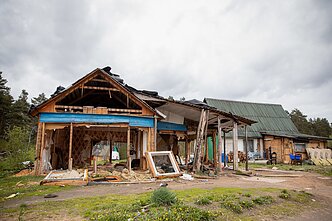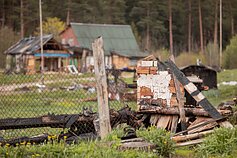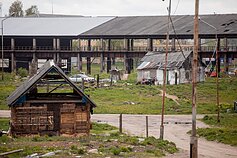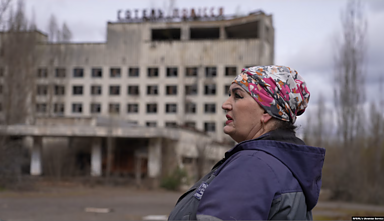













For the Roma, Vilnius tabor was a place where they felt safe, a home. So says Kristina Saidova, who grew up in the camp. She regrets that the demolition of the tabor did not benefit the community, because it lost the most important things, family and home. “Five years have passed since my grandmother's house was demolished, but still every night my grandmother cries because she misses her home,” says Saidova.
Kristina Saidova is a member of the younger generation of Roma in Vilnius and an activist. She was born and grew up in a tabor. “My whole childhood and adolescence was spent there,” says Kristina, who participated in a discussion at the National Human Rights Forum.
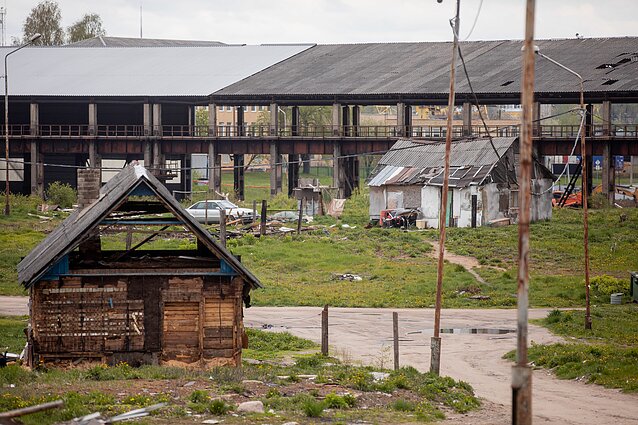
The tabor in Kirtimai, on the southern outskirts of Vilnius, used to be home to over 500 people, the biggest Roma settlement in the Baltics. In 2016, however, the city announced plans to resettle its residents and tear down the ramshackle houses, claiming they had been built there illegally. By June 2020, the tabor was gone, all its residents resettled.
Several years have passed since the demolition, but the community is still in pain and finding it difficult to come to terms with it, says Saidova.

“It was a place where we felt safe and at peace, and we considered the land our own: our home, our community, where everyone was united and friendly. Everyone helped each other. It is very painful that we are not as united now as we were when we lived in the tabor,” said Saidova.
The young people found it easier to adapt to the new living conditions, she said, while children and the elderly found the changes difficult.
The house of Saidova’s grandmother was occupied by her whole family. When it was demolished, her grandmother did not get any housing, even though it has been more than five years. “One day, the police came and said: either you demolish this house yourself or we’ll come with a bulldozer, raze it to the ground and fine you.”

She also recalls that her family had difficulty finding a place to rent, so they split and moved in with different relatives.
“They gave me temporary social housing, a room of 15 square metres. I lived there for five years with a small child and my husband. [...] It was extremely difficult to get a bigger room,” said Saidova.
Solving problems with evictions
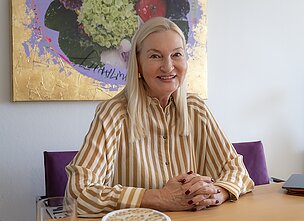
Agnieška Avin, sociologist and educator at the organisation Help Me Fit In, pointed out that for a long time, policymaking regarding the Roma community did not include Roma themselves – but finally there is talk that they should be involved in Roma empowerment processes.
When the authorities demolished the Vilnius tabor, Avin noted, their main argument was that the houses were illegal structures. However, the Roma community had been living there since before the Second World War. And even the municipality acknowledged it by naming streets after the community. Avin also argued that the houses in the tabor were numbered and people were receiving utility bills directly to their addresses.

“This means that the institutions acknowledged that these people lived there. [...] Everybody knew it, it was only later that the issue of illegality came up,” said Avin.
The municipality used other arguments, too, she added, such as integrating the Roma community and reducing crime – the Vilnius tabor was a popular drug sale site. However, as Avin pointed out, when the authorities started razing houses in the tabor, they did not start with those of drug dealers.
“Those houses that were nearest to the street were the first ones to be demolished. [...] The idea was that all Roma should be evicted and the problem would be solved,” she lamented.
“It has to be admitted that the Roma in Vilnius lost their homes because of state policy, because of local policy,” she added.

Labels and stigmas
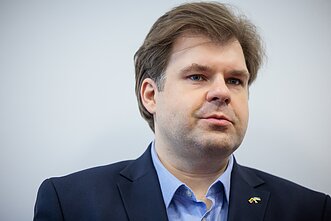
Human relations and home are always very sensitive issues, Simona Bieliūnė, vice-mayor of Vilnius, said at the discussion. Moreover, the Roma community is often blamed for the drug problem in Vilnius – for example, the municipality gets asked if the recent spread of drugs in the city has something to do with the dismantling of the Roma tabor.
“What is happening now is being attributed to the tabor, even though it has nothing to do with it directly. All countries are seeing a spread of new substances. [...] Any child can get involved in crime. I think we still have attitudes, we still label, we still stigmatise – not much has changed,” said Bieliūnė.

She stressed the importance of changing societal attitudes and acceptance of different communities, including the Roma.
Bieliūnė welcomed the fact that NGOs working with the Roma community have strengthened relations with schools and other institutions. Truancy, for example, is a more widespread problem among Roma children, but it is not enough to only work with the child to address it. It is important that the adults and the school community do not push them away, she said.
Social housing is a particularly sensitive issue, Bieliūnė admitted. Currently, the municipality has provided 60 social housing units for Roma families, and 47 more receive rent subsidies. Another 90 Roma people are on the waiting list for social housing. The list, however, is very long with 1,606 people waiting for social housing in Vilnius.

The community does not feel happy
Saidova, who is one of the younger generation of Roma in Vilnius, pointed out that the word “integration” has a different meaning for her community than for the rest of Lithuanians: “It hurts that they want to change us, our traditions, our national identity. [...] We are also Lithuanian people, but we have our own language and traditions.”
She also pointed out that when it comes to integration policymaking, the Roma themselves are rarely asked their opinion: whether they want to enroll in any courses or not.
“A lot of action plans have been written down, but the Roma themselves are never involved,” Saidova lamented.
Even if the dismantling of the tabor was intended to help the community, it did not work, she said: the former residents lost their homes and their social ties but did not gain anything in return.

“Home is where your family is. Five years have passed since my grandmother’s house was demolished, but she still cries every night because she misses her home. She had nowhere to go, all her belongings were gone and there was nowhere to leave them. Our whole family is scattered all over the city,” Saidova said.
They can now only come together at weekends, but even then it does not always happen. “We have lost our united and active community. Yes, the young generation, children, are getting more socialisation, they’re going to school and kindergarten. There have certainly been steps forward and for the better, but the community does not feel happy,” said Saidova.
Worst social exclusion
Experts from the Lithuanian Centre for Human Rights (LŽTC) recently conducted a study “Lithuania’s Non-Discrimination Policy: The Cases of the Jewish and Roma Communities” and presented it at the National Human Rights Forum.
“The Roma remain the most marginalised community. This is also reflected in experiences of hate speech,” noted Monika Guliakaitė, LŽTC advocacy manager.

According to her, Lithuania’s laws against discrimination are in line with European and international standards, but there are difficulties in their proper and effective implementation: people who have experienced discrimination do not seek help because of fear, mistrust, or previous negative experiences.
Kristina Rūkaitė, head of research at the LŽTC, added that the main challenges for the Roma remain unchanged for years: difficulties in finding employment and housing, recurrent discriminatory experiences in the education system, negative social attitudes, and distrust of institutions.
“Often there are stereotypes, even among state institutions, that Roma are not motivated, that they don’t make the effort. We are trying to show the impact of long-term systemic discrimination. Naturally, when people in your environment are unable to get a job and constantly feel humiliated or mistreated, they develop a distrust of institutions and society.
“Motivation is not a given, it is influenced by social contexts and needs to be encouraged. The totality of discriminatory experiences deepens exclusion. The Roma community is not always treated as equals by institutional representatives and Roma often feel marginalised. We need to bear this in mind when we are developing policies, when we are trying to respond to the needs of that community,” emphasised Rūkaitė.

Newsletter
Every Friday morning.