





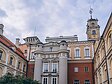


After Soviet forces occupied the Lithuanian Radio and Television Committee buildings – what is today LRT – on January 13, 1991, radio and TV journalists and technicians remained expelled from their studios for 222 days. They still continued to broadcast.
“Dear people! This is the very last piece of information: the Lithuanian radio has stopped broadcasting, but television, as you can see, still is,” were some of the last words of the news host Eglė Bučelytė on air on January 13, 1991.
Just like the TV tower or the Press House, Soviet troops occupied the TV and Radio headquarters on Konarskio Street that night. So-called platformists – Juozas Jermalavičius, Mykolas Burokevičius, Juozas Kuolelis and others – were put in charge as the “national rescue committee” to restore the “legitimate Soviet power” in Lithuania which had declared independence from the USSR less than a year before.
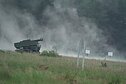
On January 13, 1991, Soviet troops and the KGB attempted to take control by force, which resulted in 14 deaths and some 600 people were injured. Moreover, Lithuania lost important media arteries that night: radio, television and the TV tower. It was a huge blow, but not irreparable. The air went silent for just 40 seconds before the Kaunas editorial office stepped in, its staff staying on the air for three days without a break.
The last images before the TV broadcast from Konarskio Street in Vilnius ended were a prayer outside the Supreme Council and soldiers walking down a long corridor leading to the studio. The screens went blank and some seconds later the Kaunas studio broadcast came on. It was 222 days before broadcasts from Konarskio Street could return.

Editorial meeting in a parking lot
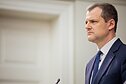
“We tried to keep broadcasting until the very last minute, and then Egle Bučelytė and I got on the phone. What to do? I said: Let’s not panic, it’s not the end of the world,” the then head of the Lithuanian television, Algirdas Kaušpėdas, recalls the night when the building was stormed by Soviet troops. “And then they came to my office. [...] I didn’t think they’d shoot me or anything, but when they threw me out the door, plaster fell off.”
All the employees working at the radio and television were expelled from the building by around 03:00 that night. Some of them managed to take out some equipment or important footage. Sometime later, some of the staff were allowed to come to collect their personal belongings under the supervision of armed soldiers.
Once the initial shock somewhat abated, the expelled journalists and other employees had to organise TV and radio broadcasts from another place, improvised editorial offices and studios. Although the Kaunas editorial offices were working, this was not enough.
During Leonid Brezhnev’s leadership, the USSR had been preparing for a possible nuclear war and a backup studio had been set up outside Vilnius, near Nemenčinė, codenamed “House of Creativity”. However, it had been occupied since January 10, so it was not possible to broadcast from there.
“On January 14, the Radio and TV staff gather outside the Supreme Council building. [TV chief] Kaušpėdas starts the morning editorial meeting over a loudspeaker, announces that we will meet at 24 Gedimino Avenue, a former radio studio, [...] and that the Journalists’ Union will also take us in,” Antanas Šimkūnas wrote in his memoirs.
The radio and TV staff got scattered across different makeshift offices in Vilnius: some worked from the Journalists’ Union, others in Saltoniškių Street. TV studios were arranged in the Supreme Council building, and the radio was hosted by the Library for the Blind and Visually Impaired.

Although the staff managed to take some equipment and supplies with them, it was not enough for smooth work. Ordinary people were donating amateur video cameras or VHS tapes to make up for the shortfall.
“After the night of 13 January, we managed to keep an operational mobile TV station, which was parked in the courtyard of the Supreme Council. All the latest news was broadcast from there,” says Kaušpėdas, who was in charge of TV at the time.
According to eyewitnesses, one employee succeeded in driving away with another mobile station right in front of the occupiers. However, this was not enough – there was a shortage of editing stations, basic equipment.
Moreover, Vilnius was somewhat isolated from the rest of the country, which made the situation worse.
“At that time, Lithuanian television was not accessible in the Vilnius region, but in the rest of Lithuania it was, they could receive broadcasts from Kaunas and other regions. [The Russians] took over the TV tower and the television buildings, they only cut off the Vilnius region, where [Lithuanian TV] was not accessible,” Romas Jankauskas, who was in charge of the TV news service at the time, tells LRT.lt.
A low-power repeater was brought in from Klaipėda. It was placed on the roof of the Supreme Council, where a temporary TV studio was located. It allowed to broadcast TV programmes within a radius of 2-4 kilometres.
Difficult conditions
Both radio and television needed temporary studios and special equipment. Technicians and engineers found a solution – to use small studios that had been built around the city in previous decades and route their signal to an intercity telephone exchange.

“People at the Library for the Blind and Visually Impaired dropped all their work and gave us two radio studios, analogous to our radio studios in Konarskio Street. And little by little it was possible to restore both the first and the second radio broadcasting programmes," said Nerijus Maliukevičius, who was in charge of the radio at that time.
Ordinary people were donating music records and other materials for the radio. Its programmes were broadcast in Lithuanian and Russian, hoping that more information about the situation in Lithuania would reach audiences abroad.
“The signal around Vilnius was weaker, only broadcasts from Kaunas could be picked up. We were just worried that the occupiers would invade the Library for the Blind and Visually Impaired, but they didn’t and we worked successfully,” recalls Maliukevičius.
For the television, things were much more complicated. Although a makeshift studio was installed in the office of the Vice-Chairman of the Supreme Council, Bronis Kuzmickas, there was not enough equipment. Although the crew had a mobile TV station, they didn’t have basic cameras or editing equipment.

Before 1991, the TV news service had been reorganised into a separate unit with a complete technical base, which helped a little. Cameramen kept professional cameras in their flats and cars but could not use them.
“We had professional cameras, but no editing room. Then we decided to film with amateur VHS cameras. People brought those cameras, tape recorders and videotapes, but the quality suffered,” says Romas Jankauskas.
Improvisations and conspiratorial editing rooms
“People of Vilnius, every day from 19:00 on channel 10 you can catch the Independent Lithuanian Television programme (with an indoor antenna),” ran an announcement in the Lietuvos Aidas newspaper on January 23.
Broadcasts from the makeshift studio in the Supreme Council in Vilnius started on January 17 January. Editorial offices were scattered all over the city, and the studio was operating from the still-barricaded Supreme Council.
“There are the barricades, the smell is so bad, the defenders are asleep, the lights are dimmed. And you walk from the mobile station in the courtyard all the way up [to the Supreme Council building]. The image of the Parliament covered in sacks has stayed with me to this day,” says Danutė Jokubėnienė, who worked in the studio.

Not only most of the equipment was left in the occupied buildings on Konarskio Street, but so was the entire content library: vignettes, films, video footage. It was a time of improvisation and learning to make do with what was available. Like “changing from a Mercedes to a Zaporozhets”.
“You had to gather all the material yourself, borrow a song from the music editorial office. Children had probably never seen as many Tom and Jerry episodes before,” recalls Jokubėnienė. “After January 13, we were supposed to launch a programme called the Mirror. We didn’t have a vignette. The Film Lovers Union lent us a cameraman, and we made the vignette by writing the title on a barricade with a sinker and filming it. We were very creative.”
There was a lot of stress not directly related to the work itself, some of the staff were ordered not to sleep at home or even to take their families to a safer place. Hiding equipment from potential seizures was also a concern.

“We used to take the equipment, the donated tape recorders, to a conspiratorial apartment near the Vingis stop for the night. A colleague was in charge of this, and every night it was taken away. At first, someone was always on duty guarding the place,” says Jankauskas.
Between Vilnius and Kaunas
And yet work continued. One TV studio would broadcast from Kaunas to the entire country, while another worked in Vilnius for the benefit of a relatively small territory around the city. The Vilnius-Kaunas highway was crucial for coordinating their activities.
“We divided the work so that we filmed Panorama stories [the main evening TV news programme] in Vilnius and broadcast them within a radius of four kilometres. Then all the footage, ready by 16:00 or 17:00, would be transported to Kaunas every day and broadcast to the whole of Lithuania. The carriers drove with anxiety because they could be stopped and the footage taken away,” says Jankauskas.
Meanwhile, the occupied studios on Konarskio Street were broadcasting propaganda, derisively nicknamed “Kaspervision”, after one of the hosts, KGB officer Edmundas Kasperavičius.

The independent radio and television, meanwhile, gradually improved the technical base with donations from abroad. Editorial offices started working from Panevėžys, Šiauliai, Marijampolė, Alytus, and Klaipėda.
This was a unique period in terms of content, with foreign films filling in the gaps between Lithuanian programmes.
“We were transgressing a bit, [...] we used to show films from VHS without any copyright, sometimes with amateur Russian dubbing... We were like underground artists,” says Kaušpėdas.

Independent Lithuanian TV
The occupation of the TV and radio buildings on Konarskio Street lasted until August 22, 1991.
To protest the brutality of the Soviet actions, Virginija Motiejūnienė organised hunger strikes in a trailer, starting on March 6. The trailer still stands in the parking lot outside LRT.

The putsch in Moscow on August 19–21, 1991, reverberated in Lithuania too. More studios were taken over during it, but when it failed, the Russians had to leave all the occupied buildings.
“Dear people, for 222 days, the feet of our staff did not walk up and down these stairs, we ourselves were evicted. We were working as refugees, under semi-conspiratorial conditions. And here we are, back again,” is how the TV chief, Kaušpėdas, addressed the people before entering the repossessed buildings.

The day before, the Lenin statue had been toppled on Lukiškių Square and the Soviet project had breathed its last breath in Moscow.
After the radio and TV buildings were taken back, it was not until the end of the year that all operations moved in. It took some time to restore the studios, air out the rooms and even, according to some witnesses, clean up excrement left by the occupiers.

Opinion polls carried out between April 17–22, 1991, showed that the trust rating of independent Lithuanian television programmes was as high as +64, while that of the Moscow First Programme was -38. The confidence rating of the Soviet-controlled television in Vilnius was as low as -75.

“Importantly, people regarded television with love and respect. The first night was terrible, but we got used to the new conditions and kept working. [...] Then there was a lot of enthusiasm because one by one the countries of the world recognised Lithuania, diplomats and guests started coming in. We were broadcasting all that and it gave us a lot of energy and enthusiasm,” recalls Kaušpėdas.

Newsletter
Every Friday morning.