






“I testify that, under the current Russian government, Russian troops will leave the territory of Lithuania,” said the Russian Ambassador to Lithuania on August 31, 1993. Just before midnight, the last Russian troops left Lithuania.
Lithuanian President Algirdas Brazauskas then expressed his wishes that Russia would “continue on the path of democracy, economic and social progress”. He expected Lithuania and Russia to maintain “good neighbourly relations”.
Russian troops left the territory of Lithuania before they withdrew from other neighbouring countries and even East Germany. But negotiations with Moscow were tense, witnesses recall.
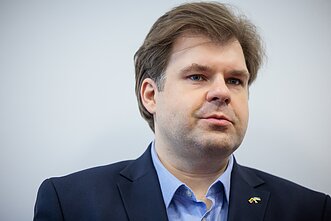
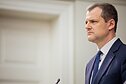
“The tone of the negotiations was quite confrontational,” says the then Defence Minister Audrius Butkevičius.
According to him, some Russian politicians and officials adhered to post-Soviet views. However, Pavel Grachev, who had previously served in Kaunas, headed the Russian Defence Ministry, so personal relations were used to expel the Russian troops.
Initially, there were negotiations not only on troop withdrawal but also a political condemnation of the occupation. Russia demanded proof of the economic damage caused by the occupation, and the Lithuanians were quick to come up with estimates. When the Russians saw the numbers, they did not want to talk about it anymore.

Lieutenant Colonel Gintautas Surgailis, who was on the Lithuanian negotiating delegation, recalls that in 1990 and 1991 nobody believed that Soviet troops would leave Lithuania so soon. Russia tried to negotiate a withdrawal period of several years and wanted to keep using military facilities on Lithuanian territory.
“Our position from the very first meeting was for them to leave without any further conditions. And the Russians kept saying that it was complicated, that it could be done in 10 or 15 years,” Surgalis recalls.
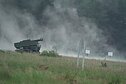
There were about 34,000 Russian troops in Lithuania at the time, with 1,000 tanks, 80 airplanes, and almost 2,000 armoured personnel carriers, mainly in Vilnius, Kaunas, Šiauliai, and Klaipėda.
No political part
Negotiations ended on September 8, 1992, with the signing of a withdrawal timetable. The withdrawal was due to be finished by August 19, 1993, but with only a few thousand troops remaining, the process was stalled.
“That issue was very useful for Russia, as it needed the support of the Western countries,” Butkevičius says.

He recalls that at that time, Lithuania was also negotiating to remind Moscow and the world of the illegal secret protocols of the Molotov-Ribbentrop Pact, which divided Europe into Nazi and Soviet zones of influence. Russia quickly refused to accept political assessment of the occupation, reparations, and ecological damage. Eventually, the political part of the document was dropped.
“Looking at the situation today, I sometimes regret that we don’t have a well-developed political part of this document,” says the first defence minister of the independent Lithuania.
‘Red Army, go home’
In November 1991, during the last Russian army parade in Lithuania, the signs “Moscow – 966 km” and “Red army, go home” could already be seen.
In 1993, Lithuania was in a complicated situation, as there were still Russian troops, while the Lithuanian national defence system was being established.
According to former Defence Minister Butkevičius, the low morale of the Russian troops contributed to their quick and smooth departure from Lithuania. At the time, the Russian soldiers, who were accustomed to having all their requests met, were suddenly left with a very small role and relatively uncomfortable living conditions.
“The Russian military forces in Lithuania have become dependent on us. All supplies, from potatoes to pensions and salaries, were under our control,” he says.
To ensure the quick departure of Russian forces, the government allowed the privatisation of the soldiers’ apartments but only by selling them to Lithuanians. Since prices in Lithuania were higher, the families rushed to Russia with the money they received.

The retreating Russian soldiers also sold what they could. Lithuania took advantage of this and bought weapons and armoured vehicles, but the purchases were often informal.
But even as the Russian army in Lithuania was weakening, the country was still in danger, according to Surgailis. On January 13, the parliament and the TV tower were attacked not by troops stationed in Lithuania, but by the Pskov Air Assault Division because it was feared that the soldiers who had lived here for a long time would refuse to resort to violence.
However, Surgailis is convinced that if Moscow had decided to attack Lithuania, the local Russian troops would have listened to the orders.
“There were those who were aggressive, ready to take up arms. If there had been an order to come out with weapons, probably most of them would have obeyed,” he believes.

Newsletter
Every Friday morning.