














Vilnius is carefully preparing to host the NATO summit next week. However, this will not be the first such event in the Baltics, as NATO leaders flocked to Latvia’s capital 17 years ago. Riga imposed strict restrictions and security measures during the summit, but Latvians were given two days off to make their life easier.
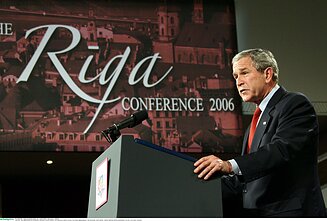
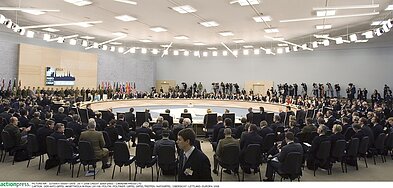
The Riga NATO Summit took place on November 28-29, 2006, at the Olympic Sports Centre. Leaders of the then 26 NATO countries, including US President George W. Bush, French President Jacques Chirac, German Chancellor Angela Merkel, British Prime Minister Tony Blair, and others, attended the event.
Lithuania, Latvia, and Estonia officially joined NATO in 2004, so the NATO summit in Riga just two years later had a symbolic value and increased the visibility of the Baltic states.
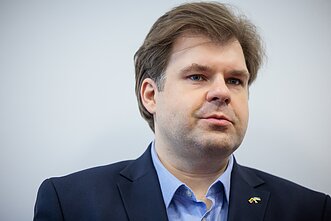
“We were a new member of NATO, bordering Russia. And in those days, Russia was not perceived as a threat by NATO. Moreover, there were a lot of Western politicians among our allies who were very careful with drafting any kind of larger military presence in the Baltic states,” Artis Pabriks, who served as Latvia’s Foreign Minister from 2004-2007, told LRT.lt.
“So, for us, it was a kind of confirmation that we are equal members of the organisation. It was also a sign that we are not a country or a region where heads of NATO would not come or would not organise such summit,” he added.
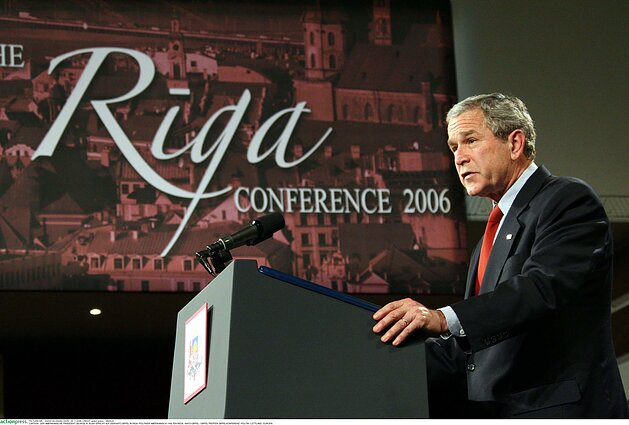
According to the Latvian politician, the NATO summit in Riga was important for the whole Baltic region, which was in the spotlight and had the opportunity to convey its message to the alliance.
“This message was about our full integration, about the equal defence of our territory compared to any other NATO country. That was the very beginning, and it was highly important for us,” Pabriks explained.
Security measures
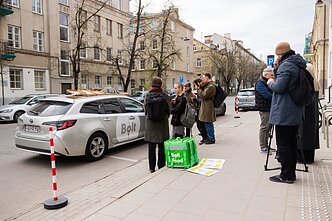
According to former Riga mayor Aivars Aksenoks, the city centre was closed not only to cars but also to people during the NATO summit. The airport and some of the roads used by the state leaders were closed to parking for fear that bombs might be left in the cars.
Around 9,000 Latvian police officers and soldiers ensured security during the summit. However, according to Pabriks, Latvia at the time was not able to “grant NATO-level security on its own”. Therefore, more than 450 airmen from seven European NATO countries were invited to take part in Operation Peaceful Summit, which ensured a no-fly zone over the venue.
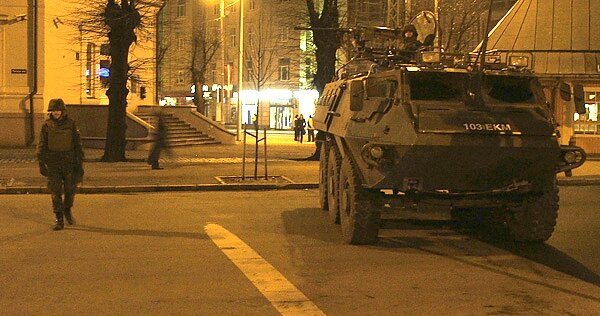
The gathering of the most important Western politicians in one place always increases the risk of provocations, the former Latvian foreign minister noted. At the time, there was talk that the Riga Summit would irritate Russia, which was already unhappy about the Baltic states joining NATO.
“On the other hand, those were the years when the West saw Russia as a partner and as a country which should be engaged with. It was thought that if we engage more with authoritarian countries, if we engaged in mutual trade, mutual dependence, then, after a while, they would also become democratic. This was a total mistake,” Pabriks said.
According to him, there were even rumours that high-ranking Russian officials would briefly visit the Riga summit. In the end, this did not happen, and such a move was “not welcome”.
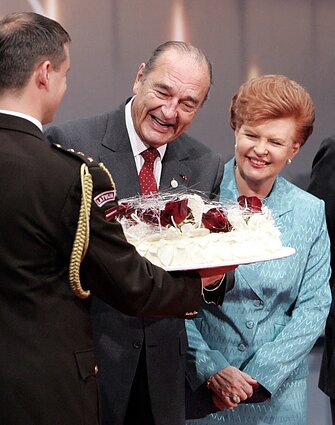
However, French President Chirac, who celebrated his 74th birthday during the NATO summit, cause quite a stir by inviting Russian President Vladimir Putin to come to Riga and have dinner with him and then Latvian President Vaira Vīķe-Freiberga.
Chirac’s office then said that Putin had accepted the invitation to celebrate the French president’s birthday in Latvia, but a Kremlin spokesman later announced that “the visit will not take place because it is impossible to coordinate the work schedules of the three presidents”.
According to Pabriks, the estimate of danger was much lower in Riga than it will be in Vilnius because “there is a war going on at the moment”.
“But Lithuanians should not be concerned about security because whenever a NATO summit is happening, NATO is on high alert, so there is no force which could disrupt such an event,” he added.
Renovating houses
The news of the NATO summit in Vilnius was met with mixed reactions. While some call it a historic event and an extraordinary opportunity for Lithuania, others resent the restrictions to be imposed and plan to leave the city during the event. With the government giving Latvians two days off during the NATO summit in Riga, many residents of the capital also chose to avoid the inconveniences and leave the city.
According to Former Riga Mayor Aksenoks, the NATO summit did not cost the city anything as it was a state-level event. Asked how much it cost Latvia, Pabriks, who was Foreign Minister at the time, said that the amount is kept secret. But he stressed that countries should not overthink costs when organising events of this scale.
“It is in the interest of Lithuania to have the NATO summit in Lithuania. And it was in the interest of Latvia to have it in Latvia. That’s very simple,” said the former Latvian foreign minister.

According to him, Riga, like Vilnius, prepared thoroughly for the event: “When you invite guests, you clean up your house. That’s normal.”
While Vilnius is repairing the streets ahead of the NATO summit, Riga renovated wooden houses on Kalnciema Street, listed as a protected cultural monument. However, not much attention was paid to the visual clean-up of Riga before the event, said the former Riga mayor.
“As far as I remember, all the preparations were mostly about security issues. We also had the ice hockey championship in Riga in the same year and many guests, so the city was prepared. And this was the time before the crisis, so we had a lot of investment in roads, in buildings. So, at the time, Riga was really nice,” Aksenoks explained.
Meanwhile, Pabriks encouraged the Baltic countries to get rid of their complexes.
“Lithuania is a very beautiful country, and Baltics are a very nice region. I think that what we are missing sometimes is a little bit of self-confidence. So, I think you should not be concerned because everybody will be happy with your hospitality, just as they were in Latvia,” he said.

According to the former Latvian foreign minister, the Riga NATO Summit was “a success overall” because it was “a good advertisement for the Baltic region”.
“So, we expected that in Vilnius the Baltic interests will be furthered. And our interests are very clear here – we are at war, so we need additional presence with brigades,” Aksenoks said. “And, of course, one of our largest concerns is a greater assistance to Ukraine and political wording for Ukraine’s future membership.”