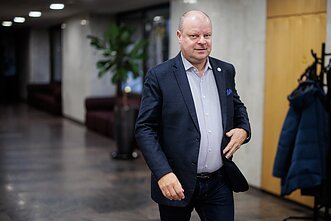












The first generation to grow up in independent Lithuania is unwilling to take up responsibility and tends to postpone family planning, Laima Žilinskienė, associate professor at the Faculty of Philosophy of Vilnius University, has found.
Žilinskienė’s study includes people born between 1980 and 2000. According to her, a lot of research has been carried out on the generations of the Soviet era, but there is a lack of understanding about people born in independent Lithuania.
“We’ve researched the different Soviet cohorts, collected a lot of material, and we can talk about the behavioural patterns of the Soviet generations. Now, we have decided to study those whose childhood and youth passed during the transformation period,” she told LRT TV.
A research participant tells their life story and that of their parents and grandparents. According to Žilinskienė, this allows researchers to understand life experiences over a period of about 100 years.
“This type of research helps us, first of all, to detect or study certain behavioural patterns. The second thing is that we can see very clearly the influence of the family on the participants, how the parents of the participants managed to adapt during this period of transformation, and how this is reflected in the children,” she said.
In her words, the research has shown that the generation of respondents’ parents puts more emphasis on financial security and professional success. Attitudes towards the family also differ, as those born after 1990 are more oriented towards the so-called solo life model.
“They argue that this life model is based on the pursuit of a professional career and development. However, they also say that they want to have longer and better leisure time and don’t want to make commitments,” Žilinskienė said.
The unwillingness to make commitments also leads to a refusal to have children or at least postponement of family planning to the future.
“For example, one participant said: ‘I already have a dog and I know what that means – it's also a living creature that requires commitment. Imagine if I had children. Then I would have to commit for life’,” the researcher said.
“Such examples show that this generation is unwilling or even afraid of commitment. But I think that this is a feature of the times, a generational effect,” she added.
Although the study included those born between 1980 and 2000, it also provides some data on the generation born after 2000, known as Generation Z, who are siblings or children of the participants.
“It remains to be seen whether this generation will be very different. But I can tell you right now that global situations such as the coronavirus pandemic and the war will play a big role here,” Žilinskienė said.
She mentioned a study in the Baltic states was carried out by the Americans.
“They concluded that the overall life in these countries started to improve only in 2014. This did not last long because then came the Covid-19 pandemic and the war in Ukraine,” she explained.

Newsletter
Every Friday morning.