












After the Ministry of Education has hinted at plans to significantly reduce the teaching of Russian in Lithuanian schools, teachers are looking to retrain for fear of losing their job.
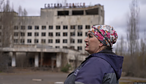
Marta Sinkevič has not been teaching Russian at a school for a very long time but is already seeking a new qualification so that she could switch to another subject if need be.
Soon after Russia invaded Ukraine last spring, she enrolled on a municipal programme and is now studying special education.
“Deep in my heart, I knew that anything can happen. You can say it’s my plan B since one has to make a living, [...] so it’s for my peace of mind,” explains Sinkevič.
Amid anti-Russian sentiment unleashed by the war, Lithuania’s government decided that the country’s children should be taught other foreign languages instead of Russian, which is currently second in popularity only to English. Around 70 percent of students study Russian as their second foreign language.
The Ministry of Education, Science and Sport is therefore incentivising Russian teachers to obtain a second teaching qualification. Starting in autumn, it is launching a special retraining programme.

The Ministry has even surveyed Russian language teachers, asking them whether they would be interested in retraining. Just under half, 410 Russian teachers, completed the survey, of whom 279 said they would like to acquire an additional qualification.
The most popular subject choices among them were life skills, special education, and German.
However, retraining may not be a viable option for all.
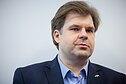
“When it comes to older teachers, we should look at this situation realistically – how many more years are they going to teach? Because we need at least four years to train a good language specialist,” says Vigilija Žiūraitė, spokeswoman for the Association of Language Teachers.
The Ministry insists the training programme will last a year and teachers will be able to participate after work.
Further reading
“It can be organised in different ways: in sessions, on weekends. Higher education institutions will choose the most appropriate method,” says Deputy Education Minister Ramūnas Skaudžius.
Retraining is possible, but not easy, says Sinkevič, the Russian language teacher. Under the programme she is enrolled on, intense sessions – morning to evening – are scheduled for one week every month. “Thanks to my colleagues who can cover for me, I can somehow manage, because there are still classes we have to teach,” she says.
The Education Ministry’s plan is to significantly reduce the teaching of Russian as a foreign language within 3-5 years.

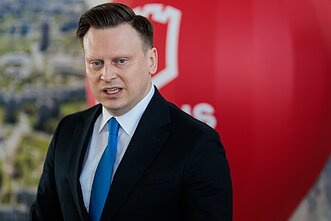
“The pyramid should be turned upside down and have 70 percent [of students] pick to study an EU language,” says Skaudžius, adding that Russian will remain an option, but the goal is to have under 30 percent of students study it.
According to the Association of Language Teachers, the transition will not be quick and easy, since the teaching of languages other than English and Russian has been neglected for years.
“Leaving all this to so-called natural change also requires some regulation. Otherwise, we could have an even bigger problem by abandoning Russian without offering anything instead, which is why all efforts should now be focused on training new specialists,” says Žiūraitė.
The Education Ministry’s vision is to have more students study German, French, and Spanish.

Newsletter
Every Friday morning.