







At the European Council’s working lunch on Thursday “all eyes will be on one country: Lithuania”, writes Politico. As the EU is preparing to ease sanctions on Belarusian fertilisers, Lithuania “is making it a bit difficult”.
The proposal to ease sanctions is supported not only by a number of EU countries but also by the United Nations (UN), which is concerned about rising food prices.
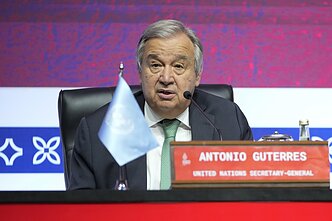
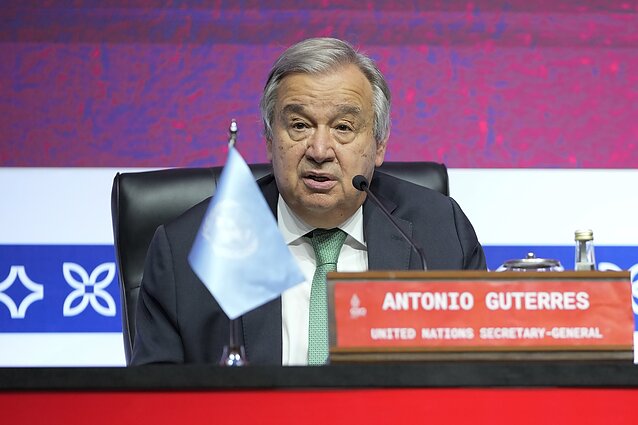
UN Secretary General António Guterres will attend the European Council’s meeting on Thursday and Friday to urge the EU leaders to “stop world hunger”, according to Politico.
Proposed exemptions
Some EU countries, including Portugal, the Netherlands, France, and Italy, have proposed exemptions for Belarusian fertiliser export sanctions.
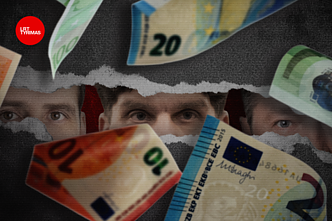
According to information available to LRT.lt, the proposal aims to free up funds of several Belarusian businessmen currently frozen in the EU after proving that the money is needed to export fertilisers to third world countries.
The exemptions are proposed to avoid the negative impact of sanctions on food prices, a problem that is particularly acute in developing countries in Africa, Asia, and South America.
Belarusian potash fertilisers were sanctioned in 2021 after Alexander Lukashenko’s regime forced a Ryanair flight with an opposition journalist on board to land in Minsk and launched a crackdown on its opponents. With the sanctions further tightened the following year, fertiliser exports fell by nearly 70 percent.
However, Lithuania believes that there are other ways to address the hunger problem, for example, by replacing Belarusian fertilisers with products from other countries.
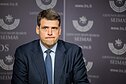
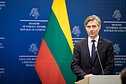
According to Lithuanian Foreign Minister Gabrielius Landsbergis, if the current proposal was adopted, it would not mean that Lithuania would be obliged to allow the transit of Belarusian fertilisers through its territory again. However, it would create a precedent for further easing of sanctions, he said.
“We believe that once the door is opened, the next step is a progressive easing of sanctions, so we don’t want to open that door because it has to do with the economic and political benefits for the regime,” Landsbergis told LRT.lt

Sanction hawks
EU leaders meeting in Brussels on Thursday will start with lunch with UN Secretary General António Guterres. According to Politico, the so-called “food security” issue could be one of the main topics of the meeting.
“The idea is to reach a similar agreement [to] the one that we had on the Russian sanctions, [but] Lithuania is making it a bit difficult for the moment,” an unnamed diplomat seeking to broker a deal told Politico.
Vilnius, however, is backed by the other Baltic states and Poland, a group of sanction hawks that believes squeezing Russia and Belarus is crucial to ending the war in Ukraine.
“There is no way we will agree to derogate sanctions on Belarusian fertiliser. With Guterres coming, we feel the pressure growing. But this has nothing to do with global food security. It’s really just a way to appease the UN,” an EU diplomat from one of the countries that back continued sanctions told Politico.
Other ways
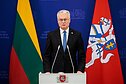
Lithuanian President Gitanas Nausėda also noted that Lithuania is not the only country opposing the easing of sanctions.
“We imposed sanctions with very clear objectives. These sanctions were imposed to make both regimes [Belarusian and Russian] feel certain consequences of their actions, first of all, the war in Ukraine,” Nausėda said in Brussels.

According to him, there have been no positive changes in Belarus, and the situation has only worsened because Minsk is now “assisting Russia” in its war against Ukraine.
“We must not give these two dictatorial states a chance to celebrate their victory by easing our sanctions,” the president said.
He also told reporters in Brussels that he had received information about several companies producing potash fertilisers in Africa. According to him, these companies produce twice the amount the continent needs, but the fertilisers are mostly exported.
“So, let’s perhaps manage the chains of trade and production. Let’s directly support the countries that we want to support but let’s not be swayed by these artificial arguments that are aimed at one thing only – to create a precedent that shows that Europe is going sideways,” Nausėda said.
“This would be extremely politically damaging,” he added.
The Lithuanian president stressed that “we will definitely take a very clear and unambiguous position on this issue because this has always been Lithuania's position”.

Newsletter
Every Friday morning.