















The ruling conservatives want the Communist Party of Lithuania to be recognised as a criminal organisation. The proposal is needed but overdue, according to historians.
The Soviet security agency (KGB), secret police agency (NKVD), and Ministry of State Security (MGB) have all been recognised as criminal organisations in Lithuania.
The ruling Homeland Union wants the Communist Party of Lithuania, the key structure that implemented the Soviet occupation policy in the country, to be added to the list.
According to the proposal, all high-ranking party figures who were active before 1990 would be required to mention their activities in the Communist Party of Lithuania in their biographies if running for an elected office.
“We must know who the masters, the inspirers, and the organisers of all these terrible things that happened in Lithuania were,” said Audronius Ažubalis, a conservative MP.
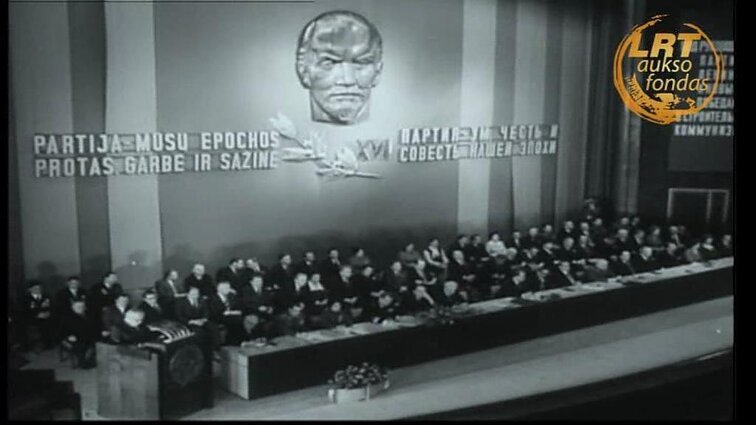
Historians argue that history tends to repeat itself if we do not learn from it.
“It is a very meaningful initiative, but perhaps a little overdue – it should have been done a long time ago,” said historian Regina Statkuvienė.
“The question is overdue, as many of these people have already passed away or are no longer active in politics,” added Deputy Parliament Speaker Julius Sabatauskas of the Social Democratic party.
There would also be “a number of exemptions”, as such people as signatories of the March 11 Act of the Re-Establishment of the State of Lithuania would probably not be targeted by the law, Sabatauskas added.
In 1989, during mass protests of the Singing Revolution in Lithuania, the party also declared independence from the Communist Party of the Soviet Union. The conservatives say further studies are needed on how to address this episode in the law.
“There are no objective grounds for declaring the independent Communist Party of Lithuania, founded in 1989, a criminal party. On the contrary, its members voted in favour of the March 11 Act,” said Dainius Žalimas, Dean of the Faculty of Law at the Vytautas Magnus University.

The initiators also argue that the law is not overdue, as a modern version of communism is reborn in Russia today. But according to Žalimas, modern Russia cannot be compared only to communism.
“Modern Russian ideology is based on a mixture of Nazism and Communism, and this should be taken into account,” the lawyer said.
In his words, it is much more important to identify those who have been “involved in various neo-Nazi and pro-Kremlin organisations” since 2000.
The conservatives plan to register the proposal to recognise the Communist Party of Lithuania as a criminal organisation in the spring session of the Seimas.
The party was established in early October 1918 and banned in August 1991 after the collapse of the Soviet Union.

Newsletter
Every Friday morning.