














Lithuania’s parliament came short of banning microplastics in cosmetics, opting instead to wait for EU regulation. However, the country is banning free plastic bags in supermarkets.
Microplastics are used widely in cosmetics, even as environmental concerns are putting pressure on companies and governments to phase them out.
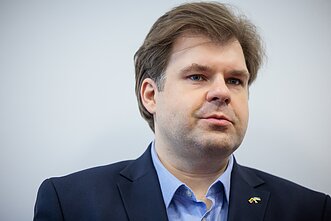
“In cosmetics, microplastic particles are used as exfoliants. Like abrasives in toothpastes, for example – they don’t do any harm in themselves, but they accumulate all the time because they are quite resistant, chemically inert,” says Albinas Žilinskas, a professor at Vilnius University.
A group of politicians in the Lithuanian parliament Seimas proposed banning microplastics in cosmetics, but the majority of MPs were reluctant to do so and will wait for EU regulation. Cosmetics and household chemical manufacturers agree that change is needed, but say it takes time.
“If we removed microplastics today, we would not have liquid make-up bases, mascara or nail polish, and replacing microplastics will require innovation,” says Eglė Vaitiekūnaitė-Šiuškienė, head of Dermofactorius.
“Finding analogues, developing products and research can take time. Today, it is estimated to take up to 10 years. I think there will be a period of time when it will be safer to buy a product with microplastics than one without, if we shorten the transition period,” comments Natalija Liškauskienė, spokeswoman for the Association of Cosmetic and Household Chemicals Manufacturers.

While cosmetics with microplastics will still be available in supermarkets, the free distribution of clear plastic bags will be discontinued from next July. The parliament has decided that supermarkets will have to charge customers a few cents for those bags. Only bags for fish, meat or meat products will be exempt.
“Prices are rising all the time, everyone is tired of rising prices, and any additional charge is very sensitive for shoppers,” says Silvija Katinaitė, manager of the Pas Katiną shop.
However, some shoppers say that additional charges will not discourage the use of plastic bags, since products have to go somewhere.
“It’s not the kind of sum that would discourage you a lot,” says a man interviewed by LRT TV.
“It would be even better if there were paper bags instead of plastic,” says another interviewee.
“But what will you buy and where will you put it? In your pockets? Think about it, you need bags,” comments another shopper.

The head of the Norfa supermarket chain thinks that packaging is a much bigger problem.
“When we sell sweets, each one is wrapped, then 10 sweets are wrapped again and the 10-packs are wrapped again. Perhaps there should be a regulation setting packaging limits per kilogram of product,” says Dainius Dundulis, CEO of Norfa.
The Žiedinė Ekonomika (Circular Economy) NGO argues that bans are needed because environmental damage affects everyone. However, it believes that such measures are only a first step.
“There are necessary things that encourage us to change, but in my opinion, it is not enough because we have other disposable bags, such as paper bags, which are still free. Packaging is not taxed enough in general, for example, coffee cups,” says Domantas Tracevičius, director of the NGO.
Researchers estimate that the amount of plastic waste entering the world’s oceans can double by 2040.

Newsletter
Every Friday morning.