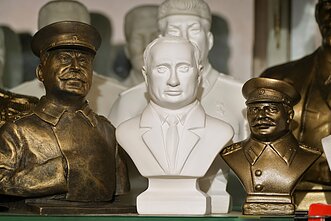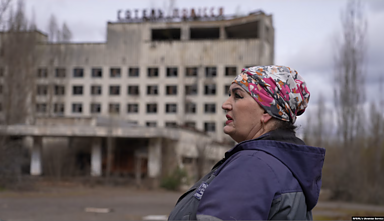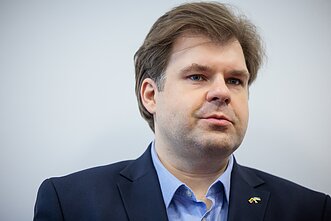



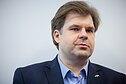




Lithuania’s post-Soviet transition was economically painful for many. As the country continues to ignore the effects of trauma, the phenomenon of Soviet nostalgia will continue to linger on, according to Ainė Ramonaitė, a professor at Vilnius University’s Institute of International Relations and Political Science (TSPMI).
After Lithuania tore away from the Soviet Union in 1990, the country saw a dramatic increase in suicide rates, which was followed by decreasing life expectancy and increasing emigration.
"We can see that there is a deep trauma, which has great consequences for the present," said Ramonaitė. "We can attribute the nostalgia for the Soviet era not necessarily to the pro-Soviet nature of the person. Other studies show that people do not want to return to the Soviet Union or that they miss it."
Soviet nostalgia, ie longing for the USSR, could be explained by the resistance to the established narrative, which says the post-Soviet transition to a market economy went smoothly.
"If we look at the social consequences of that process, they were severe and painful," said Ramonaitė.
Many people have also felt resentment about the economic changes brought about by the market economy. Researchers have observed similar processes in the West, where many manufacturing regions have been hit by globalisation, with production moving to Asia.
According to Ramonaitė, those regions also have a favourable environment for populism to grow.

In Lithuania, people also feel they are unable to share their disappointment, as the establishment narrative prevents bringing up the painful moments in Lithuania's post-independence development.
"The first decades of independence were really difficult," said Ramonaitė. "We don't talk about the consequences of the transition, we keep quiet, saying that if anyone has experienced problems, it's their own business."
Who longs for collective farms?
For several years now, Ramonaitė has been travelling to the Lithuanian countryside, interviewing people and asking about their views on politics.
According to her, these interviews reveal that people talk about politics and Lithuania's independence in a different way than what is usually heard in public.
Even people who live in the same village and worked in the same factory during the Soviet era give completely different answers on whether they long for the Soviet era and how they remember it.
"Some say that during the Soviet era Lithuania was industrialising, building factories, growing, prospering, and then everything collapsed and there is no clear direction," she said.
"Others point out that modernisation during the Soviet era was artificial, nothing worked as it should have, and there was corruption. Everything was nice on paper, but in reality, it wasn’t, and it was only at the time of independence that modernisation started," she added.

While some remembered collective farming as providing basic services, others associated them with hard work and control and referred favourably to independence when people regained their land.
"Memories are very different. But some of the people who remember the collapse of the USSR with regret are not anti-Lithuanian or pro-Russian. Nothing like that. They are happy about independence, they just don't understand why [the country] destroyed what they had built with their own hands," she said.
"They did not see it as Soviet – the factory that they designed themselves or the collective farms that they built themselves. For them, it was the product of their labour, which was then demolished," added Ramonaitė.
In light of her research, Ramonaitė says the academic, political, and economic elite should be speaking more about the country’s problems.
According to her, if the dissatisfaction is not present in official sources, it does not mean that people do not talk about it privately with their neighbours and families.
"This creates a very fertile ground for conspiracy theories to spread. If you don't trust what is said in the public space, it is very natural and easy to believe in conspiracy theories, because you think [that] the real reasons lie elsewhere," she said.
Thus, Lithuania's elites should not keep silent about the consequences and the trauma of transformation.
Meanwhile, criticism of Lithuania's current direction may favour Russia, which would be a threat.

"Vladimir Putin came to power in Russia and has been successful precisely because of the trauma of that post-Soviet transformation. He came as a counterpoint to [President] Boris Yeltsin and the chaos of the transformation, which in Russia was incomparably greater than in Lithuania,” said Ramonaitė.
"This is the reason why we do not dare to talk about that time, because it seems to serve the Russian narrative. But not talking is unlikely to help, because people are talking anyway," she added.
Nostalgia for the Soviet era is diminishing over time. However, it’s not because the market itself is solving the post-transition problems.
"We can see this is not always the case and sometimes state intervention is important. So far, we don't have a normal regional policy and everything is spontaneously moving to the cities," said Ramonaitė.
"The capital is booming, but people in the provinces are constantly suffering new losses – schools are closing, post offices are shutting. This always creates a mood of regression, which contributes neither to a sense of happiness nor to support for the government."

Newsletter
Every Friday morning.