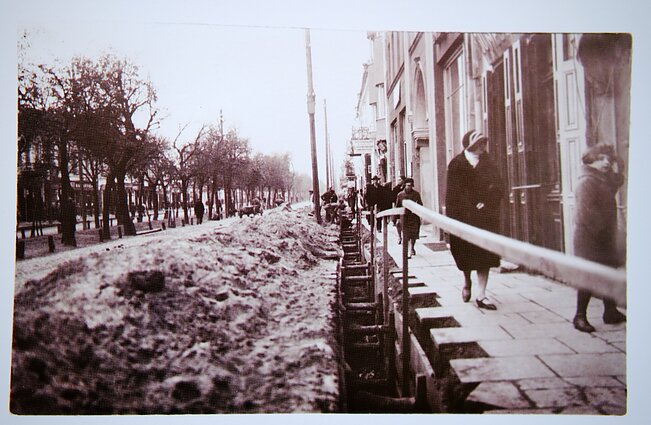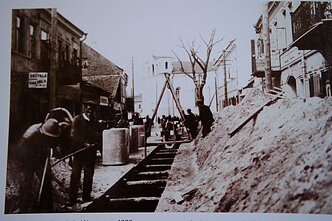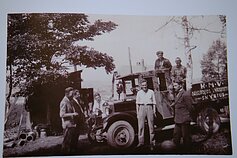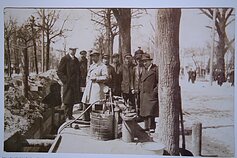










Kaunas, the current European Capital of Culture, did not have proper water supply and sewerage systems when it became the temporary capital of Lithuania in 1920. The infrastructure that was quickly built in the city also helped to increase its population.
According to Simonas Jazavita, a historian at the Kaunas City Museum, there were discussions about the introduction of water supply and sewerage in Kaunas before the First World War.
In Vilnius, the then capital of Lithuania, which was later annexed by Poland, such an infrastructure was built in 1912.
“Such work first started in the British Isles and Germany and then moved on to other parts of Europe. At the end of the 19th century, it was built in Prague, as well as Warsaw and other Polish cities. It quite quickly came to our country from Poland,” Jazavita told LRT.lt.
When Kaunas became the temporary capital of Lithuania, water supply and sewerage became a necessity. “If Kaunas hadn’t become the temporary capital, it would have possibly taken a long time to install both water supply and sewerage in the city,” the historian said.
It was Steponas Kairys, one of the signatories of Lithuania’s Act of Independence, who undertook to make Kaunas a sanitary city. He became the head of the sewerage and water supply department of the Kaunas City Municipality and drew up a construction plan.

According to Jazavita, Kairys travelled to Germany’s Berlin and Frankfurt to gain experience.
“He saw how it was done in more than one place in Germany, and it must have impressed him because he used similar working methods in Kaunas,” the historian explained.
Taking care of workers
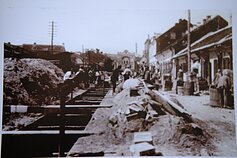
The digging and laying of the pipes were done by people, as the excavator, which was a novelty at the time, appeared only towards the end of the construction. For many, the construction of water supply and sewerage became an opportunity to earn money.
The municipality decided not to pay benefits to the unemployed and took on 200 people to start construction. Soon, it became so popular that there were days when 50 new workers came in.
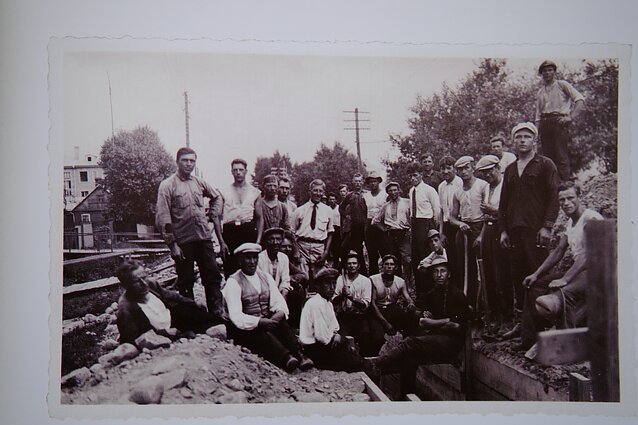
One of the main issues was feeding a large number of workers. Kairys suggested giving them pea porridge with ham, as was done in Germany.
“It was the responsibility of the project manager. Kairys had a long record of political and social activity; he was not just an engineer. He was a representative of the political left and always thought it was important to take care of the workers because they were the driving force of the state,” Jazavita said.
“Moreover, if the workers were not taken care of, the Bolshevik ideas, which were popular at the time, would spread. On the other hand, it was a natural understanding that if a person was fed and had decent working conditions, he would be motivated and would do more,” the historian added.
According to him, Kairys succeeded in motivating the workers, and the work proceeded quite quickly, taking less than a decade.

Population jump
The construction of the water supply and sewerage in Kaunas cost around 10 million litas at the time. The citizens quickly felt the benefits of the system, according to Jazavita.
“The city saw a reduction in hygiene problems and the threat of epidemics. This has contributed to the city’s population growth,” the historian said.
“The expansion of the city to the suburbs increased its size, but there was a high infant mortality rate. Once the problem was solved, the population curve shot up immediately, and the number of people in Kaunas increased,” he added.
The first hydrant in Kaunas started operating at the Town Hall in the city centre. Later, pipelines were laid towards Naujamestis (New Town) and gradually towards the suburbs.


Newsletter
Every Friday morning.