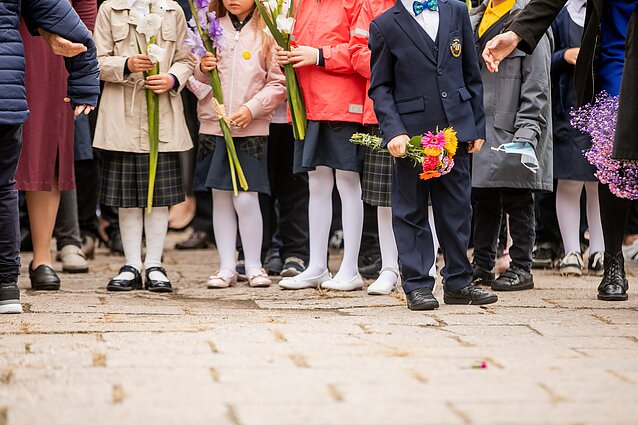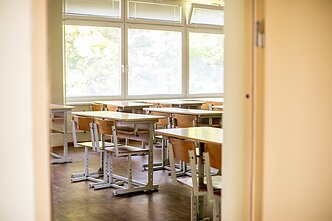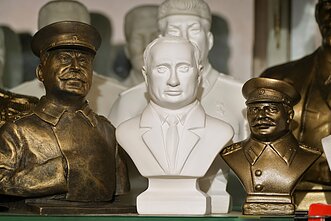










Although children start learning English in primary school, two-thirds of pupils choose Russian as the second foreign language class later on. Why does the Russian language remain a popular choice in Lithuania?
Irina Timofijčiuk teaches Russian to over 120 pupils at Klaipėda's Vėtrungė Gymnasium. When she asks students why they choose Russian, they often reply that their parents told them to do so.
"Because parents speak Russian and parents always think that if there are any difficulties, they will be able to help the child, and I think, and I have heard such opinions, that Russian will be more useful in life than, for example, German or French," says Timofijčiuk.
Both German and French can be chosen as a second foreign language at the gymnasium. Students can also pick Latin as an additional language. However, Russian is still the most popular choice.
According to Živilė Kiškionytė, head of Klaipėda Vėtrungė Gymnasium, many children from mixed families study at the school, and many of them already know Russian.
"Because we are cosmopolitan, not only English but also Russian can help us to communicate with people. And in this case, [help] with the Ukrainian [refugees]," says Kiškionytė.
Meanwhile, French is the most popular second foreign language in Vilnius Simonas Daukantas Gymnasium. The school also offers Russian, German, and Swedish as additional languages.
"It is noticeable that children in year 11, when they can opt-out of languages, are not very keen to choose a second foreign language. Most of them think that their first English language is enough," says Jolanta Knyvienė, director of the school.
But many schools offer Russian as the only additional language class after English.
This is "why most pupils choose it", says Jonė Kučinskaitė, a journalist at Reitingai magazine. "In the vast majority of Lithuanian schools, there is no [other] choice."
For now, Lithuania is not considering abandoning Russian as the second foreign language choice, the deputy minister added.
"In small schools, it is difficult to create working conditions even for those who teach even with a larger workload, so the main thing is the number of hours, and the other thing is what the demand is," says Ramūnas Skaudžius, Deputy Minister of Education, Science and Sport.

According to Rimvydas Valatka, a signatory of the Act of Independence, Russian is only needed by a small minority of people, while hostile countries also use their language as soft power.
"When do you need a language? When you go to live in a country when that country is at the forefront of science, politics, technology, literature. Russian doesn't meet any of these points," he says.
According to cultural historian Darius Kuolys, the freedom to choose a language in school is important, but the content of Russian textbooks needs to be reviewed.
"Every subject tries to create a positive image of its own country and Russian language textbooks do the same without giving a real, genuine knowledge of Russia, which is very important for Lithuanian schoolchildren, whatever their background, to understand the essence of this totalitarian Russian empire," he says.

Newsletter
Every Friday morning.