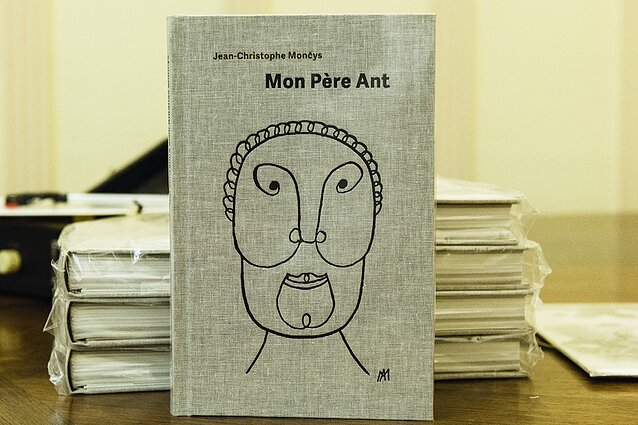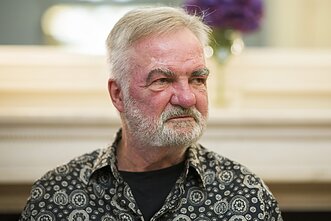








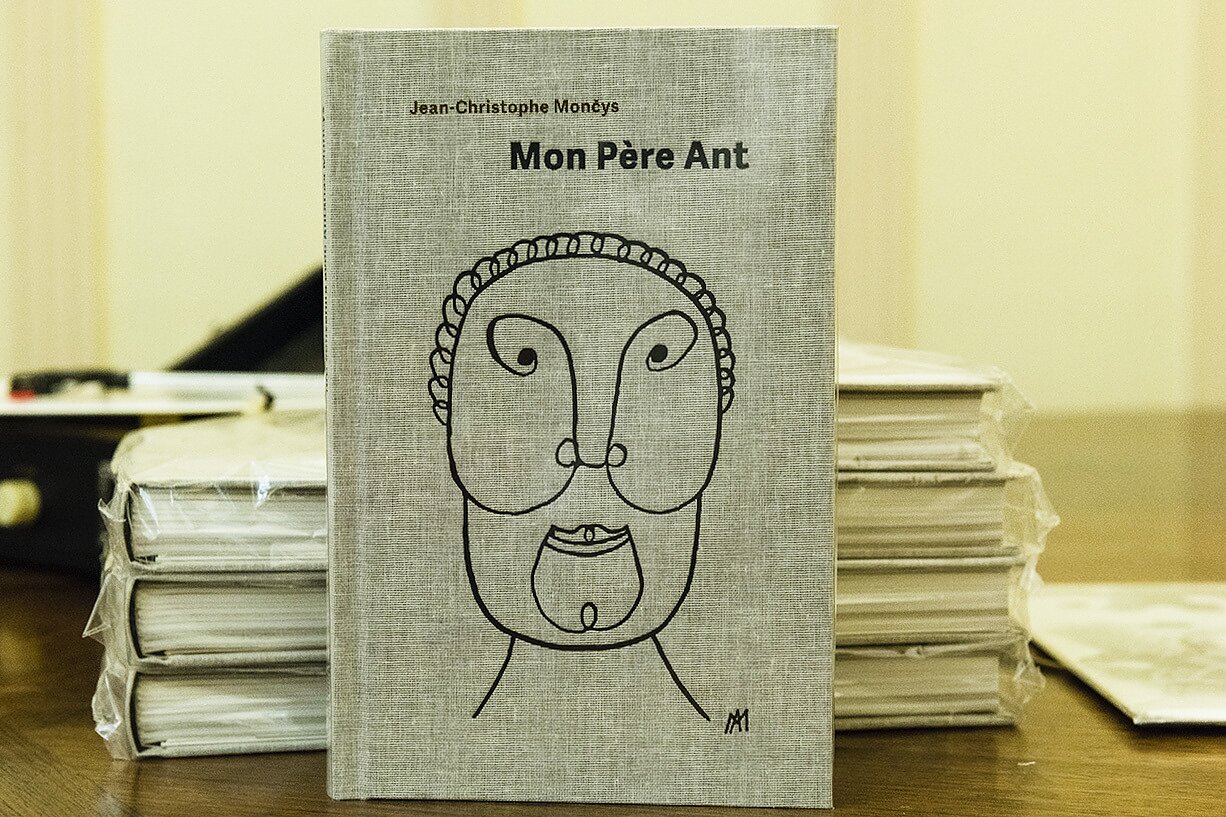
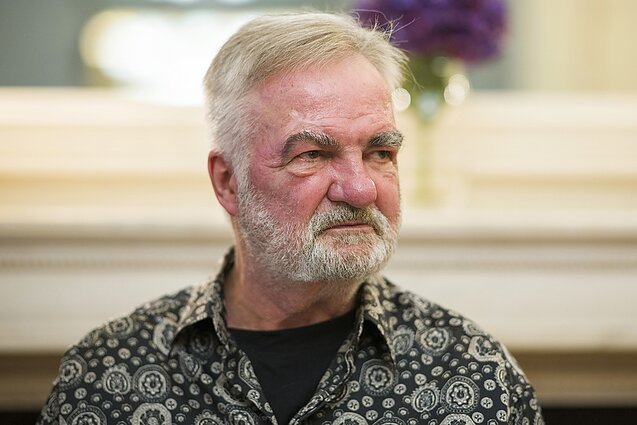
Lithuanian sculpture artist Antanas Mončys would have celebrated his 100 years in 2021. His son Jean-Christophe, a French-Lithuanian actor, teacher and writer, recently published a book celebrating his father's life.
My Father Ant collects some of the fondest memories Jean-Christophe has about his father. The French edition was presented in Paris days after Lithuanian President Gitanas Nausėda awarded Jean-Christophe the Commander’s Cross of the Order of the Cross of Vytis on June 6, Lithuanian National Day.
Antanas Mončys had an atypical life and career, one that is often inseparable from his work. Mončys’ output was very much influenced by sticking to his authentically Samogitian (north-western Lithuanian) roots. Described by contemporaries as silent, obstinate, honest, without compromise or concession, indifferent to judgments, he was not too preoccupied with fame and financial success. But he was also an uprooted man, living in exile in France, after spending some time in Germany.
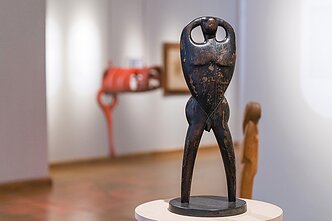
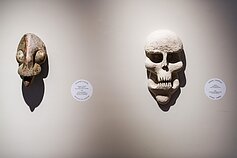
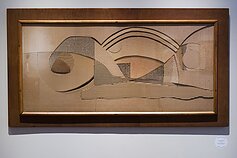
Mončys’ body of work reflects all of this. Multidisciplinary, but mainly his sculptures reveal his openness to new ideas and his newly found freedom of expression in mythical Paris. It served as a source of inspiration resulting in work that is often more sensory than conceptual, without worrying about profit and fame.
Mončys was, as Jean-Christophe describes it, “in perpetual search of progressing, forms and approaches, without ever contemplating self-obsession and satisfaction”.
Contemporaries saw him as a major artist of his generation deserving of wider recognition. Last year’s exhibition in the Vytautas Kasiulis Museum in Vilnius and the newly published book may achieve that.
Out of the ordinary, the book contains a number of captivating removable paper objects closely linked to the work of a remarkable man. In 100 little chapters interspersed with drawings and objects, his son reflects on the different stages of his father’s life.
Jean-Christophe fondly remembers how he saw his father transforming a stone from a pencil drawing into the masterpiece – La Chaine Mère – that is now the centrepiece of the dedicated museum in Palanga.
However, one memory stands out – how he witnessed his father reunite with his mother Barbora in Lithuania after 45 long years of forced separation. A moment filled with looks, infinite tenderness and long moments of silence.
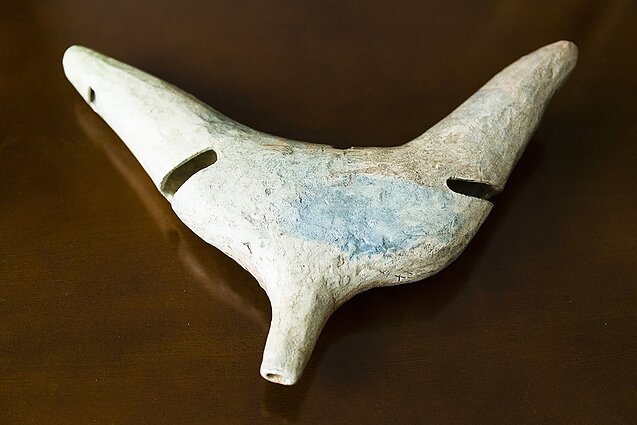
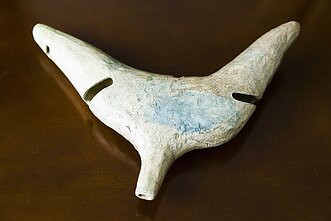
Among the more fascinating creations in the later stages of Mončys’ life were simple three-tune whistles, ocarinas, made out of clay. Clay was easier to handle than stone, but the ocarinas involved a lot of trial and error. With them, he paid tribute to the folk artisans of his childhood. His good musical ear permitted him to build them to cover an entire musical scale.
However, his voice was his instrument of choice. During his youth in Lithuania and later in Germany after the war, he sang in traditional ensemble choirs. “I liked to sing, to the point of thinking of becoming a singer. But, not having a good enough voice, I finally chose sculpture to express my songs,” Mončys wrote in his small notebook.
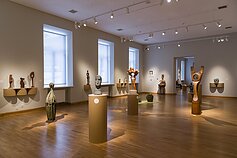
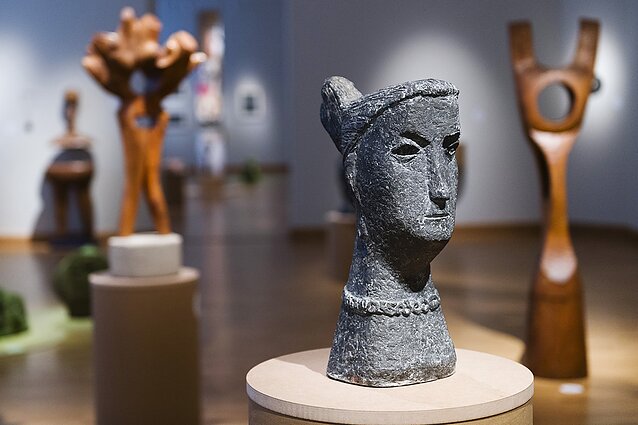
That career decision left a legacy of sculptures on view in several museums, particularly the one dedicated to his work in Palanga. Although mostly created in France, many of his works are in collections in Palanga and elsewhere in Lithuania. They deserve to revisit France and gain a wider audience in the country of their creation.

Newsletter
Every Friday morning.