










Lithuania’s national graduation exam in history this year did not contain a single question about women. The National Education Agency says the problem lies with the curriculum, not the exam, while historians debate whether women played no role in Lithuania’s history or their contribution has simply been neglected.
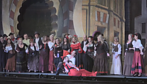
An exhibition by the National Museum includes a display of women’s clothing, commemorating crucial historical battles and women’s role in them. Although men usually dominate the history of battles, the role of women is no less important.
Read more: Women partisans among Lithuania’s Forest Brothers: from lovers to fighters
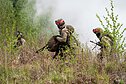
“Take the [post-war anti-Soviet] partisans. Women were messengers. How can a partisan movement function without messengers?” asks Rūta Kačkutė, director of the National Museum.
Women secretly transported documents and messages hidden in bicycle frames. The National Museum’s exhibition mentions 50 fighters, according to the museum director, this is just a drop in the ocean.
“The number of women who were detained for distributing banned press and for teaching the Lithuanian language [in the late 19th century] is over 2,500. And how many women partisans are there,” says Kačkutė.

None of them were included in this year’s national history exam. A reader contacted LRT, asking why all the historical personalities analysed in the exam were exclusively male.
The National Education Agency, which compiled the exam, says the questions were based on the school curriculum.
“Unfortunately, in our history programme we have only one woman mentioned who can be included in the national graduation exam, Nijolė Sadūnaitė,” according to Vidmantas Jurgaitis of the National Education Agency.
Sadūnaitė was a dissident nun persecuted by the Soviet authorities.

“Of course, this is a major oversight that we must correct,” says Mindaugas Nefas, a history teacher and director of the VDU lyceum. “It’s not as if women only came into public life in the middle of the 20th century and said: now we are going to do something. They had been doing important things before, and we need to talk and learn about that.”
According to the historian, women’s contribution to history is not reflected in textbooks because Lithuania has hardly carried out any relevant research.
“We are 10-15 years behind the Western tradition, where women’s studies have been intensified a decade ago, and where these topics have come earlier,” Nefas believes.
But not everyone agrees. Robertas Ramanauskas, council chair of the Lithuanian History Teachers’ Association, says the dearth of women is a fact of history, not historiography.
“Sometimes we want to see women on an equal level with men in history, which historically was not the case and would require stretching history to the current moods in public opinion,” Ramanauskas comments.

Meanwhile, Norbertas Černiauskas, a historian at Vilnius University and one of the authors of the new history curriculum, assures that school students will be taught more about women in history.
“There are many more women [in the new curriculum]. From Queen Morta to the winners of the Venice Biennale – let me sum it up like this,” he tells LRT. “Do we need a strict 50/50 quota? Perhaps, but I’d say maybe we shouldn’t stretch it artificially.”
The new school history curriculum will be introduced gradually starting in September 2023.
Read more: Vilnius names square after 16-century Queen Bona Sforza

Newsletter
Every Friday morning.