
















A new exhibition throws a glance at the hundred-year history of the Lithuanian currency, the litas.
In 1922, four years after declaring independence and defending it in battle, the young Lithuanian Republic issued its national currency, the litas. It was used until World War Two, when the Soviet occupation led to the use of the Soviet rouble. The litas returned in 1993 and stayed until 2015, when Lithuania retired the national currency and adopted the euro.
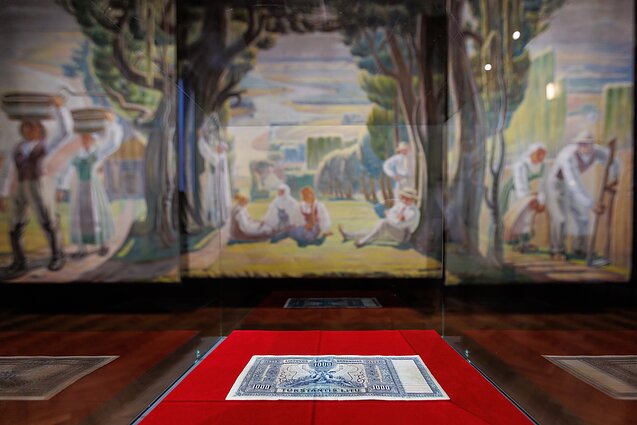
On the occasion of the centenary of the litas, the exhibition Art and Money opens at the M. K. Čiurlionis Art Museum in Kaunas. The curators foreground symbols and allegories that artists used to design the money – bank notes are displayed alongside paintings, graphic art and sculpture.
According to the curators of the exhibition, art and money were closely linked. The designers of the litas notes and coins in the 1920s were the famous artists of the time, Adomas Galdikas, Adomas Varnas, Juozas Zikaras, Antanas Žmuidzinavičius.

As early as 1919, Galdikas and Žmuidzinavičius travelled to Sweden to learn how to design money. Gold-plated litas and cent banknotes appeared in circulation on October 2, 1922.
“The very first litas notes, designed by Adomas Varnas, were issued in five editions and, because of the poor quality of the paper, they were printed without watermarks. There soon appeared counterfeits and, apparently, the printing was not of good quality, which is why they were popularly known as ‘the blue dirties’,” says Genovaitė Vertelkaitė-Bartulienė, the exhibition curator.
The exhibition also includes government bonds issued just a few years before World War Two.

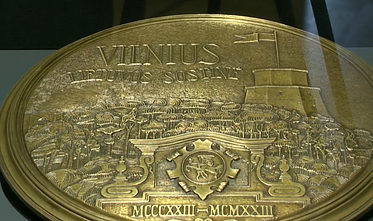
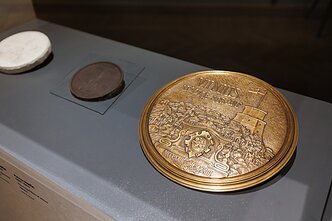
The so-called Vilnius bonds were a must-have.
Since Vilnius at the time was part of Poland, to Lithuanians’ great resentment, “people had to buy them to support the idea of regaining Vilnius,” according to Vertelkaitė-Bartulienė.
Alongside the litas notes and coins, the exhibition presents samples of works by the interwar artists who designed them. The curators of the exhibition say they wanted to show the many symbols and allegories used by artists to create money.

“The Lithuanian girl was an obligatory, canonical image, but that canon was very freely interpreted,” says Daina Kamarauskienė, another curator of the exhibition.
“A national currency is one of the signs of your identity,” she adds, proven by the many notes preserved by people throughout the Soviet period.
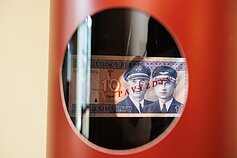
According to the curators, many of the images and symbols from the interwar litas were transferred onto the new notes and coins after 1993.


Newsletter
Every Friday morning.