






Lithuania rose to number nine, up 19 spots, in this year’s World Press Freedom Index published by Reporters Without Borders (RSF) on Tuesday.
Last year, Lithuania ranked 28th.
“Despite flaws in the legal system, financial issues and tensions with the government, journalists work in a relatively favorable environment,” the organisation said in its report.
“Verbal attacks on journalists during the protests against restrictions related to the fight against coronavirus came as a shock for a country where journalists are generally not confronted with dangers to their physical security,” it continued.
As to relations between the media and the government, RSF noted that “political attacks against journalists have recently been rare”, but the media “are relatively often confronted with refusals to provide public information without explanation”.
“Institutions of media regulation and oversight are fairly free from political influence with the exception of LRT’s board whose members are selected by the politicians.”
‘Legal framework lacks clarity’
In RSF’s opinion, Lithuania’s “legal framework lacks clarity and is not always conducive to protection of journalists’ rights”.
“It incorporates elements of self-regulation embodied by an association mandated by the legislation to address ethical issues. Its special role has been challenged by part of the profession.”

The organisation also says that Lithuanian “courts sometimes prefer protection of private data to media freedom”.
However, it notes that the parliament has been working on legislation to protect journalists from what are called Strategic Lawsuits against Public Participation, lawsuits intended to censor or silence the media.
According to the report, while media businesses have been slowly recovering from the Covid-19 pandemic, “local journalism has been crippled by systematic lack of funding”.
“Moreover, entering the market with a new venture is still difficult because of an intensive competition on a small market,” it said.
According to RSF, journalists in Lithuania “enjoy the respect of the society”, with the exception of “certain conspirationist groups”.
“Although there are no systematic attempts to censor quality journalism, journalists struggle with self-censorship while reporting on certain historical and gender issues,” it said.
According to the report, Lithuania’s media landscape continues to be dominated by the public broadcaster LRT, as well as TV3 and LNK, the main commercial media groups.

“The multitude of online media, some of which focus on investigative journalism, benefit increasingly from the attention of younger audiences,” it said.
RSF notes, among other things, that “corruption in the media has been decreasing”.
Estonia makes it to top 5
The Scandinavian countries of Norway, Denmark and Sweden continued to top the rankings, and Estonia jumped to fourth place, from number 15 last year.
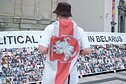
The situation is classified as “very bad” in 28 countries in this year’s index, more than before. Twelve countries are on the index’s “red list”, including Belarus (153rd) and Russia (155th) which have tightened censorship during the military invasion of Ukraine.
North Korea remains the lowest ranked country at number 180. The world’s worst countries for press freedom also include Myanmar (176th), “where the February 2021 coup d’état set press freedom back by 10 years”, as well as China (175th), Turkmenistan (177th), Iran (178th), and Eritrea (179th).
The Paris-based NGO ranked a total of 180 countries and territories in its annual study.

Newsletter
Every Friday morning.