












Lithuania is seeking that NATO review the Baltic defence plans and that "both Poland and the Baltic countries have a strategy of complete defensibility", Foreign Minister Gabrielius Landsbergis said on Wednesday.
"It's not necessary to name the exact capabilities, but [NATO has] to assess the completely changed security situation," he told reporters ahead of the alliance's summit. "It is from [the] political mandate that the precise planning of forces in the region begins."
NATO leaders are to hold an extraordinary summit in Brussels on Thursday to discuss the situation amid Russia's continuing war against Ukraine.
"There has to be a very clear signal that both Poland and the Baltic states have to have a strategy of complete defensibility, when it is said that every inch, every centimetre will be defended, and this has to be followed by concrete actions to achieve this," Landsbergis said.

"We see certain capabilities being deployed in Poland and I'm convinced that this kind of capability must be deployed in the Baltic states as well," he added.
The United Kingdom said last week that it would deploy Sky Sabre, a state-of-the-art medium-range air defence system, to Poland.
When asked what specific capabilities are expected to be deployed in Lithuania, Landsbergis said that this is a matter of the security of the whole region as "you can protect Lithuania by protecting some things in Latvia".
"We shouldn't be so sensitive about this; not everything has to be located in Lithuania," he said.

Speaking about calls to upgrade NATO's Baltic air policing mission to an air defence mission, Landsbergis said, "I support it and the government takes that position, but it's best when it comes from NATO planners, because some of the aircraft are in Latvia and some are in Estonia".
Earlier on Wednesday, Lithuania's parliamentary Committee on National Security and Defence discussed the possible additional capabilities on NATO's eastern flank.
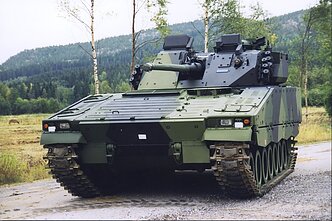
Currently, around 3,500 allied troops are deployed in Lithuania, mostly from the United States and Germany, which leads NATO's multinational battalion stationed in the country.

Newsletter
Every Friday morning.