















Despite harsh EU sanctions, Belarussian oil exports to Estonia reached record levels in 2021. Here’s how the trade, initiated by the oligarch dubbed the “energy wallet of Lukashenko”, has been set up.
When the Baltic countries asked the European Union (EU) to introduce harsh sanctions against the circle surrounding self-declared Belarussian president Alexander Lukashenko after brutal crackdown on people protesting rigged elections, the local transit and port businesses were awash with worries of how badly it would hit them.
A year later, trade with the Baltics was booming at record levels, Estonia being the main beneficiary. The imports of oil products were up three-fold compared to 2020. In addition, about a third of the Belarussian oil which was previously destined to Latvian ports was now going to Estonia (value of Latvian imports from Belarus are also significantly up, but it is down to timber, not oil).

Re:Baltica/Delfi Estonia/Belarusian Investigative Center investigation has found two reasons for that. One is the fact that the trade is going through the cluster of companies which appear to be related to sanctioned Belarussian oligarch Mikalai Varabei (Nikolay Vorobey). Another is a little trick with the customs codes which allow the trade to continue uninterrupted.
This has left the Estonian government in a dire situation. On the paper everything looks correct. But the government that has taken a leading role in pushing for strict sanctions, is also allowing the state-owned railway carrier to carry huge amounts of Belarussian oil products.
Deals with sanctioned NNK
The trains that deliver mazut run regularly from Novopolotsk in Belarus to Daugavpils in south eastern Latvia. From there they continue to Riga and then they follow northwards to Lugaži next to the twin towns of Valga-Valka. That’s where the trains enter Estonia and dozens of barrels of oil products are carried by the state-owned Operail to the port of Muuga close to Tallinn.

Two Belarussian companies have exclusive rights to export oil products from Novopolock. One is state owned, another, Novaya Neftennaya Kompaniya (NNK), is private. Its main shareholder is Mikalai Varabei. The EU describes him as a leading Belarussian businessman with interests in petroleum, coal, banking and other sectors, who is one of the main supporters of the Lukashenko regime in return of tax exemptions and other lucrative privileges. US calls him “Lukashenko’s energy wallet”.
NNK was placed under EU sanctions in June 2021, because the block believed the sole purpose of its creation was to bypass earlier sanctions. Its exclusive rights are “an indication of close links to the authorities and highest level of state privileges. NNK is owned by Interservice, a company belonging to Mikalai Varabei who is one of the leading businessmen benefitting from and supporting the Lukashenko regime. NNK is also reported to be connected to Aliaksei Aleksin, another prominent Belarusian businessman who benefits from the Lukashenko regime,” the EU stated.
But the deals concluded before the EU decision remained legal and thus mazut could keep flowing to the Baltics ports until the end of 2021. NNK had held two tenders in October 2020 and January 2021 which required the use of these ports as delivery points.
An industry source confirmed that mazut produced by Belarusian refineries was indeed exported through the Muuga port in Estonia last year. “Buyers of this product under a long-term contract with the NNK are trading companies Tintrade and Coral Energy,” the source said.

Trick with codes
And here the story gets a bit tricky and technical, but bare with us. EU banned the trade of oil products with specific commodity codes, but some other – very similar ones – were left out. Whether to classify a certain type of oil product as code 2710 (sanctioned) or 2707 (unsanctioned) leaves room for creativity.
“The line between diesel fuel, mazut and other mixtures is thin, and the coding of goods is always at the discretion of the person filing the declaration, so there is room for abuse,” Vladimir Salnikov from the Center for Macroeconomic Analysis and Short-term Forecasting in Russia said. “It is theoretically possible that mazut (code 2710) is supplied under the guise of aromatic hydrocarbons (code 2707).”
This trick could be one of the reasons why Estonian imports of Belarussian oil products skyrocketed while the volumes in Latvia fell.
The official data indicates that the amount of cargo with code 2707 coming from Belarus to Estonia grew from close to zero in Nov, 2020, to around 150,000 tons a month. It has remained at similar levels ever since. With the oil prices at record levels, the value of such cargo exceeded half billion euros in 2021.
Moreover, Estonia is virtually the only EU country to import such fuel oils from Belarus at all. In some months, Estonia’s share of all EU-wide imports reached more than 99 percent.

The Estonian Tax and Customs Board (ETCB) says it implements a 100% control on sanctioned commodity codes and goods “with no exceptions”. “All oil products coming from Belarus are under our heightened attention. This means that also products that don’t have the sanctioned commodity code are checked,” said Piret Tinkus, representative of the ETCB. According to her, the customs also takes samples from such shipments and analyzes them in labs. So far no cheating has been found.
The Estonian Ministry of Foreign affairs was surprised when they learned from Re:Baltica/Delfi about the country’s 95% share of all EU imports regarding the 2707 coded products. Considering that other EU member states wouldn’t be affected if the EU were to also sanction this trade, it would leave the door open for Estonia to suggest such new restrictions on a EU level or to impose additional national sanctions. Jüri Seilenthal, the director general of the ministry’s external economic department said that so far no such suggestions had been thought about.
Enigmatic Baltic duo and Varabei
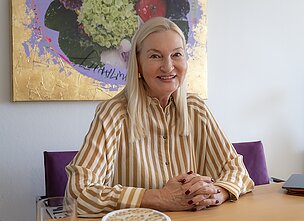
This is a rare public photo of Alexey Tshulets (62).

He and his business partner Sergey Pasters have been in the Baltic transit and ports business for almost three decades, but remain enigmas.
One of the few times that Tshulets appeared in the Estonian press was not because of a business deal, but the fact that he had decided to build a private residency in the size of a small concert hall. Even less is known about Pasters. There is no media trace or social media profiles. His old passport in the Latvian business registry identifies him as a citizen of Russia. Data from Malta indicates that he acquired a Maltese passport in the golden visa scheme in 2016.
Tshulets and Pasters control the cluster of companies in Latvia and Estonia which are among the main beneficiaries of the now sanctioned oil trade with Belarus. Moreover, the personalities and companies involved in their business deals which took place exactly in the time the EU and US placed sanctions on Belarus indicate that Tshulets and Pasters were fronting the interests of Varabei.
Restaurateur with penchant for oil
One of the pieces in Tshulets – Pasters holding was a terminal in the port of Riga, called B.L.B Baltijas termināls. Oil products are the main cargo coming from Belarus to Riga, although the volume after introduction of sanctions was halved in 2021. This terminal was a leader in that trade. It was no secret that Belarussian state (or it’s rulers) would like to buy it to cut out the middleman and increase their own profit.

When Latvia and Belarus were still on speaking terms and planning to host the world ice hockey championship together, diplomats were planning Alexander Lukashenko’s visit to Latvia in the spring of 2020. B.L.B Baltijas termināls was on the list of places he could possibly visit.
In April, 2021, Tshulets – Pasters holding company sold the terminal to private Belarussian firm Belkaztrans which until December 2020 was owned by Varabei. However, in Latvian business registry Belarussian woman named Lidziya Ushakova appeared as the true beneficiary. She took Belkaztrans over from Varabei exactly a week before the EU included him in sanctions list and the US included the company in its sanctions list.

Little is known about her, except that she has worked in Varabei’s companies before, partnered with another sanctioned oligarch Aleksin in one his and Varabei’s businesses (Neonafta) and co-owns restaurant Brooklyn in Minsk. She did not respond to a request for comment.
Her ownership of the terminal did not last long. In September, 2021, it was sold on to a Cyprus-registered company owned by an Azerbaidjani citizen.
Mysterious Russian (with a lot of money)
In Estonia, the Tshulets – Pasters holding is involved in a cluster of companies that engage in trading or expediting Belarussian oil products.
First, the transit. Company Tintrade, which continued to ship the Belarussian oil through Estonian port of Muuga in 2021, is connected to Tshulets. The proof is in annual report of another of his companies, NT Marine, which has issued 3 million euro loan to Tintrade. It is listed as deal with companies which are under control or management board or shareholders with notable shares.
Second, the expeditors. One of the big transporters of Belarussian oil products in Estonia is Merktrans AS which expedited 1.8 millions tons in 2021. Aleksandr Kovaljov, the sole board member of Merktrans AS, refused to reveal who was the client owning the cargo, but insisted the product was not under EU sanctions. “It has been coordinated and verified with the customs every time before the transport,” he said.
However, it appears that with EU and US sanctions in place, Tshulets is getting rid of the ownership of some of the companies which are trading with Belarus – at least on paper.
On the day the EU introduced another round of sanctions in June 2021, Tshulets’ shares in the holding’s central enterprise, Baltic Sea Bunkering OU (BSB), were transferred to a Russian citizen Elena Skvortsova (another half is still owned by Pasters). Merktrans is one of the companies BSB owns and Tshulets is still on its advisory board.
Skvortsova got more than just the company’s shares. A month later she became the official owner of Tshulets’s 1800 square meter seafront mansion in a picturesque suburb of the Estonian capital. Two things stand out about the deal. She did not need a bank loan to buy an estate which is worth millions of euros. On top of that, Tshulets was given a lifelong permit to reside there. This suggests the deal was made in an effort to shield possible claims against Tshulets (he didn’t respond to a request for comment).

She is as enigmatic as Tshulets and Pasters are. Her name appeared in the boards of the holding’s subsidiaries before. Some ties with Estonia could be presumed from an old court case about the speeding ticket which she was issued in 2009 while driving a “Porsche”.
Cash cow
Tshulets main cash cow is a company called NT Marine AS which he acquired from BSB as sole owner in 2019.
And almost as if by magic, it went from barely a million-euro annual revenue up to 118 million in a space of the year. Almost all of it came from sales to Belarus. 2020 was even better. Revenue was up to 155 million euros (of which 29 million came from Ukraine and 125.8 million from “outside the EU”.)
The nature of the magic success soon became clear. According to Russian media outlet RBC, in 2019 NT Marine had received a permit to start supplying Russian oil and coal to Ukraine. As there was an embargo to deliver coal straight from Russia to Ukraine, it was traded through Belarus. According to RBC, the company was “in the sphere of interests of the Belarusian oligarch Mikalai Varabei”.
Another link between the companies, which are otherwise formally unrelated, is the 10 million loan which NT Marine gave to Belkaztrans (which belonged to Varabei). It is shown in the company’s annual report.
NT Marine 2020 financial statement was so insufficient that the auditors declined to approve it. Among other things, the auditors were startled by the close to a 100 million euros that NT Marine used to buy a Cyprus company Gemenel Investments which is supposedly involved in real estate development in Ukraine. In three projects, in which it has been part by the end of 2020, the investment value has been barely 20 million euros.
Tshulets acquired company from a Ukrainian Rada member Vadym Stolar from the Opposition Platform – For Life. The party is a successor to former president’s Victor Yanukovych’s Party of Regions and is known for its pro-Russian and eurosceptic attitudes. The current chairman of the party is the oligarch and Leonid Kuchma’s former chief of staff Victor Medvechuk. Medvechuk and Varabei, in turn, have close business interests.
“I will not give any comments on this topic,” Tshulets said when contacted by Delfi over the phone. Later he confirmed through a text message that he and Varabei know each other, but after the latter was sanctioned they haven’t had mutual business deals.
Holger Roonemaa, Delfi
Sanita Jemberga, Re:Baltica
Alexander Yaroshevich, Blarusian Investigative Center
Raimo Poom, Delfi
Martin Laine and OCCRP ID contributed to this report
This Re:Baltica investigation has been republished with permission.

Newsletter
Every Friday morning.