











A Peruvian-Lithuanian couple were brought together by a shared dream of one day running a farm. They are now growing organic vegetables just outside Vilnius – and still trying to settle the question of who, Lithuanians or Peruvians, are better at serving potatoes.
Kristina Milkeraitytė and Diego Guillermo Valencia Lopez met a decade ago. Kristina had been travelling across Latin America and came to Peru. Diego was a student at the National Agrarian University in Lima. It was at the university that the Lithuanian and the Peruvian met.
Among other things, they shared a dream of one day running a farm. For a time being, however, it remained but a dream, while the couple maintained a long-distance relationship: Kristina would occasionally fly to Peru and Diego would visit her in Europe.
His first trip to Lithuania happened in 2014. After an exhausting flight via Madrid and Riga, he stepped out of Vilnius Airport into a cold winter – although it was March. “I had never experienced real winter. I came with a jumper and had to dig into my suitcase to find more layers of clothing,” he says.
Winter was not the only unfamiliar thing. “As I was queuing at the gate in Spain, I realised I was going to a completely different place. Ninety percent of the people were fair-haired and blue-eyed,” Diego recalls. “God, I thought, where am I going?”

Long-distance dating lasted several years, after which Kristina and Diego decided to live together in Belgium. They got married and had a son, Feliksas Vytis. Soon afterwards, Kristina learned that she had inherited a piece of land in Lithuania – and so it was time to make the dream of having a farm come true.
Who's the potato king
Diego says what he likes most about Lithuania is the sense of being close to nature, even while living in Vilnius.
“I was born in Lima, a city of 11 million people. To leave the city, you have to drive two hours, even more if there's traffic,” he says.
At the same time, both Peruvians and Lithuanians are obsessed with potatoes. At first, Diego was incredulous when Kristina insisted that Lithuanians were the 'kings of potatoes' – after all, the plant comes from Peru where there are over 4,000 varieties of potatoes. Much fewer can be found in Lithuanian supermarkets.

Still, Diego was impressed with how potatoes were used in the Lithuanian cuisine.
“We have a dish in Peru that is similar to žemaičių blynai, but once I tried kugelis, bulviniai blynai, I thought what a great and unusual way to use the potato,” he says.
Organic veggie subscription boxes
Once they moved to Lithuania, Diego and Kristina took up farming on the land inherited from Kristina's family. However, the farm in Alytus region, southern Lithuania, was too far from their home in Vilnius, so the family decided to lease a plot of land closer and move their business there.
They still live in the city and spend most of their time on the farm between May and late autumn.
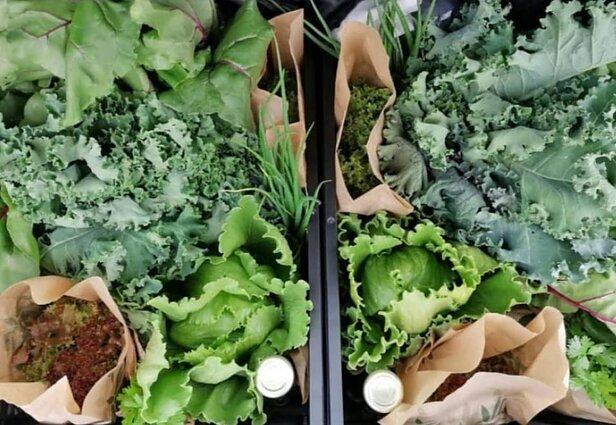
“We always knew we wanted a small farm – to grow organic vegetables and build a community. We grow organic food for people we know, following the principle ‘good food for good people’,” says Diego.
The farm offers veggie subscription boxes – during the vegetable season, which usually lasts 18–20 weeks, subscribers receive weekly boxes of fresh produce. What's in the box depends on the yields in a particular week – it can be tomatoes, spinach, salad, etc.
“This is a common service in the world and we are not the first ones to offer it in Lithuania, but we were among the pioneers,” says Kristina.
The organic farm is also a focal point for the local community. Diego and Kristina often invite people to help plant the vegetables and spend time together.

“This is not the farm of Kristina, Diego and Feliksas. It's everyone's farm. Members of our community can pop in at any time to see how the vegetables are growing,” says Kristina.
And although the farm has yet to get an organic farming certificate, everything is farmed without pesticides or chemical fertilisers. “Our [son] Vytis is the best proof – he eats everything,” Kristina adds.
Cow in the plans
During the pandemic, Diego quit his office job in Vilnius and dedicated his time fully to the farm. The family has plans to expand, buy more land and set up outlets in Vilnius where people could pick up their vegetables or just meet and share recipes.
Diego and Kristina would also like to start growing fruit and berries and even get some chickens.
After watching the Lithuanian cinema classic Walnut Bread (Riešutų Duona), Diego is now intent on gifting a cow to his wife.
He also insists on maintaining ties with Peru. Not being able to travel during the pandemic, Diego is video-chatting with his family every week.
He is also sharing farming tips in Spanish on social media. “I'm telling people how to start a farm so that it can support a family,” he says. “I want to help raise a new generation of Peruvian farmers who could support small, organic farms,” he says.

Newsletter
Every Friday morning.