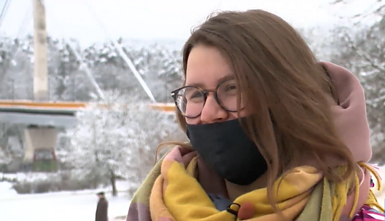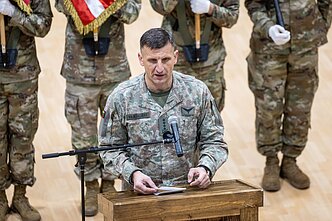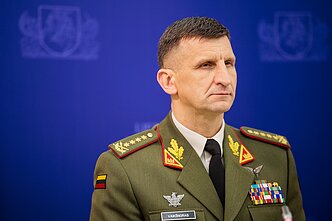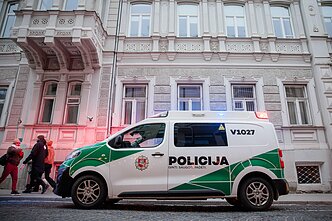







Maria Matusevich, a Lithuanian citizen of Belarusian descent, has turned to the Lithuanian Criminal Police Bureau after being beaten by the Belarusian security forces in Minsk.
"The questioning took a long [time]. She told everything. Her story is interesting," Alexander Dobrovoslky, representing the headquarters of Svetlana Tikhanovskaya in Vilnius, told BNS.
This marks the second time when a person has turned to the Lithuanian law enforcement over violence at the hands of Belarusian security forces.
Read more: Lithuanian protester in Belarus: police hit me harder when they found my passport
In December, Lithuania's Prosecutor General's Office launched a pre-trial investigation into crimes against humanity in response to a request from Belarusian citizen Maxim Khoroshin.
A former resident of Minsk, Matusevich previously told LRT TV that she had been detained and beaten by OMON officers for two days in August amid protests against the results of the presidential election. Later on, she moved to Vilnius.

Read more: Surviving captivity in Minsk. Belarusian detainee recalls abuse and endless beatings
"They accidentally found my Lithuanian passport and began saying that I was a puppet of Lithuania, that I was paid to destroy the country, that they will jail me for life," Matusevich said at the time.
Belarus later banned Matusevich from entering the country for five years.
Dobrovolsky told BNS more people plan to turn to Lithuania's police over Belarusian police violence, and they include two Belarusian citizens who have recently arrived in Lithuania.
The Lithuanian prosecution service has previously said they can investigate crimes potentially committed by the Belarusian regime due to the universal jurisdiction under Lithuania’s Criminal Code.
Universal jurisdiction means that criminal liability for crimes defined by international treaties applies irrespective of the citizenship of victims or suspects, the place of the offence and whether the country where the offence was committed punishes it by law.

Torture as one of the crimes against humanity is also attributed to crimes that are subject to universal jurisdiction.
Belarus has been rocked by mass protests since the August 9 presidential election last year when Alexander Lukashenko, ruling the country since 1994, declared he had won the election.
The country's opposition, as well as the European Union, consider the vote rigged.
Tikhanovskaya, a former presidential candidate, was forced to flee to Lithuania soon after the election and has called on other European countries to investigate the alleged acts of torture committed by the Belarusian regime.
Read more: Can Lithuania put Belarusian regime officers behind bars?

Newsletter
Every Friday morning.